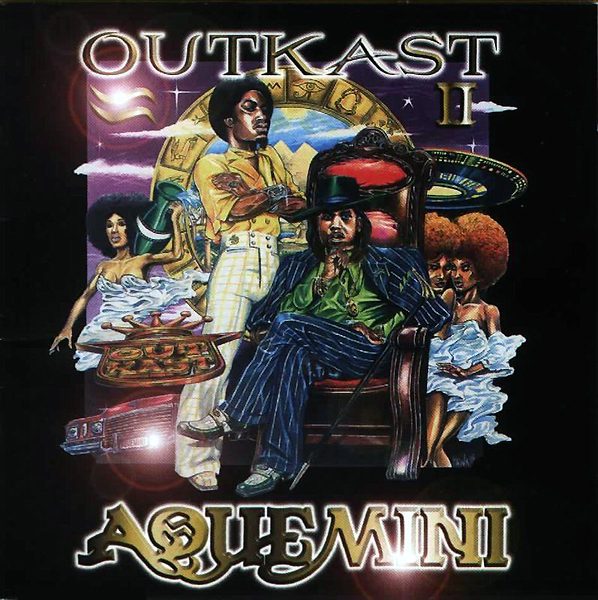
Sixteen tracks in 75 minutes. Recorded across approximately fourteen months at OutKast's Stankonia Studios and Doppler Studios in Atlanta with Organized Noize and OutKast co-producing. The Atlanta duo's third LP, André 3000 and Big Boi at their most-creatively-ambitious. The album that consolidated Southern hip-hop as a commercially-viable artistic register and provided the template every subsequent Atlanta-based hip-hop LP has worked within.
- Released
- September 29, 1998
- Label
- LaFace Records / Arista Records (US, 26053)
- Producer(s)
- Organized Noize · André 3000 · Big Boi · Mr. DJ
- Runtime
- 75:00 (16 tracks)
- Chart peak (US)
- #2 (Billboard 200); #1 (Top R&B/Hip-Hop)
- Chart peak (UK)
- Did not chart
- Certifications
- 2× Platinum (RIAA, 1999)
- Awards & honours
- Source Five Mic rating (1998); ranked #500 on Rolling Stone's 500 Greatest Albums (2020); Library of Congress National Recording Registry (2024)
Sixteen tracks in 75 minutes. Recorded across approximately fourteen months at OutKast's Stankonia Studios and Doppler Studios in Atlanta with Organized Noize and OutKast co-producing. OutKast's third LP, Big Boi (Antwan Patton) and André 3000 (André Benjamin) at the moment their stylistic divergence became the album's central artistic decision. Released by LaFace / Arista in September 1998. The album that converted the Atlanta-based Southern hip-hop vocabulary into experimental commercial-pop form and inaugurated the genre-omnivorous commercial hip-hop template every subsequent ambitious Southern-rap LP has worked within.
OutKast in spring 1997 were a Decatur-based duo with two commercially-successful Southern hip-hop LPs to their name: Southernplayalisticadillacmuzik (1994, US #20, Platinum) and ATLiens (1996, US #2, Platinum). Big Boi and André 3000 had grown up together in East Point, Georgia and had been performing together as OutKast since 1992. The Organized Noize production team, Rico Wade, Sleepy Brown, Ray Murray, had been their primary musical collaborators since the debut.
By late 1997 the duo's stylistic preferences had diverged substantially. Big Boi had remained closer to the Southernplayalistic / ATLiens commercial-Southern-hip-hop vocabulary; André had been increasingly drawn toward experimental-funk-and-soul vocabulary. The Aquemini LP, named after the duo's astrological signs (Aquarius for André and Gemini for Big Boi), was conceived as a deliberate document of the stylistic divergence rather than as a unified statement.
Sessions began in late 1997 at OutKast's Stankonia Studios in Atlanta and continued at Doppler Studios across approximately fourteen months. Organized Noize co-produced approximately half the tracks; OutKast themselves produced the remainder. Substantial guest contributions: Erykah Badu, Goodie Mob, Raekwon, George Clinton, Cee-Lo Green, Slick Rick.
The album's central artistic decision was the deliberately genre-omnivorous palette. 'Rosa Parks' (the lead single) uses harmonica-and-Southern-funk arrangement; 'Da Art of Storytellin' Parts 1 and 2' use deliberately-narrative-soul vocabulary; 'SpottieOttieDopaliscious' uses a deliberately-extended slow-funk arrangement (André's spoken-word vocal across six and a half minutes). The album refuses to choose between commercial-Southern-hip-hop and experimental-funk-and-soul; the refusal is the album's specific commercial-cultural argument.
LaFace released the album on September 29, 1998. The album debuted at US #2 with first-week sales of approximately 530,000 SoundScan units, OutKast's commercial breakthrough. 'Rosa Parks' (lead single, US #55) drew Rosa Parks's own lawsuit (filed 1999) over the unauthorized use of her name; the suit was settled in 2005. RIAA 2× Platinum certification within six months.
Critical reception was extraordinary and unanimous. The Source gave the album 5/5 mics; Rolling Stone's Touré gave it five stars; subsequent critical-poll positioning has placed it among the canonical commercial-Southern-hip-hop LPs of the 1990s. The Grammy nomination for Best Rap Album (1999) was won by Jay-Z's Vol. 2... Hard Knock Life.
Aquemini belongs at #71 because it is the album that converted the Atlanta-based Southern hip-hop vocabulary into experimental commercial-pop form and inaugurated the genre-omnivorous commercial hip-hop template every subsequent ambitious Southern-rap LP has worked within. Every subsequent Stankonia (2000), Speakerboxxx/The Love Below (2003), Kanye West's College Dropout-era catalogue, Andre 3000's solo trajectory, OutKast-direct-descendant catalogue (Killer Mike, Janelle Monáe, T.I., all from the Dungeon Family extended collective) runs on the proof Aquemini delivered.
Pressing guide — the one to own
Original 1998 US pressing on LaFace Records, catalog 73008-26053-1, a triple LP (the vinyl edition reorders the tracklist versus the CD). This is the uncensored issue, identifiable by the yellow/orange-speckled LaFace labels; a separate censored version on a generic LaFace sleeve carries its own catalog number (LFL-6153), and an instrumental 3xLP also exists. Clean original copies in EX/NM typically trade around the low-to-mid three figures. Confirm the speckled labels and the full 73008-26053-1 catalog number to distinguish a true first press from later repressings.