
№ 35 of 100
Bitches Brew
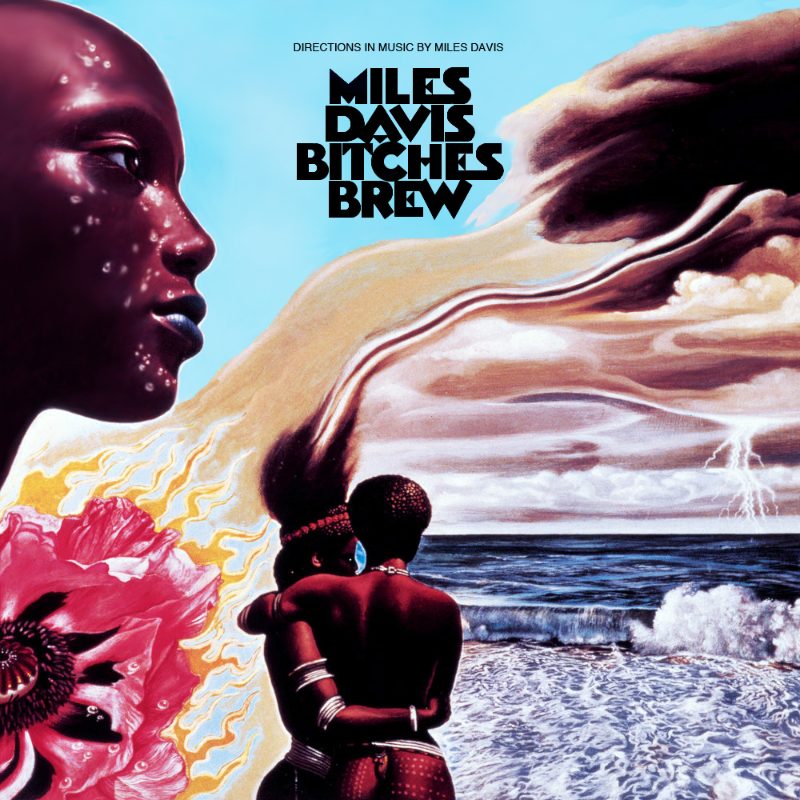
Bitches Brew by Miles Davis (1970), № 35 in The Lead-In’s 100 greatest albums. The day Miles Davis killed jazz and electric music had to be invented to fill the space.
Bitches Brew by Miles Davis (1970), № 35 in The Lead-In’s 100 greatest albums. The day Miles Davis killed jazz and electric music had to be invented to fill the space.
Miles Davis in 1970 with thirteen musicians, three keyboards, two drum kits, electric bass, and a producer (Teo Macero) who edited the sessions into something neither rock nor jazz. The album that started fusion.
Three days at Columbia's 30th Street Studio in August 1969, then six months in post-production at producer Teo Macero's editing bench. Two LPs, six tracks, 94 minutes. The album that took Miles Davis from a respected mid-list jazz artist into the most commercially successful jazz release of the postwar period, established jazz-rock fusion as a sustainable commercial genre, and launched the next decade's worth of major fusion bands from the personnel who played on the sessions.
Miles Davis had been Columbia Records' flagship jazz artist for a decade. Kind of Blue (1959), Sketches of Spain (1960), Miles Smiles (1966), and the run of mid-1960s quintet records had established him as the most respected jazz instrumentalist in the country. By 1968 he was 42, the founding quintet (Wayne Shorter, Herbie Hancock, Ron Carter, Tony Williams) was approaching dissolution, and the cultural moment that had made bebop and modal jazz commercial, the late-1950s through mid-1960s American jazz audience, was being eclipsed by the rock-and-roll audience that was buying Hendrix, Cream, and Sly Stone records in the hundreds of thousands of copies. Davis had been spending evenings at the Fillmore East and watching the Hendrix and Stone audiences directly. He had married Betty Mabry (later Betty Davis) in September 1968; she was 23, deeply embedded in the rock scene, and had introduced Davis to Sly Stone, Jimi Hendrix, and the music their audiences were responding to. The marriage lasted approximately a year. The musical influence outlasted it.
In a Silent Way (February 1969), recorded the previous February with John McLaughlin on guitar and Joe Zawinul on electric piano, had been Davis's first major step toward electric instrumentation and rock-derived rhythmic vocabulary. The record had divided critics but had sold respectably for a Davis release. The Bitches Brew sessions came six months later. Davis had assembled an extraordinary thirteen-piece ensemble: Wayne Shorter on soprano sax, Bennie Maupin on bass clarinet, John McLaughlin and (on some sessions) Larry Young on guitar and organ, Chick Corea and Joe Zawinul on electric pianos, Dave Holland on acoustic bass, Harvey Brooks on electric bass, Jack DeJohnette and Lenny White and Charles Don Alias on drums and percussion, Jim Riley on hand percussion. The session personnel on any individual track varied; Davis would call players in for half-day sessions and combine them as he heard fit.
Recording took place across three days, August 19, 20, and 21, 1969, at Columbia's 30th Street Studio in Manhattan, the converted Greek Orthodox church Columbia had used for Kind of Blue and most subsequent Davis records. Producer Teo Macero ran the sessions with Davis directing from the studio floor; engineer Stan Tonkel captured the audio on Columbia's 8-track machine. Davis would call short instructions to specific players ('Wayne, play that figure again') and then signal the band to repeat or vary a passage. There were no charts. The sessions produced over 20 hours of tape across the three days. Macero spent the subsequent six months, September 1969 through February 1970, assembling the released album from this raw material via tape splicing and loop editing, a process that effectively made Macero a co-author of the final compositions.
The Macero editing process is what makes Bitches Brew the album it became. The opening track of the album, 'Pharaoh's Dance' (20 minutes), is assembled from at least sixteen separate session takes spliced together via half-inch tape edit. Some passages have been pitched up or down to fit the surrounding material; some have been looped to extend their duration; some have been overdubbed with effects (echo, ring modulation) at the editing stage. The result is a composition that did not exist as a continuous performance in the studio, it was composed in post-production. The technique was unprecedented in jazz, where the assumption had been that the recorded document captured a live performance of a pre-composed piece. Bitches Brew effectively imported into jazz the studio-as-instrument approach that the Beatles and Brian Wilson had developed in pop. The album's three remaining major tracks, 'Bitches Brew' (the title track), 'Spanish Key,' and 'Miles Runs the Voodoo Down', were similarly assembled.
The album was released in April 1970, two months after the Beatles' breakup announcement and one month after Hendrix's death (which happened in September 1970, Davis and Hendrix had been in informal discussions about a possible collaboration that was now foreclosed). Davis booked a residency at the Fillmore West in San Francisco in April 1970, opening for the Grateful Dead. The booking was unprecedented for a jazz artist of his stature; rock critics who had never reviewed jazz began writing about Davis. The album sold 400,000 copies in its first year, roughly four times anything Davis had previously released. The traditional jazz audience was alienated; the rock audience treated him as a major new artist. Stanley Crouch and other defenders of the bebop tradition wrote venomous essays accusing Davis of selling out; Davis ignored them and continued. The commercial trajectory of jazz, briefly, returned to rock-comparable levels.
The Bitches Brew personnel went on to define the entire 1970s jazz-fusion genre. Wayne Shorter and Joe Zawinul formed Weather Report in 1970. John McLaughlin formed the Mahavishnu Orchestra in 1971. Chick Corea formed Return to Forever in 1971. Herbie Hancock (who is not on Bitches Brew but had played on In a Silent Way) formed the Head Hunters in 1973. Lenny White joined Return to Forever. Dave Holland formed his own ensembles. Jack DeJohnette joined Keith Jarrett's Standards Trio. The sessions were the launching pad for the next decade of major jazz instrumental records, a generational impact wildly disproportionate to the album's three days of recording. The 1970s fusion scene is, in a real sense, an extended response to the questions Bitches Brew posed.
Bitches Brew belongs at #35 because it is the album in which Miles Davis took the postwar jazz audience that had carried him from Kind of Blue to In a Silent Way, deliberately broke the audience apart, and replaced it with the rock audience that had been displacing jazz commercially throughout the late 1960s. The three days of recording at 30th Street Studio produced source material; Teo Macero's six months of post-production editing produced the album as released. The personnel of those three days launched the next decade of fusion. The 400,000-copy first-year sales remained the highest figure of Davis's career until his death in 1991. The album's specific approach, studio-as-instrument, jazz-as-rock-album, the producer as compositional collaborator, was unprecedented in 1970 and has been imitated continuously since. Bitches Brew is the document of jazz briefly becoming commercially competitive with rock again. The competition didn't last; the album remains the document of when it was possible, and the personnel who proved it could be done.
1970 US first pressing, Columbia GP 26 (two-LP gatefold set) with the original Mati Klarwein gatefold painting and the printed inner sleeves listing the full thirteen-piece personnel. Look for the matrix etchings GP 26-A1 / B1 (LP 1) and GP 26-C1 / D1 (LP 2), hand-etched at Columbia's 30th Street mastering facility by Frank Laico. The very earliest pressings have a deeper, more saturated print of the Klarwein cover painting; the colour balance was lightened on subsequent press runs as the original printing plates wore.
© The Lead-In · an independent, reader-supported music publication.