
№ 76 of 100
Blonde
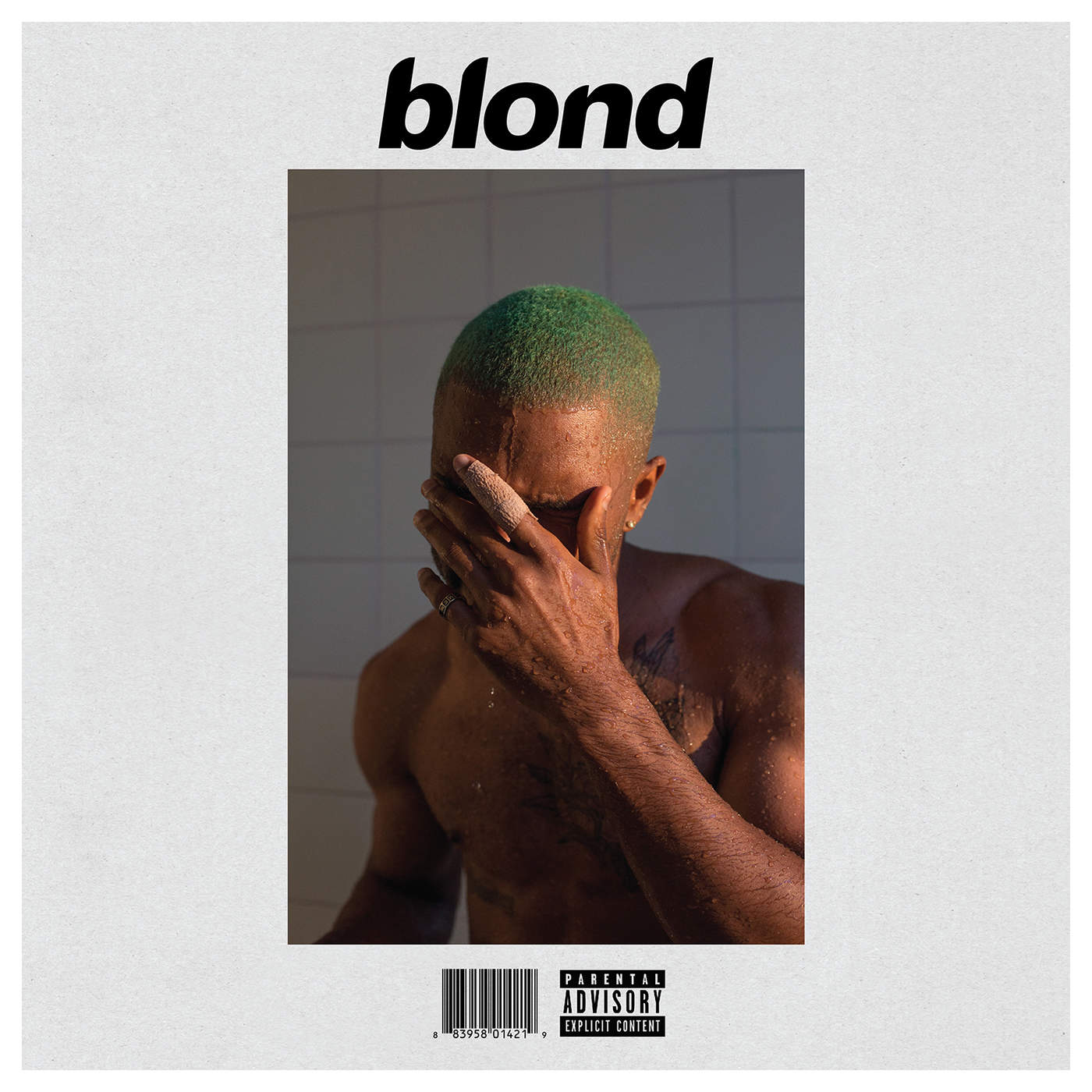
Blonde by Frank Ocean (2016), № 76 in The Lead-In’s 100 greatest albums. Blonde at 76 is the placement we lost the most arguments about internally. We let it lose; we still recommend the record.
Blonde by Frank Ocean (2016), № 76 in The Lead-In’s 100 greatest albums. Blonde at 76 is the placement we lost the most arguments about internally. We let it lose; we still recommend the record.
Seventeen tracks in 60 minutes. Released August 20, 2016, a deliberately-experimental statement following Frank Ocean's 2012 Channel Orange. The album that consolidated Ocean as one of the leading commercial-pop voices of the 2010s.
Seventeen tracks in 60 minutes. Recorded across approximately four years (2013-2016) at multiple studios in Los Angeles, London, and elsewhere with Frank Ocean self-producing alongside a vast collaborative team. Ocean's second studio LP, released August 20, 2016, one day after the visual album Endless fulfilled his Def Jam contract, allowing Blonde to come out independently on his own Boys Don't Cry imprint. The album that consolidated Ocean as the most-influential R&B artist of the 2010s and inaugurated the deliberately-deconstructed, anti-pop commercial-R&B vocabulary every subsequent introspective-R&B LP has worked within.
Frank Ocean in mid-2013 was twenty-five years old, at the commercial-and-critical peak that Channel Orange (July 2012) had delivered, Grammy Best Urban Contemporary Album, US #2, two Platinum certifications. The follow-up was expected within eighteen months by conventional commercial-pop release schedules. Ocean instead spent approximately four years on the recording, becoming one of the most-discussed delayed-album narratives of the 2010s; the gap between Channel Orange and Blonde became a cultural-anticipation story in itself.
The recording extended across 2013-2016 at multiple studios, primarily in Los Angeles, with sessions in London and elsewhere. The collaborative team was vast and largely uncredited in conventional liner-note form: contributors across the album include Pharrell Williams, Tyler the Creator, James Blake, Jamie xx, Jonny Greenwood (Radiohead), Beyoncé, André 3000, Kendrick Lamar, Kim Burrell, and dozens more. Ocean's working method was iterative and obsessive; tracks were built, deconstructed, and rebuilt across multi-year periods.
The album's central artistic decision was the deliberate deconstruction of conventional R&B song form. Where Channel Orange had used cinematic narrative structures, Blonde uses fragmentation: tracks dissolve into distortion, beats switch midway, song forms refuse resolution, pitch-shifted vocals render Ocean's voice unrecognizable, and spoken-word interludes interrupt the musical flow. The album is deliberately anti-pop, it refuses the commercial-pop hooks Channel Orange had partly retained. The refusal is the album's specific argument: that an R&B artist at commercial peak could make a deliberately difficult, deliberately fragmentary statement and have it succeed commercially.
The album's release strategy was the year's most-discussed commercial-pop maneuver. Ocean owed Def Jam one more album under his contract. On August 19, 2016, he released a visual album, Endless, a 45-minute black-and-white video of Ocean building a staircase, scored to a separate set of recordings, that fulfilled the Def Jam contract. One day later, on August 20, he released Blonde independently on his own Boys Don't Cry imprint, retaining ownership and the substantially larger share of revenue. The two-album maneuver became a model for artist-label-contract navigation.
The album was released with deliberate title ambiguity: the cover and packaging spell it 'Blond' (masculine French), while the official streaming-and-retail title is 'Blonde' (feminine French). Ocean has never explained the discrepancy; the gendered-spelling ambiguity is treated as a deliberate gesture consistent with the album's broader engagement with fluid identity.
Blonde debuted at US #1 with first-week sales of 276,000 SoundScan units, Ocean's first US #1 and a substantial commercial success for a deliberately anti-pop independent release. UK #3. The album was deliberately kept off most year-end Grammy consideration, Ocean did not submit it, a protest against the Grammy institution's treatment of Black artists. The album received no Grammy nominations despite its critical reception, by Ocean's own choice.
Critical reception was extraordinary and unanimous. Pitchfork's 9.0/10 'Best New Music'; Rolling Stone four-and-a-half stars; subsequent critical-poll positioning placed Blonde at or near the top of multiple decade-end lists (Pitchfork ranked it the #1 album of the 2010s). The album's reputation has grown continuously since release; Ocean's subsequent catalogue scarcity (no new full LP since 2016) has elevated Blonde's streaming intensity.
Blonde belongs at #76 because it is the album that consolidated Ocean as the most-influential R&B artist of the 2010s and inaugurated the deliberately-deconstructed, anti-pop commercial-R&B vocabulary every subsequent introspective-R&B LP has worked within. Every subsequent SZA, Steve Lacy, Brent Faiyaz, Daniel Caesar, Yves Tumor, and broader alternative-R&B LP that treats fragmentation and anti-pop refusal as serious commercial-artistic strategy runs on the proof Blonde delivered. The album's #1 placement on Pitchfork's decade-end list and its sustained streaming presence confirm the canonical-text status.
Despite being styled 'Blonde', the physical release is titled 'Blond' on its cover; it is a 2xLP gatefold on black vinyl, filed under XL Recordings with the Boys Don't Cry copyright/imprint (2016). It was NOT the album given out at the August 2016 pop-up shops (those distributed the Boys Don't Cry magazine and a CDr, no vinyl) — the first official vinyl was the 25 November 2016 'Black Friday' edition, sold online for 24 hours only. Earliest copies carry a 'Black Friday' shrinkwrap sticker; later backorder copies print 'XL Recordings' on the reverse and lack it. With huge demand and limited supply, sealed originals trade in the low-to-mid hundreds.
© The Lead-In · an independent, reader-supported music publication.