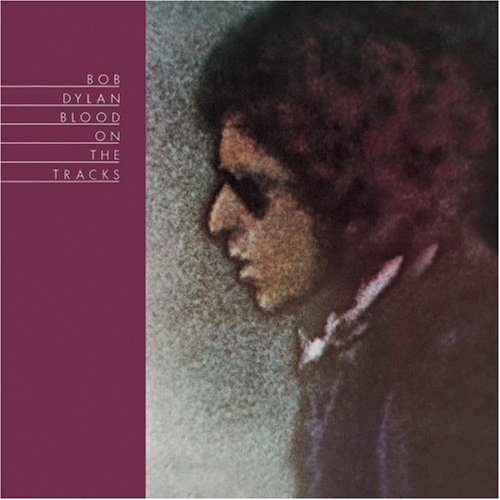
Bob Dylan's marriage to Sara Lownds was collapsing. He had spent the summer of 1974 studying painting with Norman Raeben in New York and had emerged with what he later called 'a new way of writing.' Ten songs of plain heartbreak and complicated time-travel, recorded in two cities. The mid-career rebirth.
- Released
- January 17, 1975
- Label
- Columbia Records
- Producer(s)
- Bob Dylan (uncredited) · Phil Ramone (assistant)
- Runtime
- 51:42 (10 tracks)
- Chart peak (US)
- #1 (Billboard 200, 2 weeks)
- Chart peak (UK)
- #4 (Record Retailer)
- Certifications
- 2× Platinum (RIAA); estimated 4M+ units globally
- Awards & honours
- Library of Congress National Recording Registry (2015); ranked #9 on Rolling Stone's 500 Greatest Albums (2020); Grammy Hall of Fame (2015)
Dylan's mid-career rebirth, recorded in two contradictory bursts, New York in September 1974 (intimate, acoustic, with one bassist) and Minneapolis in December 1974 (five Twin Cities studio musicians, fuller arrangements). The album that proved a 33-year-old songwriter could write better than his 22-year-old self.
By the summer of 1974, Bob Dylan was thirty-three years old, married to Sara Lownds for nine years, the father of five children, and not on speaking terms with his wife. He had spent the previous eighteen months on the road with The Band on the tour later documented as Before the Flood. He had returned to New York exhausted and creatively stuck. He spent the summer of 1974 studying painting with the Russian-born painter Norman Raeben, who had a studio above Carnegie Hall. Raeben's methods, focusing on time and perspective in painting, would influence Dylan's songwriting in ways he has discussed for fifty years. Dylan emerged in the autumn of 1974 with what he later called 'a new way of writing' and with a stack of songs about a marriage falling apart.
Recording began at A&R Studios in Manhattan on September 16, 1974. Dylan brought in Eric Weissberg's bluegrass band (Deliverance, the band that had recorded 'Dueling Banjos') as backing. Within hours he had decided Weissberg's full band was wrong; he sent everyone home except Weissberg's bassist Tony Brown. Over six days at A&R Studios, Dylan recorded most of the album with Brown on bass, occasional contributions from Paul Griffin (organ) and Buddy Cage (steel guitar). The arrangements were spare, acoustic-and-bass intimate. Dylan was satisfied; Columbia pressed test copies and prepared for a December release.
In late November 1974, Dylan listened to the test pressings at his brother David Zimmerman's home in Minneapolis. He decided the recordings were 'not finished.' He hired five Twin Cities studio musicians (Bill Berg on drums, Bill Peterson on bass, Chris Weber on guitar, Greg Inhofer on keyboards, Kevin Odegard on guitar) and re-recorded five of the album's ten songs at Sound 80 Studios in Minneapolis on December 27-30, 1974. The Minneapolis re-recordings, 'Tangled Up in Blue,' 'Idiot Wind,' 'You're a Big Girl Now,' 'Lily, Rosemary and the Jack of Hearts,' and 'If You See Her, Say Hello', replaced the New York versions on the final album. The other five tracks remained as originally recorded in New York.
The album that emerged is sonically inconsistent, the New York tracks are quiet and acoustic-bass-driven; the Minneapolis tracks are fuller, with organ and electric guitar, but the inconsistency works in the album's favor. The shifts between the two recording locations give the album an unintended documentary quality, as if the songs were captured at different moments in the breakdown of the same relationship. The lyrical content is plain to the point of nakedness: 'Tangled Up in Blue' opens the album with a non-linear narrative about a man's lifelong relationship with a woman, told in flashes from different perspectives; 'You're a Big Girl Now' is the album's most direct address to Sara; 'Idiot Wind' is an angry attack; 'Shelter from the Storm' is a love song; 'You're Gonna Make Me Lonesome When You Go' is a parting; 'Buckets of Rain' closes the album with quiet acceptance.
Released January 17, 1975, Blood on the Tracks reached #1 on the Billboard 200 within 4 weeks. The album restored Dylan's commercial position after the relatively underperforming Planet Waves and Self Portrait. Critics widely treated the album as his return to form; many subsequent rankings have placed it at the top of Dylan's catalog. Greil Marcus's contemporary review called it 'an album of conventional new songs that play like a major surprise.' Robert Christgau gave it an A+. The album has been continuously studied since.
Blood on the Tracks belongs at #25 because it is the album on which a songwriter at mid-career produced his most-sustained masterpiece, a 51-minute collection of plain-spoken heartbreak songs that are also Dylan's most-formally-ambitious work. The Raeben-influenced approach to time and perspective gives the songs ('Tangled Up in Blue' in particular) a non-linear structural complexity that no other rock-era album has matched. Without it there is no Joni Mitchell's Hejira, no Bruce Springsteen's Tunnel of Love, no Lucinda Williams's Car Wheels on a Gravel Road, no Phoebe Bridgers's Punisher. The album taught a generation of subsequent songwriters that a singer-songwriter LP could be both personally raw and formally ambitious at the same time.
Pressing guide — the one to own
Original 1975 US pressing, Columbia PC 33235, a single sleeve (no gatefold) with a coloured inner bag. The first-state back cover carries Pete Hamill's liner notes printed in black; those notes (which won a Grammy for Best Album Notes) were dropped on the second jacket and later reinstated in white type, so black-text notes are the true first marker. Separately, a handful of very early copies carry the rejected New York Side-two takes rather than the released Minneapolis re-recordings, identifiable by a '-1A' in the deadwax; those are the genuine prize and worth far more. Ordinary first pressings are inexpensive, but a clean sealed first-state copy can reach £250.