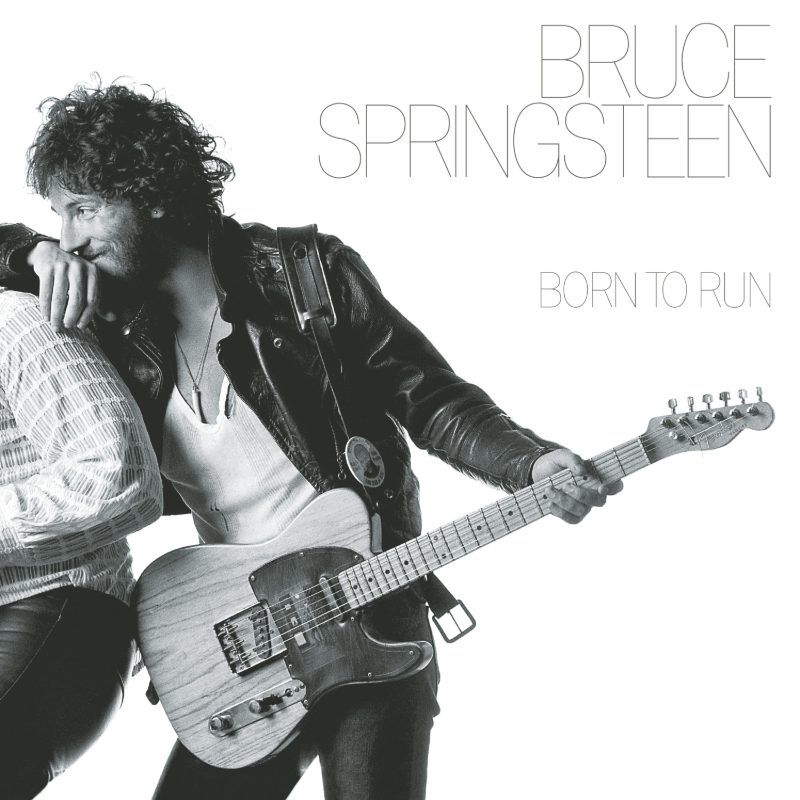
Bruce Springsteen at twenty-five, with two albums of jazz-folk-rock that had not broken commercially, locked himself in 914 Sound Studios and the Record Plant for fourteen months to make a single 'great rock and roll record.' The album that delivered.
- Released
- August 25, 1975
- Label
- Columbia Records
- Producer(s)
- Bruce Springsteen · Mike Appel · Jon Landau
- Runtime
- 39:30 (8 tracks)
- Chart peak (US)
- #3 (Billboard 200)
- Chart peak (UK)
- #17 (Record Retailer)
- Certifications
- 7× Platinum (RIAA); 8M units globally
- Awards & honours
- Library of Congress National Recording Registry (2003); ranked #21 on Rolling Stone's 500 Greatest Albums (2020)
Fourteen months at 914 Sound Studios. Roughly half a million dollars in recording costs, extraordinary for any 1975 rock album, and a financial gamble Columbia Records wasn't entirely willing to take. Eight songs across 39 minutes. The album that turned Bruce Springsteen from a regional Northeast act with two underperforming LPs and a label that was preparing to drop him into the simultaneous October cover of Time and Newsweek, and the album that made every subsequent debate about authenticity in American rock take Springsteen as its reference point.
By the spring of 1974, Bruce Springsteen had released two albums on Columbia Records, Greetings from Asbury Park, NJ in January 1973 and The Wild, the Innocent & the E Street Shuffle that November. Both had been admired by critics; neither had sold. Greetings had moved roughly 25,000 copies in its first year; The Wild had done modestly better at around 70,000. Columbia's A&R director Charles Koppelman had circulated a memo recommending Springsteen be dropped from the label after a third underperforming release. Springsteen was twenty-four years old, sharing a £300-a-month rental house in Bradley Beach, New Jersey with the woman who would later become his first wife, and writing songs that, in his own description, were intended to either save his career or end it. The first of these was a track he had been working on at the kitchen table since November 1973: 'Born to Run.'
Recording began at 914 Sound Studios in Blauvelt, New York in May 1974, initially with Mike Appel, Springsteen's manager and the producer of both previous LPs. 914 was an unglamorous Rockland County studio in a converted warehouse with a poorly-treated control room, an Ampex 16-track tape machine that engineer Louis Lahav had to coax through nightly, and acoustic problems that became their own production aesthetic. The title track alone took six months and somewhere between fifty and seventy overdubs to complete; Springsteen had a specific Phil Spector wall-of-sound in his head, multiple guitars panned across the stereo field, two organs, a glockenspiel, layered backing vocals, a saxophone solo recorded last, and wouldn't release the song until the mix matched what he was hearing. The track was finished in November 1974 and released as a promotional acetate to FM radio stations early in 1975, eight months before the rest of the album existed.
Jon Landau entered the project in May 1974. He had reviewed Springsteen's Cambridge Harvard Square Theatre show for Boston's Real Paper that April with the now-mythic line, 'I saw rock and roll future and its name is Bruce Springsteen.' Within weeks the line had been deployed in Columbia's marketing department; within months Landau had joined the project as a third producer alongside Appel. Landau's contribution was technical and editorial, he had spent years writing about Atlantic, Stax, and Phil Spector productions for Rolling Stone and Crawdaddy and brought a vocabulary the Springsteen-Appel partnership had lacked. The Landau-Appel relationship was hostile from the start; by mid-1976 it would end in a lawsuit that kept Springsteen out of the studio for nearly two years and produced the conditions out of which Darkness on the Edge of Town would eventually be made.
The E Street Band crystallized during the sessions into the lineup that would tour for the next four decades. Pianist David Sancious and drummer Vini Lopez left in August 1974; Roy Bittan and Max Weinberg auditioned together at SIR studios in New York and were hired before the day was out. Bittan's classical-trained piano became the album's primary harmonic engine, the rolling figures that open 'Thunder Road' and underpin 'Jungleland' are his contributions, and Bittan's right hand carries more of the album's melodic weight than the rhythm section that supposedly anchors it. Clarence Clemons had been the band's saxophonist since September 1972 and had developed the working relationship with Springsteen that the album would mythologize as the 'Big Man' partnership. Garry Tallent on bass, Danny Federici on organ, and Steven Van Zandt on guitar (the last brought in during the sessions to arrange the horn charts on 'Tenth Avenue Freeze-Out') completed the band.
The album's eight songs are a deliberate survey of Springsteen's romantic-American-myth vocabulary. 'Thunder Road' opens with the Mary-on-the-porch screen-door narrative, a four-minute-forty-eight-second opening track in an era when opening tracks rarely cleared three. 'Tenth Avenue Freeze-Out' is the E Street Band's origin story rendered as a Stax pastiche, with Clarence Clemons becoming 'the Big Man' in the lyric. 'Night' is a four-on-the-floor working-class portrait, the shortest cut on the record. 'Backstreets' is the side-one closer, with one of the most-cited Springsteen vocal performances; Roy Bittan's piano in the verses sits behind the beat in a way Bittan has rarely repeated since. 'Born to Run' opens side two as the album's anthem and its first commercial single, released in July 1975, it peaked at US #23, the highest-charting Springsteen single to that point. 'She's the One' uses the Bo Diddley beat as foundation. 'Meeting Across the River' is the album's quietest moment, trumpet by Randy Brecker, lyrics delivered from the perspective of a small-time hustler asking his friend for a ride. 'Jungleland' closes the record with a nine-and-a-half-minute epic and Clarence Clemons's most-cited saxophone solo at the four-and-a-half-minute mark, a solo Springsteen and Clemons worked on across two nights of overdubs.
The release on August 25, 1975 was followed two months later by the famous October 27 simultaneous covers of Time and Newsweek, engineered partly by Columbia's PR department under Ron Oberman and partly by genuine Springsteen-fatigue building in both magazines' editorial staffs after months of competing pitches. The double-cover week became its own cultural-argument event; many critics, particularly Henry Edwards in the New York Times, turned on Springsteen on the grounds that the hype couldn't possibly be justified. Sales went the opposite direction. Born to Run sold its first million copies by Christmas, reached US #3 (held off the top spot by John Denver and Elton John), and stayed on the Billboard 200 for 110 consecutive weeks. The critical backlash took two years to fully recede; by Darkness on the Edge of Town in June 1978, Springsteen had restored his standing on tougher terms, but Born to Run remained the commercial reference point, and remains it.
Born to Run belongs at #31 because it is the album on which a twenty-five-year-old singer-songwriter from Freehold, New Jersey, with two commercially disappointing records behind him and a label that had been about to drop him, locked himself in an upstate New York studio for fourteen months and produced the maximalist American-rock statement that would define mainstream rock songwriting for the next four decades. Every War on Drugs, Gaslight Anthem, Killers, Hold Steady, Japandroids, and Arcade Fire album that takes the working-class-American-romance-as-rock-song seriously is downstream of decisions Springsteen and Landau made in the 914 control room in autumn 1974. The album's 110-week chart run, the seven Platinum certifications by the RIAA, and the 2003 induction into the Library of Congress National Recording Registry are institutional ratifications of a position the music itself had already secured by the end of the 1970s. The album also produced the working partnership, Springsteen, Landau, the E Street Band, that has sustained one of the longest continuous touring careers in popular music.
Pressing guide — the one to own
Original 1975 US pressing on Columbia (not 'CBS'), catalog PC 33795 (the JC 33795 prefix is a later-1970s reissue), in the famous gatefold sleeve with the Eric Meola wraparound photograph of Springsteen leaning on Clarence Clemons. The genuine first-state markers are pressing errors on the back cover: the producer is credited as 'John Landau' (later corrected to 'Jon'), and the string credit on 'Jungleland' is absent, both added or fixed on subsequent runs. Original copies show 'MCR' (Columbia mastering) and a plant-code letter such as 'P' for Pitman etched in the deadwax.