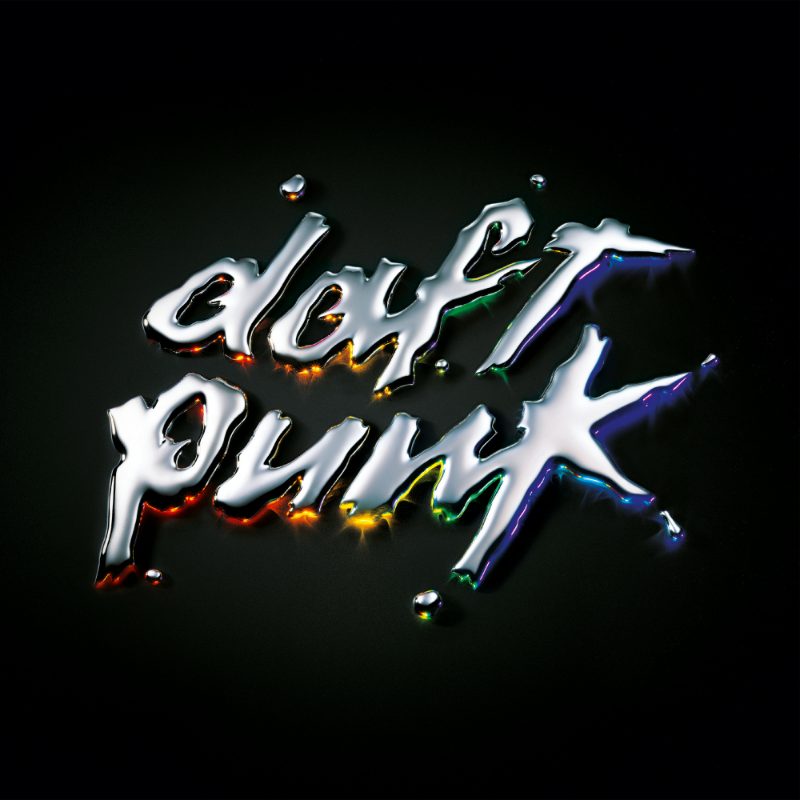
Fourteen tracks in 61 minutes. Recorded across approximately three years at Daft Punk's home studio in Paris and at Daft House in their suburb of Saint-Cloud, with Thomas Bangalter and Guy-Manuel de Homem-Christo self-producing. The duo's second LP, the deliberate disco-and-yacht-rock revivalism that converted them from anonymous Parisian house producers into the masked-cybernetic-duo brand that has defined commercial-electronic-pop for two decades.
- Released
- March 12, 2001 (UK); March 13, 2001 (US)
- Label
- Virgin Records (UK, V2940); Virgin Records / Soma (FR)
- Producer(s)
- Thomas Bangalter · Guy-Manuel de Homem-Christo
- Runtime
- 60:46 (14 tracks)
- Chart peak (US)
- #44 (Billboard 200)
- Chart peak (UK)
- #2
- Certifications
- Platinum (BPI, 2007); Platinum (RIAA, 2017); Diamond (SNEP France, 2024)
- Awards & honours
- Grammy nomination Best Electronic/Dance Album (2002, lost to Garbage); Ivor Novello Award; ranked #235 on Rolling Stone's 500 Greatest Albums (2020)
Fourteen tracks in 61 minutes. Recorded across approximately three years at Daft Punk's home studio in Paris and at the Daft House facility in Saint-Cloud, with Thomas Bangalter and Guy-Manuel de Homem-Christo self-producing and the disco-and-yacht-rock sample-source library that would define commercial French house. The duo's second LP, the deliberate-revivalist statement that converted them from anonymous Parisian house producers into the masked-cybernetic-duo commercial-pop brand that has defined electronic music for two decades.
Thomas Bangalter and Guy-Manuel de Homem-Christo had been making music together since 1992 when they were twelve-year-old Lycée Carnot classmates in Paris. Their first project, Darlin' (a shoegaze-leaning rock band), had received a dismissive Melody Maker review in 1993 that called the trio 'a daft punky thrash', they took the phrase as their next band's name. The first Daft Punk single 'The New Wave' came out on Soma Quality Recordings in 1994; the second single 'Da Funk' in 1995 became a UK and US club hit. Their debut LP Homework (January 1997, Virgin) had reached UK #3 and consolidated them as the leading French house duo of the late 1990s.
Discovery's sessions began in late 1998 at the duo's home studio in Paris and continued through 1999-2000 at Daft House, a converted facility in Saint-Cloud, a Parisian suburb, that they had built specifically for the project. The conceptual frame was deliberate and unusual: rather than extending Homework's grittier-club-techno vocabulary, the duo decided to make a deliberately-revivalist disco-and-yacht-rock album that would sound like the late-1970s pop their childhoods had been formed in. Bangalter has said in interviews that the album's central reference was 'the way music sounded when we were five years old', the late-1970s and very-early-1980s commercial pop of Paris radio.
The sample-source library Bangalter and de Homem-Christo assembled for Discovery is the album's central creative decision. Eddie Johns ('More Spell on You,' 1979), George Duke ('I Love You More,' 1979), Edwin Birdsong ('Cola Bottle Baby,' 1979), Little Anthony & the Imperials, Tavares, Barry Manilow, the Imperials, a list of late-1970s commercial-pop and yacht-rock acts that had never previously been treated as sample-worthy. The duo cleared every sample formally, a substantial financial cost, and built the album's tracks around the cleared source loops. The cleared-sample approach is the opposite of the Aphex Twin / Daft Punk Homework-era uncleared-sample tradition.
Romanthony, the New Jersey deep-house producer Anthony Moore, contributed lead vocals to 'One More Time' and 'Too Long.' His vocal on 'One More Time,' recorded at Daft House in mid-1999 and pitched and treated through the duo's signature vocoder vocabulary, became one of the most-recognizable opening gestures in twenty-first-century commercial pop. Romanthony died of complications from kidney disease in May 2013; his vocal on 'One More Time' is the central reason the album has had the sustained commercial trajectory it has had.
The album's fourteen tracks across 61 minutes are sequenced to function as both a coherent listening LP and a continuous-mix DJ document. The opening 'One More Time' / 'Aerodynamic' / 'Digital Love' / 'Harder, Better, Faster, Stronger' four-track run is the album's pop-hit spine, four singles in continuous sequence, each tracking into the next without significant pause. The album's second half moves toward more atmospheric instrumental material ('Nightvision,' 'Veridis Quo,' 'Short Circuit') before closing with the ten-minute Romanthony-led 'Too Long' as deliberate extended-club closer.
Virgin released the album on March 12, 2001. UK chart entry at #2, the duo's UK commercial peak, was the first signal that the deliberate-revivalist gamble had succeeded. The album reached US #44, sold over a million copies worldwide within twelve months, and produced five Top-25 UK singles. Critical reception was unanimous; Pitchfork's Brent DiCrescenzo gave the album 9.0/10, NME's Jeremy Allen called it 'a perfect pop record,' Q Magazine's Andrew Harrison treated it as the canonical electronic-pop LP of the early 2000s. The duo's anonymity, they had begun wearing robot helmets in public appearances from 1999 onwards, became part of the album's marketing.
The Interstella 5555: The 5tory of the 5ecret 5tar 5ystem anime film (Toei Animation, supervised by Leiji Matsumoto) was released in May 2003 as a visual companion to the album, every track scored as continuous animation. The film was screened at Cannes in 2003 and released theatrically; it converted the LP's narrative-implication into explicit visual storytelling. The film's commercial life has been modest but its presence in the album's reception has been substantial; Discovery is one of the few twenty-first-century commercial-pop LPs with a feature-length anime accompaniment.
Discovery belongs at #85 because it is the album that converted the late-1990s French house tradition into a sustained commercial-pop vocabulary and proved that deliberate disco-and-yacht-rock revivalism could deliver platinum-level commercial outcomes a quarter-century after the source-music's commercial moment. The 2007 Kanye West 'Stronger' sample of 'Harder, Better, Faster, Stronger' returned the album to commercial prominence and inaugurated a chipmunk-soul-applied-to-French-house feedback loop. Every commercial-electronic-pop LP of the subsequent two decades, LCD Soundsystem's catalogue, M83's Hurry Up We're Dreaming (2011), Disclosure's Settle (2013), Justice's Cross (2007), Random Access Memories (Daft Punk's own 2013 follow-up that won Album of the Year), Dua Lipa's Future Nostalgia (2020), runs on the proof Discovery delivered. The album's sustained streaming presence (~12.6M monthly Spotify in 2026, twenty-five years after release) confirms the canonical-text status.
Pressing guide — the one to own
Original 2001 European pressing on Virgin, 2xLP gatefold, catalog V2940 (also carrying 8496061 / 7243 8496061 2). It is a European, French-plant pressing — the deadwax is stamped MPO, not a UK issue — with full printed inner sleeves carrying lyrics and credits, plus a Daft Club card insert. Lacquers were cut by Nilesh Patel ("NiLZ") at The Exchange in London, etched verbatim as "MPO ... NiLZ - THE EXCHANGE." Cédric Hervet is one of several art-direction credits rather than the sole designer. Clean originals trade around $90–150.