
№ 48 of 100
Graceland
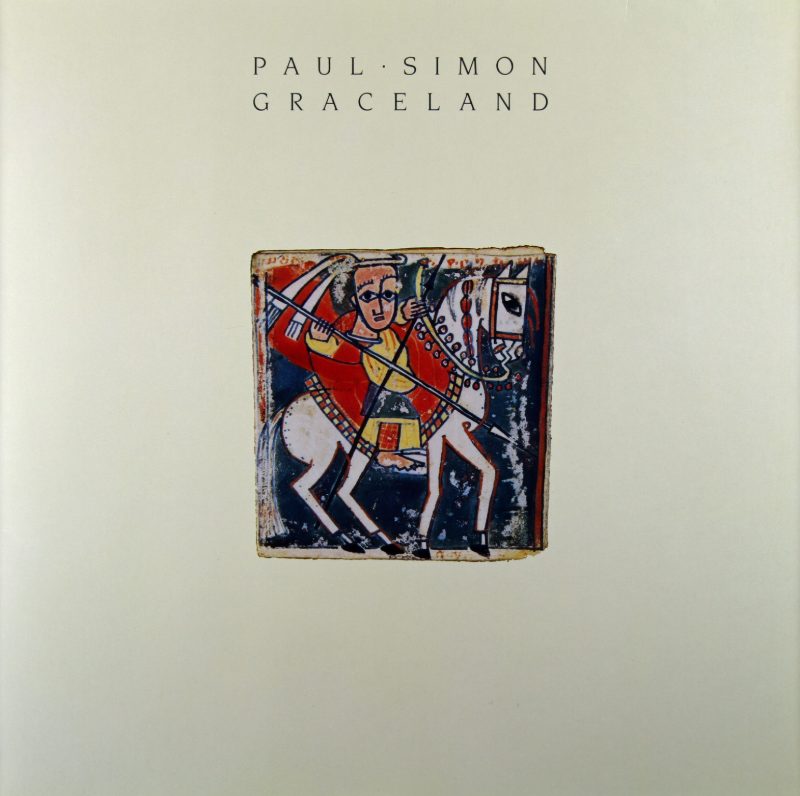
Graceland by Paul Simon (1986), № 48 in The Lead-In’s 100 greatest albums. Paul Simon broke the UN cultural boycott to record with Ladysmith Black Mambazo. The argument has never settled and the record has never lost.
Graceland by Paul Simon (1986), № 48 in The Lead-In’s 100 greatest albums. Paul Simon broke the UN cultural boycott to record with Ladysmith Black Mambazo. The argument has never settled and the record has never lost.
Paul Simon's seventh solo album. Recorded with South African musicians during apartheid-era cultural boycott. Released August 25, 1986.
Eighteen months across Ovation Studios in Johannesburg, the Hit Factory in New York, and Master Sound in Los Angeles with Paul Simon co-producing with Roy Halee. Eleven tracks across 43 minutes. The album that turned a forty-five-year-old Paul Simon, four years past his last commercial peak and trying to recover from the failure of 1983's Hearts and Bones, into the bestselling solo artist of his career, the album that introduced mainstream American audiences to South African mbaqanga and isicathamiya, and the album whose political controversy has shaped every subsequent debate about cross-cultural musical collaboration.
Paul Simon had spent the early 1980s in commercial decline. After the eight-million-selling success of his self-titled 1972 album, There Goes Rhymin' Simon (1973), Still Crazy After All These Years (1975), and the Streets of New York / 'Slip Slidin' Away' singles, Simon's commercial trajectory had peaked at the 1975 Album of the Year Grammy and steadily declined through the late 1970s. The 1980 album One-Trick Pony, released alongside the Simon-written and -starring film of the same name, was a commercial disappointment. The 1983 Hearts and Bones (originally planned as a Simon & Garfunkel reunion album but completed as a Simon solo album after the reunion plans collapsed) had been Simon's worst commercial performance to that point. He was forty-three years old when Hearts and Bones failed, and the conventional pop-singer-songwriter approach that had sustained his career for two decades was visibly exhausted.
South African musicologist Hilton Rosenthal had sent Simon a cassette tape in late 1984 of a compilation called Gumboots: Accordion Jive Hits, Volume II, a collection of mbaqanga (South African urban dance music) recordings by the Boyoyo Boys and others. Simon listened to the tape continuously through autumn 1984 in his Manhattan apartment and developed a sustained obsession with the music's specific rhythmic and harmonic vocabulary. Through Rosenthal, Simon arranged to fly to Johannesburg in February 1985 to record with the musicians he had been listening to. The trip was conducted in deliberate defiance of the UN cultural boycott of South Africa, the African National Congress had specifically blacklisted artists who recorded with South African musicians under apartheid, on the grounds that international isolation was the movement's central strategy. Simon's decision to go has been argued about for forty years; what is documented is that he traveled with the explicit approval of South African Black-musician union representatives (though not with ANC approval) and that he paid musicians triple union scale plus full songwriting credit and royalty participation.
Recording at Ovation Studios in Johannesburg in February 1985 produced the album's instrumental tracks. Simon spent approximately 3 weeks at Ovation working with mbaqanga musicians including the Boyoyo Boys (the instrumental track for what would become 'Gumboots' was actually licensed from their 1982 recording 'Gumboots / Accordion Jive'), Tao Ea Matsekha, General M.D. Shirinda's Gaza Sisters, the Real Sounds of Africa, Stimela, and Forere Motloheloa (the accordion player whose specific tones distinguish 'The Boy in the Bubble'). The recording approach was deliberately collaborative, Simon would attend rehearsals, watch the bands play their typical material, and ask them to play extended jams over which he would later add English-language vocals in New York. The South African musicians were credited as co-writers on multiple tracks (including 'Diamonds on the Soles of Her Shoes' and 'Homeless') and received full royalty participation through the album's lifetime. The financial arrangements have been documented as generous; the political question of whether the trip should have been made at all remains contested.
Recording continued in New York and Los Angeles across 1985 and into 1986. Simon brought Joseph Shabalala and Ladysmith Black Mambazo, the South African isicathamiya vocal group whose specific male-voice harmony tradition Simon had become fascinated with, to the Hit Factory in New York in May 1985 for the vocal overdubs on 'Homeless' (which Simon co-wrote with Shabalala) and additional tracks. The collaboration was structured to give the South African musicians full songwriting credit and royalty participation, unusual for the era and significant given the political stakes. Ladysmith Black Mambazo's career launched internationally from this collaboration; the group has gone on to win five Grammys of their own and become one of the most internationally recognized South African musical exports of the post-apartheid era.
Additional sessions added other collaborators. Linda Ronstadt sang on 'Under African Skies' (recorded in Los Angeles in autumn 1985). The Everly Brothers (Don and Phil Everly, reunited specifically for the session after their decade-long estrangement) sang backing vocals on 'Graceland' (the title track) at the Hit Factory in spring 1986. Los Lobos performed on 'All Around the World or the Myth of Fingerprints' (recorded in Los Angeles in 1986), and would later sue Simon over alleged uncredited use of their own composition. Adrian Belew (then in King Crimson) played guitar on multiple tracks. Tao Ea Matsekha provided the underlying instrumental track for 'I Know What I Know.' The cross-collaboration approach made the album's specific musical vocabulary cross multiple genre boundaries simultaneously.
The album was released on August 25, 1986. The political response was immediate and substantial. ANC representatives in London publicly criticized the album for breaking the cultural boycott; the United Nations cultural-boycott committee issued statements distancing themselves from the album; Hugh Masekela (the South African expatriate trumpeter living in the US) publicly criticized the album initially before subsequently endorsing it after meeting Simon. Bono publicly defended Simon's approach; Steven van Zandt of the Sun City project (Artists United Against Apartheid, which had recorded its own anti-apartheid album in 1985) was more critical. The album's commercial response, despite the political controversy, was enormous. Graceland reached US #3 and UK #1; first-year sales were approximately 5 million units; the album won Album of the Year at the 1987 Grammys (Simon's second). Total worldwide sales: approximately 16 million units.
Graceland belongs at #48 because it is the album that proved a Western pop star could collaborate with non-Western musicians at the highest level, pay them generously, credit them as co-writers, and still face accusations of cultural extraction. The political argument the album sparked in 1986 is, in 2026, the argument every cross-cultural musical collaboration still has to navigate; Graceland is the foundational text on both sides. The album's continued commercial life (still over a million copies sold every decade since release), the careers it launched for the South African musicians involved (Ladysmith Black Mambazo's subsequent four-decade international career is the most direct case), and the political clarity it ultimately provided about apartheid as a system, all coexist with the legitimate questions about whether the specific 1985 trip should have been made at all. Nelson Mandela's release from prison in February 1990 and his subsequent presidency began the post-apartheid era; Mandela publicly endorsed Graceland as having helped build international sympathy for the anti-apartheid cause. The argument continues; Simon's record exists. The Library of Congress added Graceland to the National Recording Registry in 2007.
1986 US first pressing, Warner Bros. 25447-1 with the famous Antonio Hernández Sosa Mexican religious-folk-art cover (a stylized horse-and-rider painted folk art image; the same Hernández Sosa painting was used for the album's South African press releases). Look for the matrix etchings 25447-A1 / B1, hand-etched at Warner Bros. Burbank by Mike Reese. The original gatefold (some US pressings) includes the printed inner sleeve with the full personnel credits and lyrics, plus an explanatory essay by Simon about the album's making.
© The Lead-In · an independent, reader-supported music publication.