
№ 4 of 100
Kind of Blue
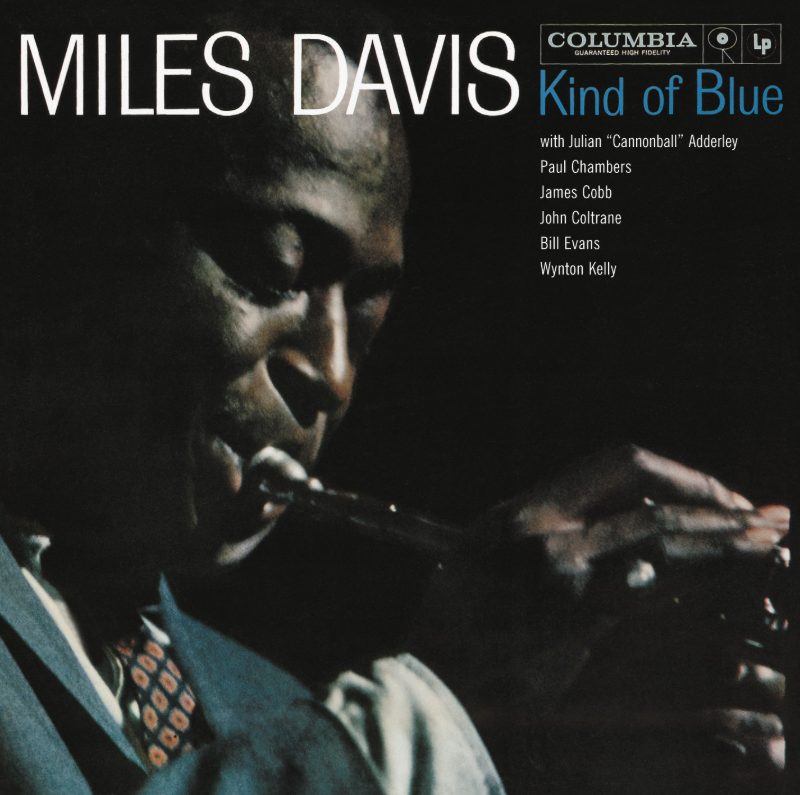
Kind of Blue by Miles Davis (1959), № 4 in The Lead-In’s 100 greatest albums. The blueprint. If jazz had a North Star, it rotates around this record.
Kind of Blue by Miles Davis (1959), № 4 in The Lead-In’s 100 greatest albums. The blueprint. If jazz had a North Star, it rotates around this record.
The bestselling jazz album in history. Two recording dates, six musicians, five sketches the band saw for the first time when the tape was already rolling, and a new language for improvisation that the next sixty-five years of music has been speaking ever since.
Miles Davis arrived at Columbia's 30th Street Studio on the morning of March 2, 1959, with five handwritten modal sketches and a sextet that had not rehearsed them. They cut three tracks that day. 6 weeks later they returned and cut the other two. The album that emerged is the closest popular music has come to a perfect object.
By 1959 Miles Davis had been the most important trumpeter in jazz for nearly a decade. He had recorded Birth of the Cool with Gil Evans, the Prestige marathon sessions that produced Cookin', Relaxin', Workin', and Steamin', and the orchestral collaborations Miles Ahead and Porgy and Bess. His sextet, John Coltrane, Cannonball Adderley, Bill Evans or Wynton Kelly, Paul Chambers, Philly Joe Jones or Jimmy Cobb, was the most accomplished small ensemble in jazz. They had cut Milestones in 1958, and the title track had begun the experiment Kind of Blue would complete.
The experiment was modal playing. Bebop had been the dominant jazz language since Parker, and bebop was a chord-changes music: improvisers sprinted through progressions that often shifted every two beats. Davis had been listening to George Russell, whose 1953 Lydian Chromatic Concept had proposed organizing improvisation around modes, scales centered on a single tonic, rather than around chord changes. He had been listening to Bill Evans, who had studied with Russell directly and could explain in pianistic terms what Russell was arguing. And he was thinking about what jazz would sound like if it stopped sprinting and started lingering.
He brought Evans back into the band for the recording dates even though Evans had left six months earlier. He wrote, sketched, really, five compositions in collaboration with Evans in the weeks before the sessions. They were chord-symbol and modal frameworks on lead sheets, not full scores. The band saw them for the first time on March 2.
The recording event lasted about 9 hours across two days, 6 weeks apart. Almost every track is the first complete take. Davis's stated principle, articulated to engineer Fred Plaut and producer Irving Townsend before the session: spontaneity. He did not want anyone to over-prepare. He played each composition briefly at the piano, walked the band through the head, and counted off. Most of the released tracks are first or second takes. The exceptions are 'Freddie Freeloader' (the 12-bar blues with Wynton Kelly subbing for the still-arriving Evans) and 'Flamenco Sketches' (which has a famous false-start alternate, misidentified as the master for decades).
What is happening across the five tracks is something no jazz record had done before and few have done since: extended modal improvisation that retains bebop's structural discipline while abandoning its harmonic urgency. 'So What' is built on two modes, D Dorian for sixteen bars, E-flat Dorian for eight, D Dorian for eight, repeated every chorus. The soloist's only obligation is to honor those modes melodically. The result is the most melodically inventive Davis solo on tape, the most exploratory Coltrane on tape, the most lyrical Cannonball on tape, all on one track. 'Blue in Green' is a ten-bar form by Evans (the composition credit dispute has run sixty years; Evans was the principal composer) of unparalleled gravity. 'All Blues' is a 12-bar blues in 6/8, the modal-blues experiment that would seed the entire 1960s 'sheets of sound' direction Coltrane took. 'Flamenco Sketches' is the album's most radical track, five modes, each played as long as the soloist chooses, no fixed bar count.
Bill Evans wrote the liner notes for the original LP. He compared the recording approach to sumi-e ink painting, the artist must execute the work in one continuous gesture, without correction, the white space of the paper as important as the ink. Whether the analogy is fair to either tradition is a longer argument; it is the right analogy for Kind of Blue. The takes are gestures, not constructions. The musicians are playing the music once in real time and Columbia is printing the result.
Why this ranks at four and not higher: because Kind of Blue invents a new jazz, while the three albums above it (What's Going On, Pet Sounds, Revolver) are inventing a more contested kind of pop. The records on this list are competing across genres for the same prize, what is the single most important album of the modern recording era? Kind of Blue invented the language of modal jazz in 3 hours of work and changed how every subsequent jazz musician approached the question. The records above changed how pop music understood politics, arrangement, songform. The inventions are not directly comparable. But if you asked any working musician in 2026 to name the album they would save in a fire, Kind of Blue would beat all three. It is the album every musician knows. It is the album where the most important question in modern music, what happens when you stop running and start listening, was asked and answered, in real time, on tape, with no second take.
Original 1959 US mono, Columbia CL 1355, on the grey 'six-eye' label with Jay Maisel's cover photo. The true first-press matrix is XLP 47324 (side 1) / XLP 47325 (side 2) with early '1A'–'1C' stamper letters—not '49902/49903'—and the earliest copies also carry the side-two label track-listing error. Note both stereo (CS 8163) and mono play sharp on side one because three tracks were recorded with the tape machine running slow; mono is not a 'correct-speed' reference. The pitch was only fixed on 1990s+ digital remasters.
© The Lead-In · an independent, reader-supported music publication.