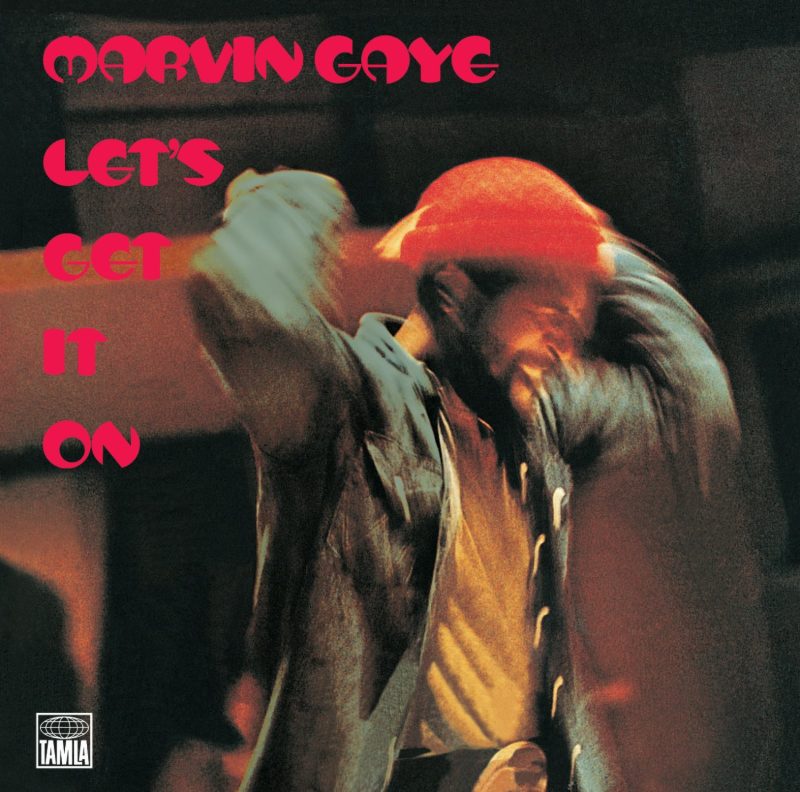
Eight tracks in 31 minutes. Recorded across approximately fourteen months at Hitsville West in Los Angeles and Hitsville USA in Detroit with Marvin Gaye self-producing alongside Ed Townsend. The follow-up to What's Going On, and the album that converted Gaye's social-conscience register into something explicitly carnal, and proved that adult-soul as a sustained commercial form was possible in the same chart year that gave us 'Tie a Yellow Ribbon.'
- Released
- August 28, 1973
- Label
- Tamla / Motown (US, T 329V1)
- Producer(s)
- Marvin Gaye · Ed Townsend
- Runtime
- 31:14 (8 tracks)
- Chart peak (US)
- #2 (Billboard 200, October 1973)
- Chart peak (UK)
- #39
- Certifications
- 2× Platinum (RIAA, 1999)
- Awards & honours
- Library of Congress National Recording Registry (2003); ranked #167 on Rolling Stone's 500 Greatest Albums (2020); Grammy Hall of Fame (2004)
Eight tracks in 31 minutes. Recorded across roughly fourteen months at Hitsville West in Los Angeles and Hitsville USA in Detroit with Gaye self-producing alongside Ed Townsend. The album that took What's Going On's social-conscience register and converted it, by deliberate decision, into the most explicitly carnal commercial-soul record any major label had released to that point, and proved that adult-themed soul could top the Billboard 200.
Marvin Gaye in late 1972 was thirty-three years old, two years past What's Going On's commercial-critical peak, and in a structural crisis. His marriage to Anna Gordy Gaye, Berry Gordy's older sister, the closest thing Gaye had to a family connection inside Motown, was effectively over; he had begun a relationship with seventeen-year-old Janis Hunter that summer in Los Angeles. His Trouble Man soundtrack (December 1972) had been a contractual obligation he had finished in 2 weeks. The Detroit-to-LA migration Motown had executed in mid-1972, Berry Gordy moving the operation to a new Hitsville West facility at 6464 Sunset Boulevard, had left Gaye between two studios and two band rosters. He was contractually obligated to deliver an LP by mid-1973; he had nothing finished.
Ed Townsend entered the project in spring 1972. Townsend was forty-four years old, a Memphis-born singer-songwriter and producer who had had a US #13 single ('For Your Love,' 1958) and had spent the intervening fifteen years writing for Atlantic, Stax, and Motown placements. He arrived at the Hollywood Hills house Gaye was renting with a song called 'Let's Get It On', written originally as a self-affirmation about Townsend's own recent recovery from substance dependency, with religious imagery in the lyric. Gaye rewrote the lyric over a single afternoon, replacing the religious frame with a sexual one, and the song's hook was set. The rest of the album was assembled around it.
Recording extended from approximately April 1972 to June 1973, split between Hitsville West (the new LA facility) and Hitsville USA's Studio A on West Grand Boulevard in Detroit. The Funk Brothers, Detroit's Motown house band, flew to LA for the principal sessions; James Jamerson on bass, Earl Van Dyke on keys, Robert White on rhythm guitar. The LA sessions added Joe Sample (Crusaders), Eddie 'Bongo' Brown on percussion, and Wilton Felder. Gaye self-produced; Townsend supervised arrangements; the engineering team (Lawrence Miles in LA, Cal Harris in Detroit) tracked direct-to-tape with minimal overdubs after the basic tracks were down. The album's eight songs were chosen from roughly thirty candidates recorded across the fourteen months.
What's Going On had ended with a question. Let's Get It On answers it. The Vietnam-and-civil-rights register of 1971 had become the post-Watergate intimate register of 1973, and Gaye's specific contribution was to demonstrate that the same vocal authority that had narrated 'Mercy Mercy Me' could narrate 'You Sure Love to Ball' without the artist losing the cultural standing What's Going On had bought him.
The album's structure is unusual. Side one's four tracks are sequenced as a single concentrated argument: the title-track manifesto, the pleading 'Please Stay,' the mortality-framed 'If I Should Die Tonight,' and the closing sequel 'Keep Gettin' It On.' Side two opens with the album's only uptempo number ('Come Get to This'), the emotional peak ('Distant Lover'), the most carnal lyric ('You Sure Love to Ball'), and a private letter to Anna Gordy Gaye as closer. The eight tracks total just over 31 minutes, short for a 1973 LP, but Gaye and Townsend resisted Motown's preference for the standard ten-to-twelve-track album.
The cover photograph, Gaye in a black knit cap and red shirt, the lower edge of the frame cropped at the lapel, his expression somewhere between solicitation and benediction, was shot by Jim Britt at the Hollywood Hills house in July 1973. The deliberately direct gaze was chosen by Gaye over alternative frames Britt had submitted in which Gaye looked away. The cover became the visual that the album's reception attached to: an artist who had spent the previous decade in suit-and-tie publicity shots now staring straight into the buyer's eyes.
Tamla released the album on August 28, 1973 with the title track already at US #1. The LP debuted on the Billboard 200 at #28 the week of September 22 and climbed to #2 by October 13, held off #1 by Elton John's Goodbye Yellow Brick Road. It reached US R&B #1 in October and held there for 11 weeks. The album sold approximately one million copies by Christmas 1973; the title-track single sold approximately three million in the same window. Black radio embraced the album entirely; AM Top-40 programmers played the title track edited or refused to play it at all in conservative markets.
Let's Get It On belongs at #81 because it is the record that converted soul music's social-conscience register into a sustained adult-romantic vocabulary without losing the cultural seriousness What's Going On had established. Every adult-R&B album of the subsequent four decades, Stevie Wonder's late-'70s catalogue, Luther Vandross, Sade, Maxwell, D'Angelo, The Weeknd's quieter records, Solange, descends from the specific decision Gaye and Townsend made to treat sex as a subject of the same dignity as politics. The album's commercial reception (US #2, R&B #1 for 11 weeks, two million-plus LPs in 1973-74, RIAA 2× Platinum by 1999) proved the proposition financially. The 2003 Library of Congress induction ratified it institutionally.
Pressing guide — the one to own
Original 1973 US pressing, Tamla T 329V1, in a gatefold sleeve with Jim Britt's red-cap portrait on the front. The catalog number, label and gatefold are correct, but the claimed runout is not: there is no "ARP / American Record Pressing" signature and no Detroit-plant matrix. The documented first-press plants are Hollywood (deadwax base C5RS-7950/7951, stamped "H"), Monarch (delta numbers, T54234 base) and Indianapolis. A multi-million seller, so clean originals are common and trade roughly in the $25–60 range.