
№ 9 of 100
London Calling
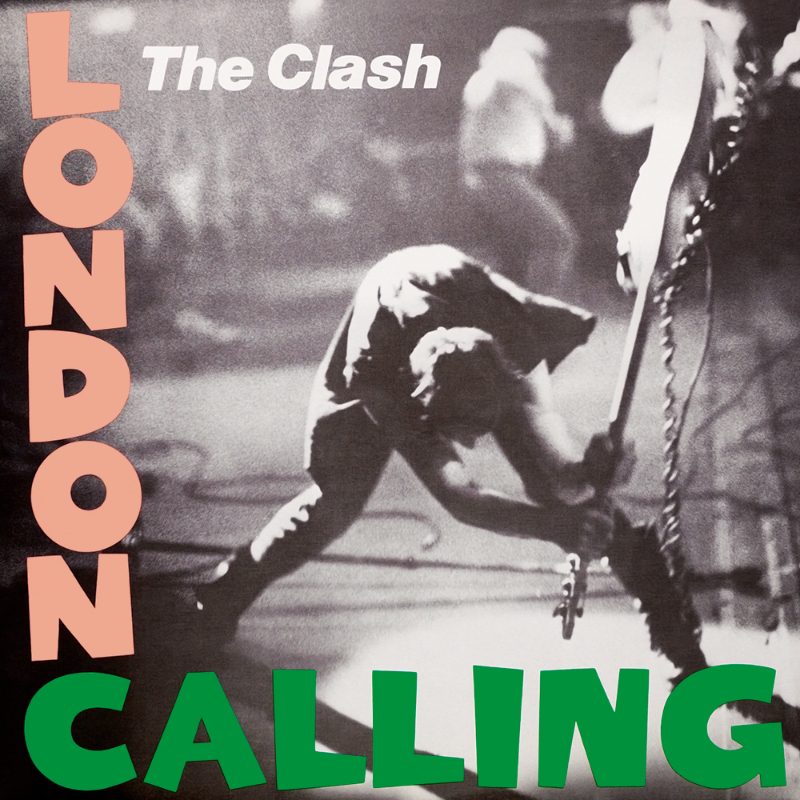
London Calling by The Clash (1979), № 9 in The Lead-In’s 100 greatest albums. The first album where punk learned that punk could be anything. Strummer and Jones treated the whole century as their record collection.
London Calling by The Clash (1979), № 9 in The Lead-In’s 100 greatest albums. The first album where punk learned that punk could be anything. Strummer and Jones treated the whole century as their record collection.
Four months after Margaret Thatcher took office. Four months before the new decade began. A four-piece London punk band locked itself in a Highbury studio with a drunk genius producer and made the album that ended the closed system of British punk and reopened it as a continent.
A double album of nineteen songs in nine genres, recorded in 10 weeks by a band that was supposed to be a punk band, produced by a man who poured beer over the mixing console and threw chairs at the wall. The album that proved punk's first wave had been a beginning, not an ending.
By the spring of 1979 the British punk movement was nineteen months old and already exhausted. The Sex Pistols had broken up on January 14, 1978, in San Francisco. Sid Vicious had died on February 2, 1979, in New York. The Damned had split, reformed, and split again. The Buzzcocks were making third albums. The press had moved on to whatever was next, post-punk in Manchester, ska revivalism in Coventry, new wave anything anywhere. The Clash were caught between waves. Give 'Em Enough Rope, their 1978 second album, had been a deliberate American-arena rock record produced by Sandy Pearlman of Blue Öyster Cult, and it had alienated their UK punk base without quite winning over the Americans. They were on tour, broke, in debt to CBS for studio time, and about to make a record their label very specifically didn't want.
What CBS wanted was a third punk album. What the Clash wanted to make was every kind of album except a third punk album. Joe Strummer had been listening to old reggae records and to Bob Marley's Exodus and to Lee Perry's productions. Mick Jones had been listening to The Sonics and Mott the Hoople and Phil Spector. Paul Simonon, the bassist, had been listening to Jamaican rocksteady almost exclusively for two years. Topper Headon, the drummer, had grown up on jazz and could play any pattern any of them named. They moved into a rehearsal space called Vanilla Studios in Pimlico, a converted garage with a single light bulb and a broken toilet, and over 6 weeks in June and July they wrote and arranged thirty songs. Many were in genres their UK punk audience had never heard them play.
Then they hired Guy Stevens. Stevens was a forty-year-old former Island Records A&R man who had named Procol Harum, signed Mott the Hoople, and discovered Free, and who by 1979 was a fully-formed alcoholic with violent mood swings and an inability to be in a room without breaking something in it. CBS executives begged the band to reconsider. The Clash had Stevens's name on every demo and would not budge. They moved into Wessex Sound Studios in Highbury, a converted church with a high ceiling and a Helios mixing desk that had previously been used for Queen's News of the World, on August 1, 1979. Stevens arrived the same day with a case of beer and a pair of cymbals he claimed to have stolen from Keith Moon's drum kit. Within 2 weeks he had poured beer over the console, thrown a chair at a window, and swung a ladder at Mick Jones during a take. The takes are on the record. They are some of the best takes of the band's career.
What Stevens did, according to the band's later accounts, was extract the live energy of a band that had been polishing itself toward a competent professionalism it did not need. He insisted on first takes. He banned headphone mixes. He had Strummer record vocals while running laps around the studio. He kept the engineer (Bill Price, who would later mix the album alone) sober enough to capture what was happening on tape. The result is a record that, despite being a double LP across nineteen songs and nine genres, has the audible heat of a band playing in a single room: 'Brand New Cadillac,' tracked in two takes because the band only ever rehearsed it as a warm-up; 'Death or Glory,' with Strummer's vocal nearly off-mic in the second chorus because he was pacing; the title track, on which Topper Headon's drumming is so loose that the kick drum walks ahead of the snare for half the song.
The album the band delivered to CBS in November 1979, eighteen songs across four sides, would have been a complete record. Then, at the last minute, Mick Jones brought in 'Train in Vain,' a song originally written for an NME magazine cover-mount single that never happened. The track was added to side four after the running order was finalized, which meant the back cover of the original UK pressing doesn't list the song. CBS pressed the album anyway. Critics initially had to listen to side four with no idea what the nineteenth song was; the song went on to become the band's first US Top 40 hit and the most-streamed track on the album outside the title song. The misprinted sleeve is the first-pressing collector's mark.
What makes London Calling a top-twenty album is not the genre-jumping in itself, bands had been mixing styles before, but the conviction with which each song commits to its own form. 'Spanish Bombs' is a Hispanic ballad about the Civil War with a slightly off-key Spanish-language refrain Strummer learned phonetically from a Spanish girl in Camden. 'Guns of Brixton' is Paul Simonon's only solo songwriting and singing credit on a Clash album, a reggae-tinged ode to the inner London riots that did not yet exist (they would happen in 1981, two years after the song's release). 'Rudie Can't Fail' is rocksteady so authentic that Jamaican radio added it to playlists. 'Jimmy Jazz' is bebop, 'Lost in the Supermarket' is Pet Sounds-style pop, 'Clampdown' is a Bruce Springsteen-influenced rocker, and 'The Card Cheat' is power-pop with a piano part that is structurally a Phil Spector wall-of-sound homage. Each song means what it is doing. None of it is pastiche.
Three months after London Calling came out, Margaret Thatcher's government slashed the top tax rate from 83% to 60%, cut public spending, and announced the beginning of what would become Thatcherism. The unemployment rate doubled within two years. The Falklands War began in 1982. The miners' strike began in 1984. The album the Clash had finished in late November 1979, 12 weeks after Thatcher had taken office and one month before the new decade began, became the alternative national-affairs report of the new era. 'London Calling' itself ('London calling to the faraway towns / Now war is declared and battle come down') reads in 2026 not as Cold War prophecy but as a description of the country the Conservatives were already remaking. The album moved with the decade.
London Calling belongs at nine because it is the album on which punk, having burned out as a closed-system aesthetic, was rebuilt as a method. The band keeps punk's ethics, autonomy, urgency, plain speech, refusal of professional polish, and discards punk's specific musical vocabulary. Every band that came after them and tried to do everything (Pavement, Wilco, Vampire Weekend, Arctic Monkeys at their best) is a child of this album. So is every American punk band that had a horn section. So is every reggae song that opens a rock record. So is every rock record that opens with a reggae song. The Clash unsealed the form, and it has stayed unsealed.
Original 1979 UK first pressing on CBS, catalog CLASH 3, a double LP in a gatefold sleeve. The famous marker is that 'Train in Vain' was added late and is not listed on the original sleeve track listing. First pressings came with the printed lyric/credit inserts and plain inner sleeves. The deadwax carries the CBS 'CLASH 3' matrix with low first-cut stamper numbers; the '-1U = first lacquer' gloss often quoted is not reliably confirmable.
© The Lead-In · an independent, reader-supported music publication.