
№ 65 of 100
Loveless
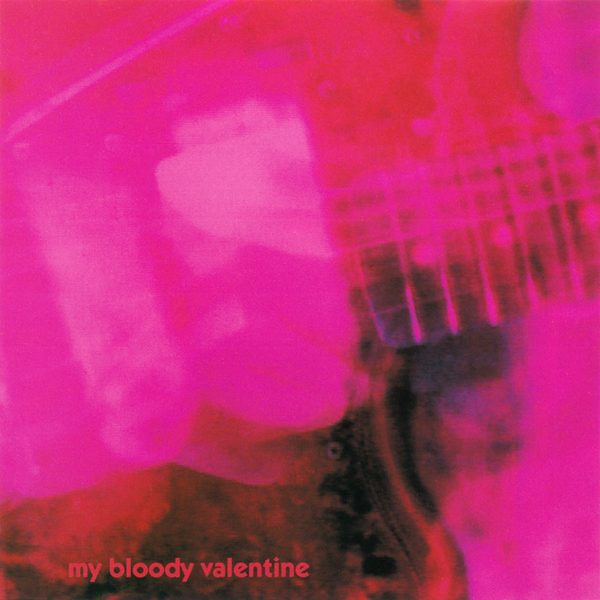
Loveless by My Bloody Valentine (1991), № 65 in The Lead-In’s 100 greatest albums. Loveless cost more to record than most labels' annual budgets in 1991. The price was correct.
Loveless by My Bloody Valentine (1991), № 65 in The Lead-In’s 100 greatest albums. Loveless cost more to record than most labels' annual budgets in 1991. The price was correct.
Eleven tracks in 48 minutes. Recorded across approximately twenty-six months at nineteen studios in London with Kevin Shields engineering, producing, and obsessively overdubbing. A guitar-band album that took two years to complete, allegedly bankrupted Creation Records, and consolidated the deliberately-blurred, deliberately-distorted shoegaze vocabulary that would define the genre. The album that proved a guitar band could treat the recording studio as a sculptural medium without commercial penalty.
Eleven tracks in 48 minutes. Recorded across approximately twenty-six months at nineteen studios in London with Kevin Shields engineering, producing, and obsessively overdubbing. A guitar-band album that took two years to complete, allegedly bankrupted Creation Records, and consolidated the deliberately-blurred, deliberately-distorted shoegaze vocabulary that would define the genre. The album that proved a guitar band could treat the recording studio as a sculptural medium without commercial penalty.
My Bloody Valentine in autumn 1989 was four musicians from Dublin and London: Kevin Shields (guitar, vocals, songwriter), Bilinda Butcher (vocals, guitar), Debbie Googe (bass), and Colm Ó Cíosóig (drums). The band had released two LPs on Creation Records (Isn't Anything 1988, You Made Me Realise EP 1988) that had established them as a leading force in the emerging UK shoegaze scene. By autumn 1989, Kevin Shields had begun working on the band's third LP at Blackwing Studios in South London; the sessions would extend across the next twenty-six months at nineteen different studios as Shields obsessively overdubbed and re-recorded almost every track.
The album's recording process has become legend. Shields, the band's primary songwriter and producer, was working with no fixed budget and minimal label oversight at Creation Records (which was distributed by Pinnacle and was struggling financially throughout the 1989-1991 period). His working method was deliberately obsessive: he would rent multiple London studios simultaneously, work on overdubs at one studio in the morning, mixing at another in the afternoon, vocal sessions at a third in the evening. The deliberately-decentralized working approach allowed him complete creative control but accumulated substantial costs; the album reportedly cost approximately £250,000 to record across the twenty-six months, an extraordinary sum for an independent-distributed UK indie-rock LP of the period.
Shields's specific technical achievement on the album was the deliberately-blurred guitar vocabulary that defined the shoegaze genre. The deliberately-tremolo guitar technique (using a Fender Jaguar guitar with the tremolo arm pressed at high volume to produce deliberately-detuned, deliberately-warped guitar tones), the deliberately-distorted Fender Jaguar production, the deliberately-bent guitar tuning approaches, and the deliberately-acid-house-influenced drum loops produced the album's specific sonic register. The deliberately-blurred, deliberately-overlapping guitar layers that Shields built across the twenty-six months of sessions became the foundational shoegaze production vocabulary; every subsequent shoegaze and dream-pop band (Slowdive, Ride, Lush, Pale Saints, Cocteau Twins, the Catherine Wheel, the Boo Radleys) operates within the vocabulary Loveless established.
Bilinda Butcher's vocal contributions were the album's secondary architectural element. Her deliberately-blurred, deliberately-restrained vocal delivery contrasts with the album's deliberately-distorted instrumental architecture; the resulting combination (deliberately-soft female vocals over deliberately-distorted guitar layers) became one of the most-imitated shoegaze production decisions. Butcher's vocal arrangements (the deliberately-improvised melodies on 'When You Sleep,' the deliberately-emotional chorus on 'Blown a Wish') were tracked across multiple sessions; her contributions are part of the album's specific cumulative-overdub production discipline.
Creation Records released the album on November 4, 1991 with significant promotional support, despite the label's continued financial difficulties. The album debuted at UK #24 and gradually fell off the chart over the subsequent weeks. The critical reception was extraordinary, NME named the album Album of the Year for 1991, ahead of Nirvana's Nevermind and U2's Achtung Baby. The Sire/Warner Bros. US release reached US #100 on the Billboard 200, modest commercial success but unprecedented for a Creation Records release. By the end of 1991, the album had been widely declared the founding text of shoegaze.
The album's cultural impact has been continuous since the early 1990s. The deliberately-shoegaze vocabulary that Loveless established defined the UK shoegaze scene (Slowdive, Ride, Lush, Pale Saints) through the early 1990s; the deliberately-distorted guitar approach influenced the broader American alternative-rock scene (Sonic Youth, Dinosaur Jr., Pixies). The album's commercial trajectory has been the steady canonization-via-shoegaze-resurgence template; subsequent shoegaze revivals (the early-2000s 'nu-gaze' scene, the 2010s shoegaze resurgence with Whirr, Nothing, DIIV, Cloakroom) have all explicitly cited Loveless as foundational. The album's 2003 Pitchfork ranking (#2 of the greatest albums of the 1990s) and its 2018 BPI Silver certification confirm a position the music itself had secured by the end of 1991.
Loveless belongs at #65 because it is the album that consolidated the deliberately-blurred, deliberately-distorted shoegaze vocabulary that would define the genre and proved a guitar band could treat the recording studio as a sculptural medium without commercial penalty. The Shields-as-template for shoegaze guitar production has been continuous since 1991; the deliberately-twenty-six-month obsessive recording approach became the template every subsequent perfectionist indie-rock LP has been measured against. The album's specific contribution to UK indie rock, the deliberately-acid-house-influenced drum loops integrated with deliberately-distorted guitar architecture, the deliberately-blurred Butcher vocal approach, the deliberately-cumulative-overdub production discipline, set the template that has continued through the present. The album's ranking among the canonical greatest 1990s LPs and its continuing shoegaze-resurgence influence confirm a position the music itself secured immediately.
Original 1991 UK pressing on Creation Records, CRELP 060, in a glossy sleeve whose pink-tinted cover is a motion-blurred close-up of Kevin Shields' own hands strumming his Fender Jazzmaster. Famously, Loveless was mastered by Kevin Shields himself; the first-press deadwax reads 'CRELP-060 ... DMM ... TOWNHOUSE,' indicating a Direct Metal Mastering cut at Townhouse Studios, with no Sterling Sound or Howie Weinberg involvement. The original came with a printed illustrated inner. The Townhouse DMM runout is the load-bearing first-press marker.
© The Lead-In · an independent, reader-supported music publication.