
№ 88 of 100
Madvillainy
Madvillainy by Madvillain (2004), № 88 in The Lead-In’s 100 greatest albums. Madonna with Prince guesting and the Catholic Church furious. Pop got allowed to be serious here. Patrick Leonard producing.
Madvillainy by Madvillain (2004), № 88 in The Lead-In’s 100 greatest albums. Madonna with Prince guesting and the Catholic Church furious. Pop got allowed to be serious here. Patrick Leonard producing.
Twenty-two tracks in 46 minutes. Recorded across approximately three years (2001-2004) at multiple locations, primarily Stones Throw HQ in Los Angeles and at MF DOOM's home in Atlanta, with Madlib producing the entire LP and DOOM rapping. Released by Peanut Butter Wolf's Stones Throw imprint after an entire pre-release leak in November 2003 forced label restructuring of the rollout. The album that converted underground hip-hop's outsider-aesthetic into a sustained critical-canonical form and made every subsequent underground-rap collaboration take Madvillainy as either its model or its refusal.
Twenty-two tracks in 46 minutes. Recorded across three years at multiple locations, primarily Stones Throw HQ in Los Angeles and at MF DOOM's home in Atlanta, with Madlib producing the entire LP and DOOM rapping. Released by Peanut Butter Wolf's Stones Throw imprint after the entire album leaked online in November 2003 and forced a label restructuring of the rollout. The album that converted underground hip-hop's outsider-aesthetic into a sustained critical-canonical form and made every subsequent underground-rap collaboration take Madvillainy as either its model or its refusal.
Daniel Dumile (MF DOOM) and Otis Jackson Jr. (Madlib) had met briefly in 1999 through Stones Throw founder Peanut Butter Wolf (Chris Manak). DOOM was thirty-two years old, a London-born Long Island-raised MC whose original group KMD had recorded a never-released second LP for Elektra in 1993, the label dropped them after KMD's co-founder DJ Subroc was killed in a car accident and Elektra had concerns about the album's cover. DOOM had withdrawn from the music industry for five years before re-emerging in 1999 with the Operation: Doomsday LP under his Metal Face Doom comic-book-villain persona. Madlib was 28, a Los Angeles-based producer with the Quasimoto Unseen LP (2000), the Lootpack catalogue, and a Yesterday's New Quintet jazz project all running in parallel.
Sessions began in late 2001 at Stones Throw HQ in Los Angeles, a converted house in Highland Park that doubled as the label's office and Madlib's primary studio. Madlib would assemble instrumental beats and ship them to DOOM in Atlanta; DOOM would write and record verses at his home studio and return the vocal stems to Madlib for mixing. The collaborative-by-mail process is unusual for hip-hop production at this scale. Sessions extended through 2002 and into 2003; by mid-2003 the duo had finalized approximately twenty-two tracks.
In November 2003 the unfinished album leaked online, every track in roughly the final sequence. The leak was widely circulated through file-sharing networks (Soulseek, Limewire, the burgeoning hip-hop blog ecosystem). DOOM and Madlib reportedly stopped working on the album for several months after the leak; Stones Throw considered cancelling release. The leaked version became the de facto bootleg edition for most listeners in late 2003 and early 2004. The eventual March 2004 official release added some final mixing and resequencing but is substantially the leaked album.
DOOM's approach to vocal performance on the album is the central artistic decision. He raps as Metal Face Doom (the comic-book-villain persona) on most tracks, as Viktor Vaughn (a parallel alter ego) on '(Fancy Clown),' and never uses his given name. The vocals were recorded at low conversational volume, often described by listeners as 'rapping to oneself in a bathroom', and Madlib's mixing keeps the vocals at relatively low level in the mix, integrated into the sample loops rather than placed over them. The intimacy-at-low-volume aesthetic is the album's identifying production signature.
The twenty-two tracks across 46 minutes are sequenced as a deliberately fragmented document. Most tracks run under 2 minutes; few have conventional verse-chorus-verse structure. The album resists radio-single edits and conventional hip-hop track-length conventions. Madlib's samples are uncleared (Daedelus 'Experience,' Frank Zappa 'Sleep Dirt,' Joe Cuba, Glen Campbell, Anita Baker, Sun Ra, Gary Burton, Z.Z. Hill, and dozens more); the legal exposure is substantial. The album's continued availability on streaming platforms has involved subsequent sample-clearance negotiations; some tracks were removed and restored multiple times across the 2010s.
Stones Throw released the album on March 23, 2004 with minimal promotion. The album didn't chart on the Billboard 200; it reached #179 on the Heatseekers chart and #67 on Independent Albums. First-week sales were approximately 8,000 SoundScan units; sales continued at roughly 1,500-2,000 units per week through 2004 and 2005. By 2010 the album had cleared 250,000 US units; by 2020 it was approaching 500,000. The commercial trajectory was slow-burn catalogue rather than launch-week event.
Critical reception was unanimous from the underground-hip-hop press and gradually expanded to the mainstream press. Pitchfork's Brent Sirota gave the album 9.4/10; The Wire's Joe Muggs treated it as the canonical underground hip-hop LP of the year; Rolling Stone's Christian Hoard ran a sympathetic review (3.5 stars) several months after release. The album's standing grew steadily through 2005 and 2006 as the chopped-and-screwed Houston tradition (DJ Screw), the alternative-rap tradition (Aesop Rock, El-P, Cannibal Ox), and the European left-field tradition (the Wu-Tang affiliates' underground catalogue) all increasingly cited Madvillainy as foundational.
Madvillainy belongs at #86 because it is the album that converted underground hip-hop's outsider-aesthetic into a sustained critical-canonical form, and proved that the bedroom-recording, uncleared-sample, comic-book-villain-persona approach could produce a commercially-sustained LP without commercial-pop infrastructure. Every subsequent underground-rap collaboration (Kendrick Lamar and Knxwledge on 'Momma' from To Pimp a Butterfly, Tyler the Creator's IGOR, Earl Sweatshirt's Some Rap Songs, Vince Staples's various work, JPEGMAFIA's catalogue) takes Madvillainy as either model or refusal. DOOM's October 31, 2020 death (announced December 31, 2020) consolidated the album's canonical status; the post-death streaming surge converted Madvillainy from underground favourite into widely-recognized canonical text. The 2020 Rolling Stone #361 ranking is the most explicit institutional ratification of the album's standing as the canonical underground hip-hop LP of the twenty-first century.
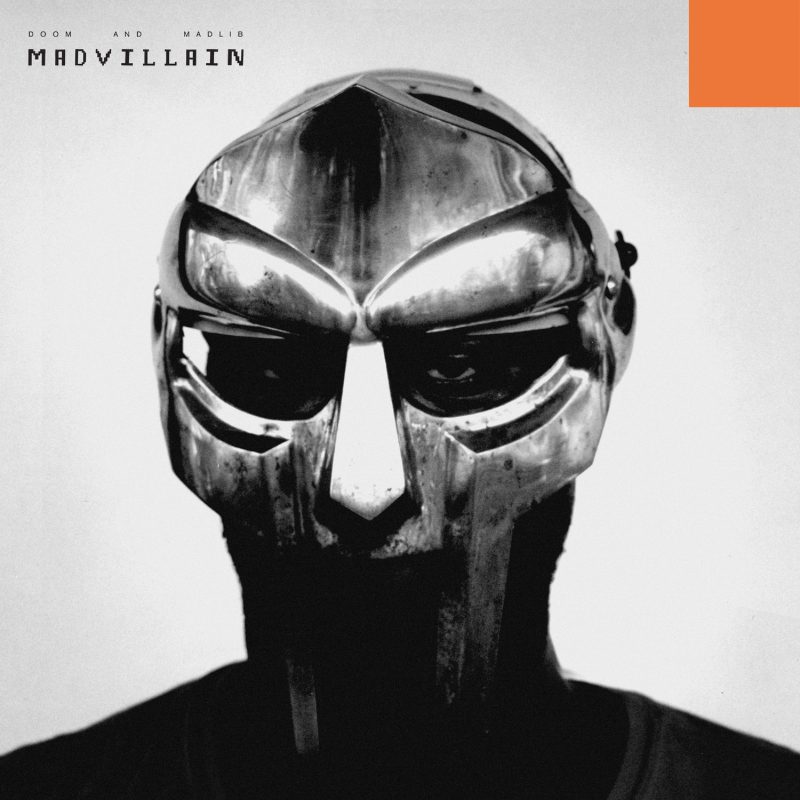
Original 2004 US pressing, Stones Throw STH2065, 2xLP — in a single (non-gatefold) sleeve, not a gatefold. Eric Coleman shot the close-up cover photograph and Jeff Jank handled the design. Mixed and mastered by Dave Cooley, with lacquers cut by Jean Dyer at Masterdisk (runouts read "STH2065-SA JD MASTERDISK," etc.). Stones Throw never published a pressing quantity, so the oft-repeated 5,000–7,000 figure is unsourced. Clean originals typically trade around $70–150.
© The Lead-In · an independent, reader-supported music publication.