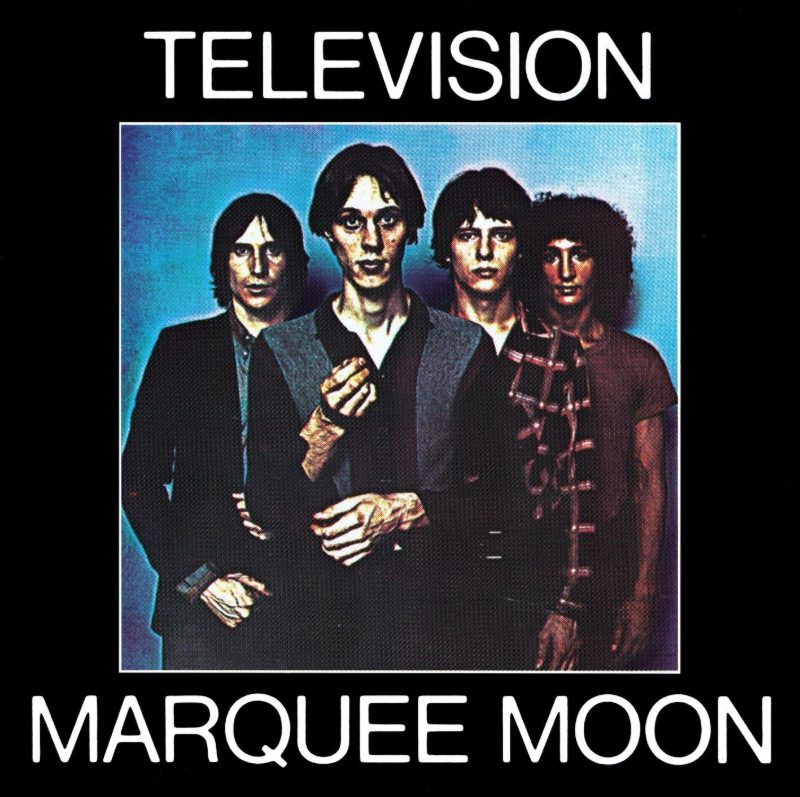
Eight tracks in 45 minutes. Recorded across approximately 6 weeks at A&R Studios in New York with Andy Johns engineering and Tom Verlaine producing. The CBGB-era band's debut LP, four New York musicians whose deliberately-architectural twin-guitar approach inaugurated the late-1970s post-punk vocabulary. The album that proved a guitar band could treat extended-form composition as a punk-era ambition without commercial compromise.
- Released
- February 8, 1977
- Label
- Elektra Records (US, 7E-1098) · Elektra (UK, K 52046)
- Producer(s)
- Tom Verlaine · Andy Johns (engineer)
- Runtime
- 45:48 (8 tracks)
- Chart peak (US)
- #160 (Billboard 200)
- Chart peak (UK)
- #28 (UK Albums Chart)
- Certifications
- Silver (BPI, 2017 retroactive)
- Awards & honours
- Ranked #105 on Rolling Stone's 500 Greatest Albums (2020); NME Album of the Year (1977); Library of Congress National Recording Registry (2024); Grammy Hall of Fame nomination (2023)
Eight tracks in 45 minutes. Recorded across approximately 6 weeks at A&R Studios in New York with Andy Johns engineering and Tom Verlaine producing. The CBGB-era band's debut LP, four New York musicians whose deliberately-architectural twin-guitar approach inaugurated the late-1970s post-punk vocabulary. The album that proved a guitar band could treat extended-form composition as a punk-era ambition without commercial compromise.
Television in autumn 1976 was four New York musicians: Tom Verlaine (vocals, guitar, primary songwriter), Richard Lloyd (guitar, vocals), Fred Smith (bass), and Billy Ficca (drums). The band had been a CBGB regular since 1974, they'd been the first non-original-CBGB band to perform at the Bowery venue when it opened in March 1974. Their independent-released 'Little Johnny Jewel' 12-inch single (Ork Records, October 1975) had established them as a leading underground force. Elektra Records signed the band in autumn 1976 to a multi-LP deal; the recording sessions for Marquee Moon were scheduled for December 1976 at A&R Studios in New York.
Tom Verlaine's working method as producer was specific and deliberately-controlled. Andy Johns, the legendary engineer who had worked on Led Zeppelin's IV, the Rolling Stones' Sticky Fingers, and Eric Clapton's solo records, was hired as engineer. Verlaine's specific decision to produce the album himself (against Elektra's preference for an established producer) reflected his deliberately-precise compositional approach; he wanted complete creative control over the deliberately-architectural twin-guitar arrangements. The sessions ran approximately 6 weeks across December 1976 and January 1977.
The album's specific technical achievement was Tom Verlaine and Richard Lloyd's deliberately-precise twin-guitar interplay. The two guitarists, Verlaine playing a Fender Jaguar and Lloyd playing a Fender Stratocaster, traded lead-and-rhythm responsibilities throughout the album, with deliberately-overlapping melodic lines and deliberately-controlled rhythmic interaction. The deliberately-architectural twin-guitar approach was unprecedented for late-1970s rock; the deliberately-extended ten-minute title track's twin-guitar conversation became the founding text of the post-punk twin-guitar vocabulary that would define the next decade of rock (Sonic Youth, Wire, Gang of Four, the Cure, Joy Division, Television's own subsequent LPs).
The album's eight tracks consolidated the band's CBGB-era working method into a coherent commercial statement. The deliberately-architectural compositional approach (extended guitar passages, deliberately-precise rhythmic structures, deliberately-restrained dynamics), the deliberately-controlled Verlaine vocal delivery, the deliberately-precise twin-guitar interplay all became the album's specific signature. The deliberately-cinematic ten-minute title track was the album's structural centerpiece; the deliberately-shorter side-two tracks ('Elevation,' 'Guiding Light,' 'Prove It,' 'Torn Curtain') provided structural balance.
Elektra released the album on February 8, 1977 with modest promotional support. The album debuted at US #160 and quickly fell off the Billboard 200; the US commercial response was minimal. The UK chart response was substantially stronger, the album peaked at UK #28 by spring 1977 (driven by Nick Kent's NME review and substantial UK rock-press attention). 'Prove It' single (May 1977) peaked at UK #25. The critical reception was extraordinary: NME named the album Album of the Year for 1977; subsequent year-end polls consistently placed it among the year's best LPs. By the end of 1977 the album had been widely declared the founding text of post-punk twin-guitar architecture.
Marquee Moon belongs at #66 because it is the album that consolidated the deliberately-architectural post-punk vocabulary and proved a guitar band could treat extended-form composition as a punk-era ambition without commercial compromise. Verlaine and Lloyd's deliberately-precise twin-guitar interplay became the foundational template for post-punk twin-guitar architecture (Joy Division's Stephen Morris/Bernard Sumner, the Cure's Robert Smith/Porl Thompson, Sonic Youth's Lee Ranaldo/Thurston Moore, Television's own subsequent LPs). The album's specific contribution to UK and US post-punk, the deliberately-architectural compositional approach, the deliberately-cinematic extended-form pieces, the deliberately-controlled production discipline, set the template that has continued through the present. The Library of Congress National Recording Registry induction in 2024 confirms a position the music itself had secured by the end of 1977.
Pressing guide — the one to own
Original 1977 US pressing on Elektra, 7E-1098, with the Robert Mapplethorpe cover photograph and a printed black-and-white inner sleeve (lyrics on one side, band photo on the other). It was cut at Sterling Sound, credited to Greg Calbi and Lee Hulko, and original copies carry a stamped 'STERLING' in the deadwax rather than a hand-etched engineer's initial. First pressings wear Elektra's tan/cream 'butterfly' label of the period. Because 7E-1098 was pressed simultaneously at several plants, runout/plant codes vary, so no single matrix string is definitive.