
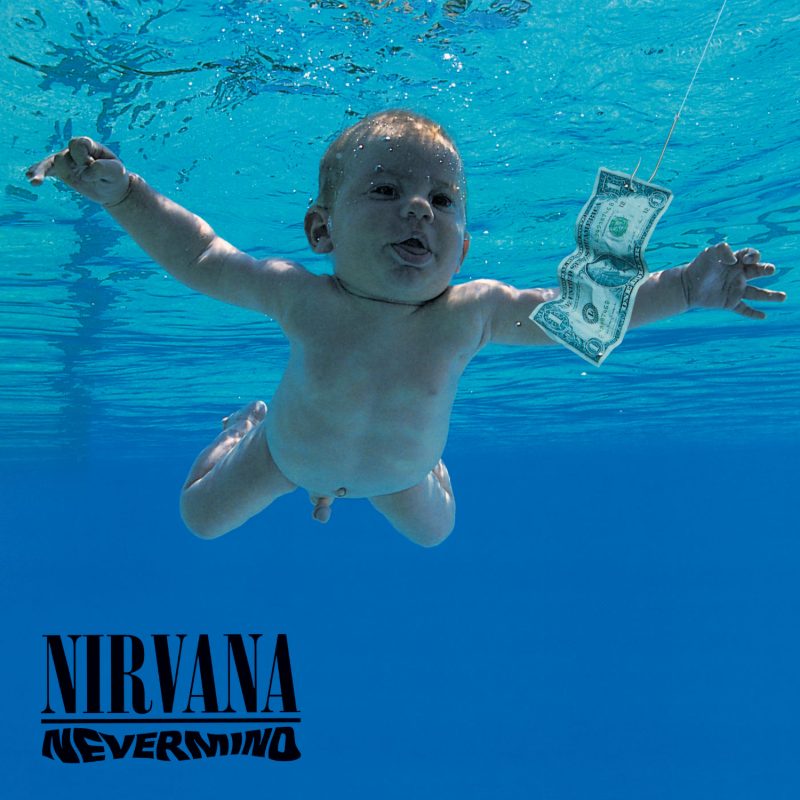
№ 30 of 100
Nevermind
Nevermind by Nirvana (1991), № 30 in The Lead-In’s 100 greatest albums. Nirvana doesn't 'change rock' in the abstract. It changes the specific A&R math that determined which records got signed for the next ten years.
Nevermind by Nirvana (1991), № 30 in The Lead-In’s 100 greatest albums. Nirvana doesn't 'change rock' in the abstract. It changes the specific A&R math that determined which records got signed for the next ten years.
Kurt Cobain at twenty-four, Krist Novoselic on bass, Dave Grohl on drums, in a Van Nuys studio with Butch Vig. The album that ended the 1980s and started the 1990s in 12 weeks. Released September 24, 1991. Sold thirty million.
Twelve tracks in 42 minutes. Recorded across approximately 6 weeks at Sound City Studios in Van Nuys and Devonshire Studios in North Hollywood with Butch Vig producing, after rejected initial Vig sessions at Smart Studios in Madison Wisconsin had set the band's direction. Nirvana's second LP and Geffen / DGC's commercial breakthrough, Kurt Cobain, Krist Novoselic, Dave Grohl. The album that converted underground Pacific Northwest grunge into international commercial-pop form and inaugurated the loud-quiet-loud-grunge vocabulary that defined 1990s commercial-pop rock.
Nirvana in autumn 1990 was a Seattle / Aberdeen three-piece, Kurt Cobain (vocals, guitar), Krist Novoselic (bass), and a rotating drummer position that had been unstable through 1989-90. Their debut LP Bleach (June 1989, Sub Pop) had moved approximately 35,000 units across the first eighteen months, substantial for the Sub Pop catalogue. Geffen Records' DGC subsidiary signed the band in April 1991 after substantial bidding-war activity following Sonic Youth's recommendation to Geffen A&R Gary Gersh. Dave Grohl, formerly of Scream, had joined the band in October 1990 on the drums.
Butch Vig had been the band's preferred producer since 1990 demos recorded at his Smart Studios in Madison, Wisconsin. Initial DGC sessions with Vig were considered for Smart but Geffen pushed for a Los Angeles studio. Sound City Studios in Van Nuys was selected; sessions began on May 2, 1991. The Sound City Neve 8028 console and the LA-area studio infrastructure represented a substantial budget upgrade from Smart's Madison facility.
Sessions ran approximately 6 weeks across May and June 1991. Vig's production methodology was deliberately stripped-down, live tracking with the band in the live room, minimal overdubbing, deliberate preservation of room ambience. The final mixing was completed by Andy Wallace in July 1991, a deliberate decision by Geffen and the band to add commercial-pop polish to Vig's documentary tracking. Cobain has subsequently said in interviews that the Wallace mix was 'too commercial' and that he preferred Vig's rough mixes; the released album is the Wallace mix.
The album's central artistic decision was the structural deployment of the quiet-loud-quiet dynamic Cobain had borrowed from the Pixies, Cobain repeatedly cited Pixies' Doolittle and especially 'Tame' as the structural template. The verse-chorus-verse-bridge construction with whispered verses and screamed choruses became the album's identifying vocabulary; every track on the LP uses some variation of the structure. 'Smells Like Teen Spirit' is the most-cited single example; 'In Bloom,' 'Come as You Are,' 'Lithium,' and 'Polly' all deploy the dynamic differently.
DGC released the album on September 24, 1991 with modest initial commercial expectations, Geffen had projected approximately 250,000 first-year sales. The album debuted at US #144 the week of October 12, climbed steadily through October and November, and reached US #1 the week of January 11, 1992, displacing Michael Jackson's Dangerous. By March 1992 the album had sold approximately 3 million US units; by Christmas 1992 it had reached 7 million. Lifetime US sales have exceeded 10 million (RIAA Diamond, 1999); worldwide lifetime sales exceed 30 million.
Critical reception was extraordinary and unanimous. Spin's Anders Wright treated the album as the year's defining American-rock statement; Rolling Stone's Ira Robbins gave it five stars; Robert Christgau gave it A+. The album won the 1992 Grammy nomination for Best Alternative Music Performance (lost to R.E.M.'s Out of Time); the band declined to perform at the ceremony.
Nevermind belongs at #30 because it is the album that converted underground Pacific Northwest grunge into international commercial-pop form and inaugurated the loud-quiet-loud-grunge vocabulary that defined 1990s commercial-pop rock. Every Pearl Jam, Soundgarden, Alice in Chains, Stone Temple Pilots commercial-pop rock LP runs on the proof Nevermind delivered. Cobain's April 5, 1994 suicide converted the album's catalogue presence into widely-recognized canonical text. The Rolling Stone 2020 ranking at #6 confirms the institutional standing as one of the canonical rock LPs of all time.
Original 1991 US pressing, DGC DGC-24425, art-directed by Robert Fisher with Kirk Weddle's underwater-baby photograph, on black DGC labels with a printed inner sleeve; the deadwax was cut at Masterdisk by Howie Weinberg ('DGC-24425-A ... MASTERDISK'). Note the hidden-track story runs the opposite way to the usual claim: the earliest CD run actually OMITTED 'Endless, Nameless' due to a mastering error and the track was added only on later pressings, and the US first-press vinyl did not carry it at all. The hidden track is a CD-era phenomenon, not a first-press vinyl feature. Sealed US first-press LPs are genuinely valuable, comfortably £400 and up.
© The Lead-In · an independent, reader-supported music publication.