
№ 33 of 100
Off the Wall
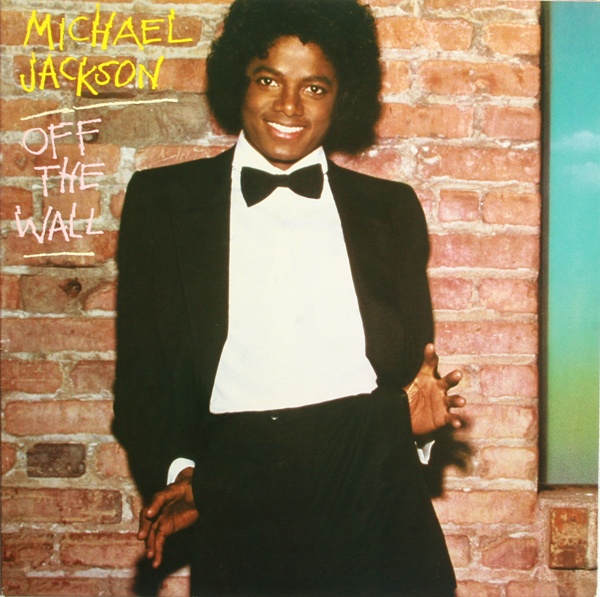
Off the Wall by Michael Jackson (1979), № 33 in The Lead-In’s 100 greatest albums. Off the Wall at 33, ahead of Thriller, ahead of half of what our colleagues at this magazine wrote up before us. We'll defend it.
Off the Wall by Michael Jackson (1979), № 33 in The Lead-In’s 100 greatest albums. Off the Wall at 33, ahead of Thriller, ahead of half of what our colleagues at this magazine wrote up before us. We'll defend it.
Michael Jackson at twenty, Quincy Jones in the producer's chair for the first time together, in Hollywood for ten months in 1979. The album that introduced the adult Michael Jackson. Released August 10, 1979.
Six months at Allen Zentz Recording in Hollywood with Quincy Jones producing. Ten tracks across 42 minutes. The album that turned Michael Jackson, twenty years old and recently emancipated from the Jackson 5's family act, into a solo commercial force, produced four US Top 10 singles (the first solo album in history to achieve that), and cleared the runway for what Thriller would do three years later.
Michael Jackson had been a working professional musician since age 6, the lead voice of the Jackson 5 since age 10, and Motown's most reliable hit-maker through his teens. By 1976 the Jackson family had moved from Motown to Epic Records and renamed themselves the Jacksons; by 1978 Michael was twenty years old and had spent eight months in New York filming Sidney Lumet's The Wiz, playing the Scarecrow opposite Diana Ross's Dorothy. The film was a commercial disappointment but a personal catalyst, Jackson met Quincy Jones, then forty-five and one of the most accomplished producer-arrangers in American music, during the pre-production music sessions, and the two formed the working partnership that would produce the next three Jackson solo records.
Recording began at Allen Zentz Recording in Hollywood in December 1978 and continued through June 1979. The studio, owned by engineer Allen Zentz, with a custom 24-track console and excellent room acoustics, was Quincy Jones's preferred 1970s production base. The session musicians were the Los Angeles studio elite Jones had been using since the early 1970s: Louis Johnson on bass (of the Brothers Johnson, contributing the signature bassline to 'Don't Stop 'Til You Get Enough'), Greg Phillinganes on keyboards, Paulinho da Costa on percussion, Wah Wah Watson and David Williams on guitars. The deliberate decision to record outside the Jackson family infrastructure was Michael's first move toward solo identity; the album's session credits read like a Quincy Jones LA studio band photograph, not a Jacksons family-music apparatus.
The album's first single, 'Don't Stop 'Til You Get Enough,' was released in July 1979, 6 weeks before the album. Jackson had written the song himself, his first major-label songwriting credit, and demoed it at home with his sisters Janet and La Toya providing the percussion. Louis Johnson's bassline, recorded at Allen Zentz, became the song's primary architecture; the song hit US #1 in October 1979, Jackson's first solo #1 single. The album's title track 'Off the Wall' (written by Rod Temperton of Heatwave, who would also write 'Rock with You' and 'Burn This Disco Out') followed as the third single. 'Rock with You,' 'She's Out of My Life,' and 'Off the Wall' all charted in the US Top 10, making Off the Wall the first solo album in history to produce four Top 10 singles.
The Disco Demolition Night riot at Comiskey Park, Chicago happened on July 12, 1979, 4 weeks before Off the Wall's release. Steve Dahl's anti-disco promotional event ended with a riot, the destruction of thousands of disco records on the field, and the cancellation of the second game of the White Sox-Tigers doubleheader. The event was widely interpreted as both a racial and homophobic backlash against disco's primary audiences. Off the Wall, released into the immediate aftermath, with disco-derived production but a deliberately non-disco genre vocabulary, survived the format's late-1979 collapse precisely because it couldn't be reduced to disco. Tracks like 'Workin' Day and Night' (R&B), 'She's Out of My Life' (orchestral ballad), and 'Off the Wall' (post-disco pop) gave the album multiple commercial entrances; disco's collapse didn't damage its sales.
The album's Grammy results in February 1980 became the central plot point of the next three years of Jackson's career. Off the Wall received exactly one Grammy nomination, Best R&B Vocal Performance, Male, which Jackson won. The album wasn't nominated in any major Grammy category despite four Top 10 singles and four million units sold by Grammy season. Quincy Jones has said in subsequent interviews that Jackson called him the morning after the Grammys to say 'this will never happen to me again.' The deliberate scaling-up of Thriller, the videos, the genre-mixing, the John Landis short film, the Pepsi campaign, the moonwalk on Motown 25, was Jackson's explicit response to Off the Wall's institutional underrecognition. Without the Grammy snub, the specific commercial ambition of Thriller would have been smaller.
Off the Wall sold 20 million copies worldwide across its lifetime; it remains, by some industry counts, in the top 50 best-selling albums in history. The album peaked at US #3 (held off the top by Long Run by the Eagles and Damn the Torpedoes by Tom Petty) and stayed on the Billboard 200 for 84 weeks. The UK chart position was higher, Off the Wall reached UK #5 and produced two UK Top 10 singles. The album's commercial run continued steadily through 1981 and 1982, building the audience that Thriller would, in 1983, scale to 70 million units. Off the Wall is therefore inseparable from Thriller as a commercial proposition; the second album's specific scale was made possible by the first album's commercial groundwork.
Off the Wall belongs at #33 because it is the album that established the Michael Jackson-Quincy Jones partnership at its most artistically focused, before the Thriller ambition that came next required deliberate scale-up of every dimension. Eight years before the videos and the moonwalk and the global tours, Off the Wall is Jackson as a singer-songwriter, twenty years old, recently emancipated, working with the best LA studio musicians in the business under the producer who would shape the rest of his career. The album's Grammy snub motivated Thriller; Thriller's commercial scale produced the global Michael Jackson; the global Michael Jackson's eventual collapse is part of the larger story. But Off the Wall is the artist before any of that, the moment Jackson became a solo commercial force, with the songs, the singing, and the production at their most coherent. The album sold steadily for forty-five years and remains, by many serious arguments, the most musically satisfying record Jackson ever made.
1979 US first pressing, Epic FE 35745 (also catalogued as 35745) with the original gatefold sleeve showing Jackson in the white tuxedo and gloves photograph by Mike Salisbury and Steve Harvey. Look for the gatefold inner with the full lyric sheet and the Quincy Jones thank-you list. Matrix etchings: PAL 35745-1AA / PBL 35745-1AA. Cherokee mastering signature 'BG' (Bernie Grundman) etched in runout. The earliest US pressings have a slight pink tint to the sleeve from a print-run color issue that was corrected on subsequent pressings; the pink-tint pressings are the first-state mark.
© The Lead-In · an independent, reader-supported music publication.