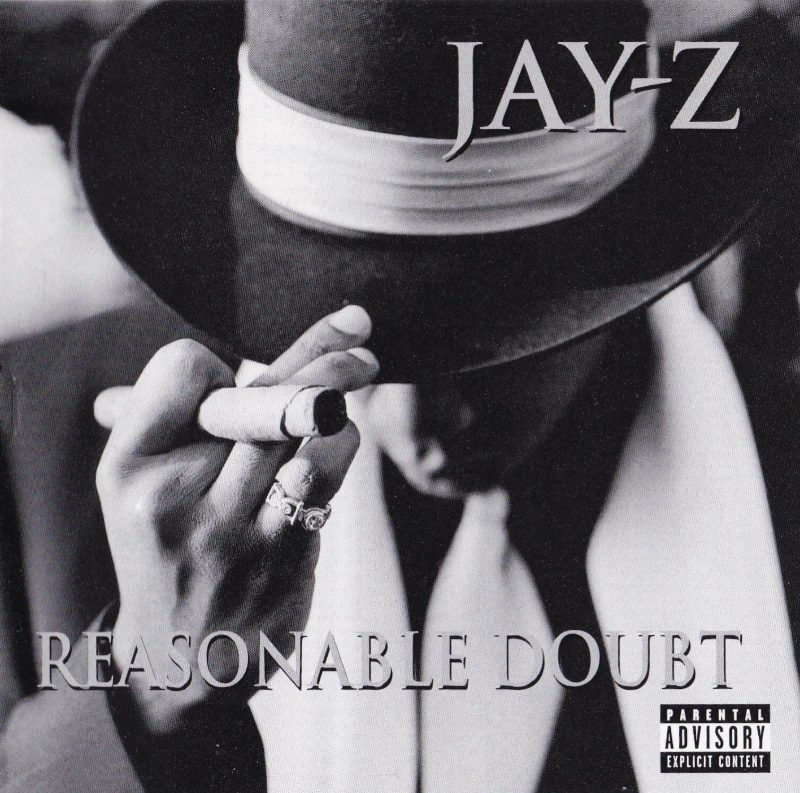
Fourteen tracks in 66 minutes. Recorded across approximately ten months at D&D Studios in Manhattan with DJ Premier, Ski Beatz, Clark Kent, Knobody, and others producing. Jay-Z's debut LP, a Brooklyn-born twenty-six-year-old rapper financing his own Roc-A-Fella Records release through hustled drug-money proceeds. The album that established Jay-Z as the leading lyrical force in East Coast hardcore hip-hop and consolidated the deliberately-cinematic Mafia-themed narrative aesthetic that would define late-1990s commercial rap.
- Released
- June 25, 1996
- Label
- Roc-A-Fella Records / Priority Records (US, 50040)
- Producer(s)
- DJ Premier · Ski Beatz · Clark Kent · Knobody · Big Jaz · Irv Gotti · Peter Panic
- Runtime
- 66:43 (14 tracks)
- Chart peak (US)
- #23 (Billboard 200); #3 (Top R&B/Hip-Hop)
- Chart peak (UK)
- Did not chart on initial release
- Certifications
- Platinum (RIAA, 2002); 2× Platinum (RIAA, 2018)
- Awards & honours
- Source Five Mic rating (1996); ranked #248 on Rolling Stone's 500 Greatest Albums (2020); inducted into Library of Congress National Recording Registry (2021)
Fourteen tracks in 66 minutes. Recorded across approximately ten months at D&D Studios in Manhattan with DJ Premier, Ski Beatz, Clark Kent, Knobody, and others producing. Jay-Z's debut LP, a Brooklyn-born twenty-six-year-old rapper financing his own Roc-A-Fella Records release through hustled drug-money proceeds. The album that established Jay-Z as the leading lyrical force in East Coast hardcore hip-hop and consolidated the deliberately-cinematic Mafia-themed narrative aesthetic that would define late-1990s commercial rap.
Shawn Carter in autumn 1995 was twenty-six years old, a Marcy Houses-born former crack dealer from Bedford-Stuyvesant, Brooklyn, who had been recording demo tapes since 1989 without securing a major-label contract. He had been gigging continuously since the early 1990s; his guest verse on Big Jaz's 'Hawaiian Sophie' (1989) had been his first commercial credit. The major labels had passed on him repeatedly; in 1995, Carter partnered with Dame Dash and Kareem 'Biggs' Burke to form Roc-A-Fella Records, an independent label structured around Carter's solo work and financed initially through hustled drug-money proceeds. The plan for the debut LP was that it would establish Carter as the leading lyrical force in East Coast hardcore hip-hop.
Recording began at D&D Studios in Manhattan in autumn 1995 and ran through spring 1996. Carter's working method was deliberately-coordinated: he would write verses at his Marcy Houses apartment, then bring the completed verses to D&D Studios for the deliberately-rotating roster of producers. The producer roster across the ten months included DJ Premier (the Gang Starr producer whose deliberately-grimy production approach was at its commercial peak), Ski Beatz (the deliberately-soul-sample-heavy producer whose 'Dead Presidents II' production became the album's structural centerpiece), Clark Kent, Knobody, Big Jaz, Irv Gotti, and Peter Panic. The deliberately-multi-producer approach reflected Carter's specific Roc-A-Fella business model, the deliberately-coordinated Roc-A-Fella roster including guest appearances by Memphis Bleek, Sauce Money, Big Jaz, the Notorious B.I.G., Mary J. Blige, and Foxy Brown.
The album's lyrical vocabulary consolidated Carter's specific approach. The deliberately-cinematic Mafia-themed narrative aesthetic (the Mario Puzo / Francis Ford Coppola reference vocabulary throughout), the deliberately-precise lyrical wordplay ('22 Two's' counting structure), the deliberately-emotional confessional register ('Regrets'), the deliberately-political cultural-commentary approach ('D'Evils') established Carter's signature lyrical approach. The deliberately-controlled vocal delivery and the deliberately-aggressive verse architecture became the foundational template for Carter's subsequent catalogue.
The album's most-significant collaboration was 'Brooklyn's Finest', the Jay-Z and the Notorious B.I.G. trading-verses track. The two Brooklyn-born rappers were friends and had been collaborating since 1995; the B.I.G. guest appearance was the album's most-prominent commercial-pop placement. The deliberately-collective B.I.G.-Jay-Z trading-verses architecture became the album's most-cited single track and one of the most-significant Brooklyn-born hip-hop collaborations of the 1990s. B.I.G.'s March 1997 murder, nine months after the album's release, would shadow the track's specific cultural reception ever after.
Priority Records released the album on June 25, 1996 with substantial promotional support for an independent-distributed hip-hop release. The album debuted at US #23 on the Billboard 200 with 73,000 first-week SoundScan units; 'Can't Knock the Hustle' (released as the lead single in May 1996) peaked at US #73. 'Dead Presidents II' (released as the second single in autumn 1996) peaked at US #66. The album's commercial trajectory was modest by mid-1990s hip-hop standards; the album was certified Gold by the RIAA in spring 1997 and would not reach Platinum until 2002. The slow commercial uptake reflected Carter's specific Brooklyn-born underground reception and his independent-label distribution model.
Reasonable Doubt belongs at #67 because it is the album that established Jay-Z as the leading lyrical force in East Coast hardcore hip-hop and consolidated the deliberately-cinematic Mafia-themed narrative aesthetic that would define late-1990s commercial rap. The deliberately-precise lyrical wordplay, the deliberately-cinematic narrative approach, the deliberately-controlled vocal delivery established the founding template for Carter's subsequent catalogue (In My Lifetime Vol. 1 1997, Vol. 2... Hard Knock Life 1998, Vol. 3... Life and Times of S. Carter 1999, The Blueprint 2001, The Black Album 2003). The Roc-A-Fella Records business arrangement that Carter had structured became the template for late-1990s independent-distributed hip-hop labels (Bad Boy, Aftermath, Dipset). The Library of Congress National Recording Registry induction in 2021 confirms a position the music itself had secured by the early 2000s.
Pressing guide — the one to own
Original 1996 US pressing on Roc-A-Fella, manufactured and distributed by Priority: the 2xLP is P1 50592, with a matching 1996 CD in the 50592 family. The Jonathan Mannion cover is the black-and-white shot of Jay-Z in a brimmed hat and scarf, cigar in hand, face half-hidden. The 'PE 50040' / '50040-2' numbers belong to the later 1998 reissue, not the original. First-press vinyl runouts carry EMI/Manhattan stamper codes (S-33598 / S-33599); there is no documented Tom Coyne mastering on this title, so that credit should not be claimed.