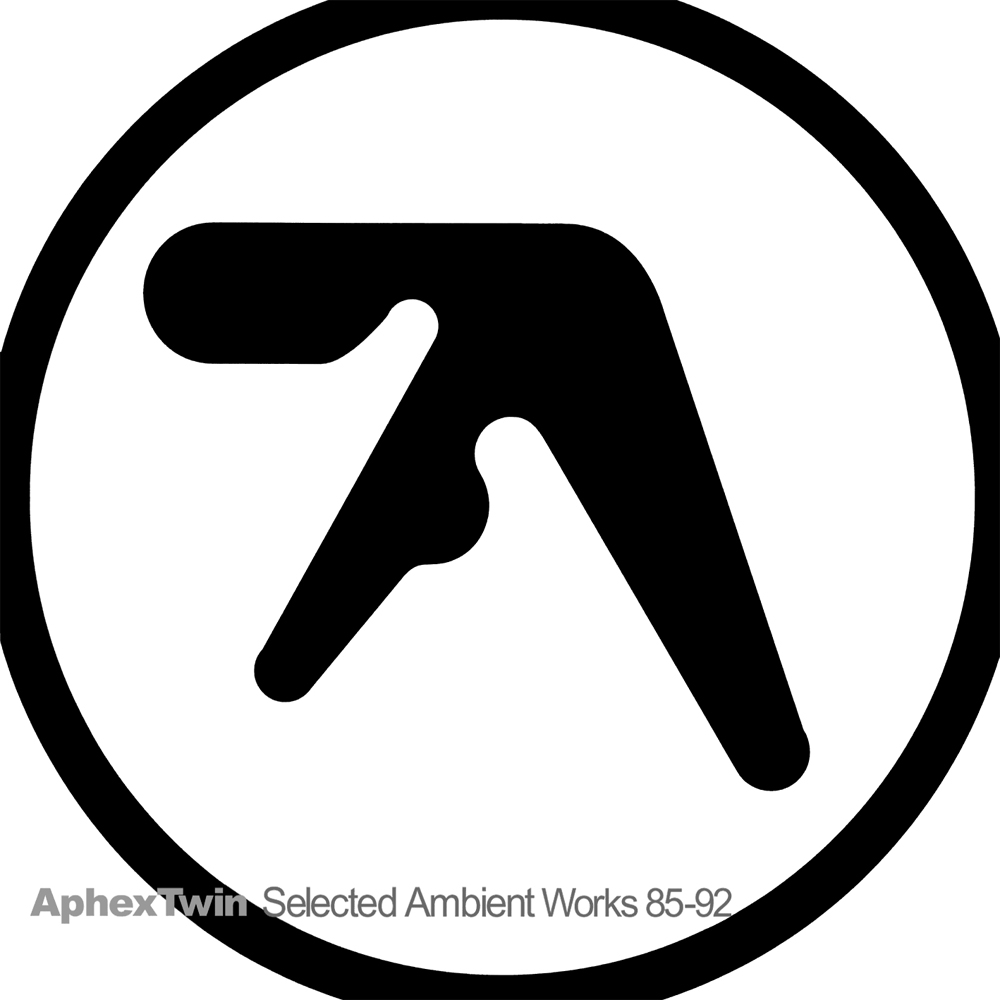
Thirteen tracks in 74 minutes. Recorded between 1985 and 1992 by Richard D. James on home-built and second-hand equipment in Cornwall and at a Manchester squat. Released by R&S Records, a Belgian techno label, into a UK rave market that had no obvious vocabulary for what to do with seven-minute melodic ambient pieces. The album that retroactively defined IDM as a critical-canonical category, and the founding text every subsequent home-recorded electronic LP either acknowledges or refuses.
- Released
- November 9, 1992
- Label
- R&S Records / Apollo (Belgium, AMB 3922)
- Producer(s)
- Richard D. James
- Runtime
- 74:24 (13 tracks)
- Chart peak (US)
- Did not chart
- Chart peak (UK)
- Did not chart on initial release; #102 on 2008 reissue
- Certifications
- Silver (BPI, 2019, retroactive)
- Awards & honours
- Ranked #181 on Rolling Stone's 500 Greatest Albums (2020); routinely topping BBC and Pitchfork 'greatest electronic albums' lists; The Wire's 100 Records That Set the World on Fire
Thirteen tracks in 74 minutes. Recorded between 1985 and 1992 by Richard D. James, then a twenty-one-year-old electronic-engineering student from Cornwall living in a Manchester squat, on home-built samplers, second-hand Roland TR-808s, and a TB-303 he had modified himself. Released by R&S Records, a Belgian techno label, into a UK rave market with no obvious vocabulary for seven-minute melodic ambient pieces. The album that retroactively defined IDM as a critical-canonical category and made every subsequent home-recorded electronic LP take James as either a reference or a refusal.
Richard D. James was born in 1971 in Limerick, Ireland, raised in Cornwall, and had been building and modifying electronic instruments since approximately 1983, his father was an electrical engineer at Geevor tin mine and the family kept a workshop. By 1985, when James was 14, he had begun recording tape compositions on a Realistic mixer and two cassette recorders in his bedroom in Lanner, Cornwall. The earliest tracks on Selected Ambient Works 85-92 ('Tha' and the original sketches that became 'Heliosphan') date to that 1985-86 bedroom period. The album's title 'Selected Ambient Works 85-92' is documentary: the dates bracket seven years of solo home recording.
The Cornwall-to-Manchester migration came in 1989 when James enrolled at Kingston Polytechnic (later moving to study at Manchester's electrical-engineering programme, accounts differ on the precise institution). In Manchester he lived briefly in a squat, where the 1990-91 recordings that became 'Pulsewidth,' 'Ptolemy,' and 'Green Calx' were made on equipment he had carried from Cornwall plus a borrowed TB-303 and a Korg MS-20. The squat had unreliable power; some of the album's track-to-track dynamic-range inconsistencies are documentary traces of equipment that was being powered through extension cords.
R&S Records had been founded in Ghent, Belgium in 1989 by Renaat Vandepapeliere and Sabine Maes as a hardcore-and-techno label. R&S signed James to its newly-established Apollo subsidiary in mid-1991 on the basis of the 1990 'Analogue Bubblebath EP' (released on the small Mighty Force label). The Apollo sub-label was Vandepapeliere's vehicle for ambient and downtempo material that did not fit R&S's main hardcore catalogue. James submitted approximately 30 hours of tape from his 1985-1992 archive; the thirteen tracks that became Selected Ambient Works 85-92 were sequenced by James in late summer 1992 from that material.
Brian Eno's Discreet Music (1975) had inaugurated the ambient-as-released-music vocabulary; Eno's Ambient 1: Music for Airports (1978) had set the genre's critical reference text. Selected Ambient Works 85-92 is the first record to apply that vocabulary to a generation raised on rave culture's 4/4 kick and 303 squelch. The album is what happens when an electronic engineer who has heard both On Land and the second Detroit techno wave sits in a bedroom and makes records.
The album's thirteen tracks are not unified. 'Xtal' and 'Heliosphan' are pop-melodic ambient with female-vocal samples; 'Pulsewidth' and 'Green Calx' are aggressive techno-adjacent rhythm tracks; 'Tha,' 'Ptolemy,' and 'Actium' are slow-evolving long-form ambient with minimal rhythm; 'We Are the Music Makers' uses an uncleared Willy Wonka sample as its narrative-statement track. The sequencing is the album's structural achievement: the 74 minutes don't unify under a single mood but produce a sustained attention-state across the genre boundaries James was negotiating.
R&S released the album as a 2× LP on November 9, 1992, with minimal promotion and no British retail push beyond the underground electronic shops (Eastern Bloc in Manchester, Black Market in London). The album didn't chart on initial release. UK club coverage was minimal; The Wire ran a sympathetic review in February 1993 but treated the album as a curiosity. The critical reframing began in late 1993 with Simon Reynolds's pieces in Melody Maker and The Wire arguing for the album as the founding text of a new category Reynolds and others were then naming 'intelligent dance music', a term James himself disliked and that has remained contested.
The album's reputation grew across the 1990s as Warp Records' Artificial Intelligence series (1992-94) consolidated the category. Warp's Artificial Intelligence Volume One compilation (December 1992) included James (as Polygon Window) and explicitly positioned the new home-listening electronic LP as a sustained form. By 1995 Selected Ambient Works 85-92 was being treated by the critical press as the founding text it had not been positioned as at release. The 2019 BPI Silver certification, twenty-seven years after release, confirmed sustained catalogue presence.
Selected Ambient Works 85-92 belongs at #82 because it is the album that made the home-recorded electronic LP a sustained critical-and-canonical form. Every Boards of Canada, Burial, Four Tet, Caribou, Arca, Oneohtrix Point Never, and SOPHIE LP that treats the bedroom-electronic record as a serious compositional document is downstream of decisions James made in 1985-1992. The album's contemporary reception (no charts, minimal UK press) and its subsequent canonization (Rolling Stone #181, BPI Silver retroactive, BBC and Pitchfork 'greatest electronic albums' standing) define the canonical-text trajectory most precisely. The album is the proof that an electronic LP can be a sustained artistic document on the same terms as a singer-songwriter LP, a claim no record had made before 1992 in quite those terms.
Pressing guide — the one to own
Original 1992 pressing on Apollo (the Belgian sub-label of R&S), 2xLP, catalog AMB LP 3922 — note the sleeve and labels carry no printed catalog number, so it comes from the matrix. The artwork is by Paul Nicholson, who designed the Aphex Twin logo; it is not a Designers Republic sleeve. The deadwax runs AMB LP A2 / B2 / C2 / D2 with no "DAMONT" etch — the Damont/A1–D1 details are unsupported. Clean originals usually trade around $100–150.