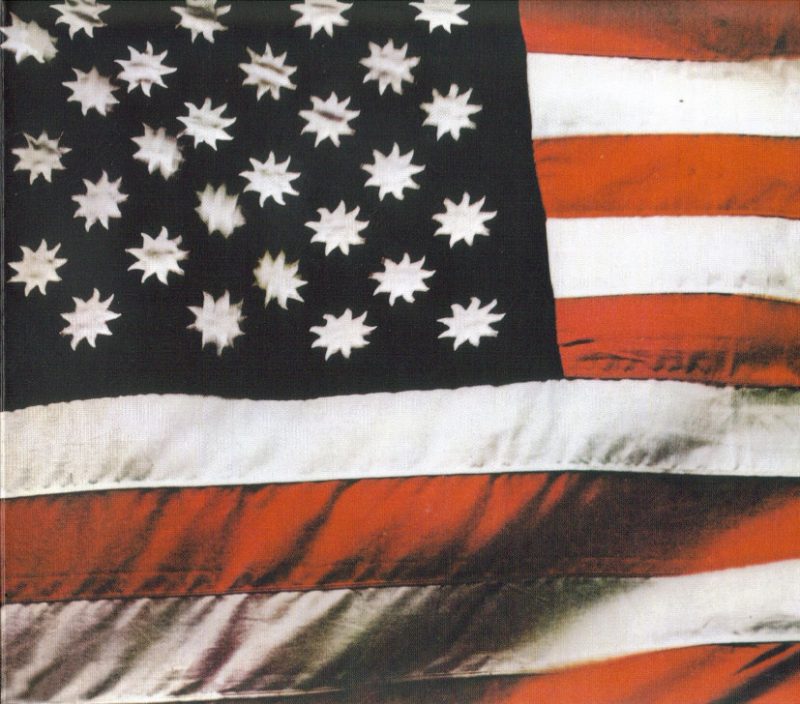
Sly Stone in 1971: heroin-addicted, paranoid, holed up in a Bel Air mansion with a Stewart drum machine and a TEAC reel-to-reel. The follow-up to Stand! that Epic had been begging for. Eleven songs of buried vocals and stretched grooves. The album that ended utopian funk.
- Released
- November 1, 1971
- Label
- Epic Records (CBS)
- Producer(s)
- Sly Stone
- Runtime
- 47:48 (11 tracks)
- Chart peak (US)
- #1 (Billboard 200, 2 weeks)
- Chart peak (UK)
- #31 (Record Retailer)
- Certifications
- Platinum (RIAA); estimated 2M+ units globally
- Awards & honours
- Library of Congress National Recording Registry (2018); ranked #99 on Rolling Stone's 500 Greatest Albums (2020)
Twelve tracks in 48 minutes. Recorded across approximately two years (1969-1971) primarily at Sly Stone's Bel Air home studio with a Stewart-Marshall Records 16-track tape machine and substantial drug-induced gear deterioration that became part of the album's specific sonic signature. The Family Stone's fifth LP, released by Epic Records in November 1971 after almost three years of label pressure for the Stand! follow-up. The album that converted late-1960s commercial-funk optimism into Nixon-era political-disillusionment vocabulary and inaugurated the deliberately deteriorated production aesthetic every subsequent dark-soul LP has worked within.
Sly Stone (Sylvester Stewart) in summer 1969 was twenty-six years old, weeks past Woodstock and at the commercial-and-critical peak of his Family Stone catalogue. Stand! (May 1969, US #13, Gold) had been the band's commercial breakthrough; 'Everyday People' (April 1969) and 'Thank You (Falettinme Be Mice Elf Agin)' (December 1969, both US #1) had consolidated the commercial-pop reception. Epic Records (Stone's label since 1967) had expected the Stand! follow-up by early 1970.
What Epic received instead was nearly three years of label-pressure stalemate. Stone had relocated to a Bel Air mansion in late 1969 and had set up a primitive 16-track home studio in the house's basement, working with engineer-and-musician Bobby Womack and a rotating cast of contributors. Drug use, cocaine and PCP primarily, escalated substantially across the 1970-1971 period; band members rotated through the house at irregular hours; Stone himself was the album's sole sustained creative presence.
Sessions extended from approximately late 1969 through summer 1971. The Stewart-Marshall Records 16-track tape machine had been customized by Stone but suffered substantial maintenance neglect across the recording period. Stone himself played most instruments on most tracks, bass, drums, guitar, keyboards, vocals, with Family Stone members contributing more peripherally than on previous records. Vocal contributions from Cynthia Robinson, Jerry Martini, Rose Stone, and Freddie Stone appear on selected tracks.
The album's central artistic decision was the deliberately deteriorated production aesthetic. Repeated tape passes had degraded the sound substantially across the recording period; Stone deliberately preserved the deterioration rather than re-recording. Vocal performances were often double-tracked through different microphones; rhythm tracks were layered with substantial low-end-and-tape-hiss texture. The resulting sound is the inverse of the bright commercial-funk production of Stand!, the album's specific sonic argument is that the post-Woodstock American political-cultural moment required a deteriorated sonic response.
Epic released the album on November 20, 1971. The label's commercial expectations had been substantially reduced by the multi-year delay; the album's title, There's a Riot Goin' On, was a deliberate rejoinder to Marvin Gaye's What's Going On (May 1971), released six months earlier. The title track is a deliberately empty zero-second runtime (the LP's tracklisting lists 'There's a Riot Goin' On: 0:00'), Stone's argument that the riot itself was an absence rather than an event.
The album debuted at US #1 the week of December 11, 1971, Sly & the Family Stone's only US #1 LP. UK chart entry was #31. 'Family Affair' (released as lead single, November 1971) reached US #1 the same week as the album. RIAA Platinum certification came in 1992, twenty-one years after release.
There's a Riot Goin' On belongs at #29 because it is the album that converted late-1960s commercial-funk optimism into Nixon-era political-disillusionment vocabulary and inaugurated the deliberately deteriorated production aesthetic every subsequent dark-soul LP has worked within. Every D'Angelo Voodoo (2000), every Prince late-1980s home-studio recording, every Funkadelic Maggot Brain (1971, released the same year), every Erykah Badu Mama's Gun (2000) descends from the proof Sly delivered. The 2003 Library of Congress National Recording Registry induction confirms the canonical-text status.
Pressing guide — the one to own
Original 1971 US pressing, Epic KE 30986, a gatefold sleeve with a printed 'Epic Undercover' inner and lyric insert. The cover is Sly's reworked American flag, photographed by Steve Paley, with nine-point suns in place of stars on the canton, the field rendered in red, white and black rather than red, white and blue (a deliberate choice Sly explained as black being the absence of colour). Original shrinkwrap carried a 'Family Affair' hit-single sticker. A clean sealed original is plausibly worth £250 and up.