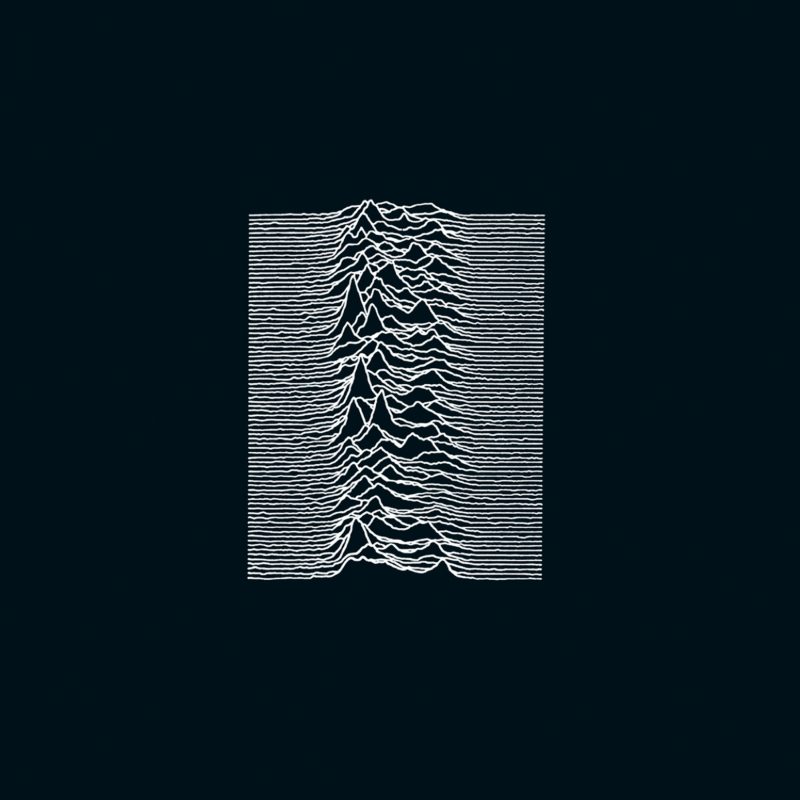
Ten tracks in 39 minutes. Recorded across approximately 3 weeks at Strawberry Studios in Stockport, Greater Manchester in April 1979 with Martin Hannett producing. Joy Division's debut LP, four Salford and Macclesfield musicians whose deliberately-controlled post-punk vocabulary inaugurated the late-1970s Manchester scene. The album that consolidated Hannett's deliberately-processed-drum production aesthetic and provided the template every subsequent post-punk LP has worked within.
- Released
- June 15, 1979
- Label
- Factory Records (UK, FACT 10)
- Producer(s)
- Martin Hannett
- Runtime
- 39:32 (10 tracks)
- Chart peak (US)
- Did not chart on initial release
- Chart peak (UK)
- #71 (UK Albums Chart)
- Certifications
- Silver (BPI, 2008 retroactive); Gold (BPI, 2019)
- Awards & honours
- Ranked #211 on Rolling Stone's 500 Greatest Albums (2020); NME Album of the Year (1979); Library of Congress National Recording Registry (2025)
Ten tracks in 39 minutes. Recorded across approximately 3 weeks at Strawberry Studios in Stockport, Greater Manchester in April 1979 with Martin Hannett producing. Joy Division's debut LP, four Salford and Macclesfield musicians whose deliberately-controlled post-punk vocabulary inaugurated the late-1970s Manchester scene. The album that consolidated Hannett's deliberately-processed-drum production aesthetic and provided the template every subsequent post-punk LP has worked within.
Joy Division in spring 1979 was four young men from Salford and Macclesfield: Ian Curtis (vocals, lyricist), Bernard Sumner (guitar, keyboards), Peter Hook (bass), and Stephen Morris (drums). The band had formed in summer 1976 after Curtis and Sumner had attended the Sex Pistols' famous Lesser Free Trade Hall performance; they had gigged across the Manchester pub circuit through 1977-1978 under the name Warsaw before adopting Joy Division. Their independent-released 'An Ideal for Living' EP (Enigma Records, June 1978) had established them as a leading underground Manchester force. Factory Records, the newly-formed Manchester label founded by Tony Wilson and Alan Erasmus, signed the band in autumn 1978 to a multi-LP deal. The recording sessions for Unknown Pleasures were scheduled for April 1979 at Strawberry Studios in Stockport.
Martin Hannett's working method as producer was specific and deliberately-controlled. Hannett, a Manchester-born producer with substantial experience in the local rock scene, had developed a deliberately-processed-drum approach using AMS 15-80S Digital Delay units and Marshall Time Modulators to produce deliberately-extended, deliberately-cinematic drum sounds. The deliberately-mechanical drum pattern that Stephen Morris developed and Hannett's deliberately-processed-drum approach produced the album's specific sonic signature. The sessions ran approximately 3 weeks across April 1979.
The album's specific technical achievement was Hannett's deliberately-processed-drum aesthetic combined with Joy Division's deliberately-controlled instrumental approach. Hannett's deliberately-extended digital-delay treatment on Morris's drums produced the album's specific atmospheric register; the deliberately-mechanical drum pattern combined with Hook's deliberately-elevated bass lines (Hook played bass as a lead instrument, with his treble-heavy approach providing the album's melodic spine) and Sumner's deliberately-precise guitar work produced the founding post-punk production vocabulary. Every subsequent post-punk LP (Closer 1980, the Cure's Faith 1981, the Sound's Jeopardy 1980, Bauhaus's In the Flat Field 1980, Echo & the Bunnymen's Crocodiles 1980) operates within the vocabulary Unknown Pleasures established.
Ian Curtis's vocal contributions were the album's secondary architectural element. His deliberately-baritone, deliberately-restrained vocal delivery contrasts with the album's deliberately-mechanical instrumental architecture; the resulting combination (deliberately-controlled vocals over deliberately-processed instrumentation) became one of the most-imitated post-punk production decisions. Curtis's deliberately-philosophical lyrics, the deliberately-Camus-influenced existential vocabulary, the deliberately-Burroughs-influenced cut-up references, gave the album its specific tonal signature.
Factory released the album on June 15, 1979 with modest promotional support. The album peaked at UK #71 on initial release, modest by major-label standards but substantial for an independent-distributed Manchester LP of the period. The album didn't chart in the US on initial release. The critical reception was extraordinary: NME named the album Album of the Year for 1979; subsequent year-end polls consistently placed it among the year's best LPs. By autumn 1979 the album had been widely declared the founding text of post-punk.
Ian Curtis's May 18, 1980 suicide, eleven months after Unknown Pleasures' release, transformed the album's cultural reception. Curtis's death, hours before the band was scheduled to begin its first US tour, gave the album's deliberately-philosophical lyrical vocabulary a retrospective biographical dimension that has shaped its reception ever since. The deliberately-cinematic, deliberately-emotional Unknown Pleasures vocabulary has been continuously read through Curtis's biographical context; subsequent post-punk and goth-rock bands have explicitly cited the album as foundational. The 2007 Anton Corbijn film 'Control', a deliberately-cinematic biographical treatment of Curtis's life, brought renewed attention to the album.
Unknown Pleasures belongs at #69 because it is the album that consolidated the deliberately-controlled post-punk vocabulary and provided the template every subsequent post-punk LP has worked within. Hannett's deliberately-processed-drum production aesthetic became the foundational late-1970s/early-1980s post-punk production vocabulary; Curtis's deliberately-philosophical lyrical approach became the foundational post-punk lyrical template; Hook's deliberately-elevated bass approach became the foundational post-punk bass vocabulary. The album's specific contribution to UK rock, the deliberately-controlled production discipline, the deliberately-mechanical drum aesthetic, the deliberately-emotional vocal architecture, set the template that has continued through the present. The Library of Congress National Recording Registry induction in 2025 confirms a position the music itself had secured by the end of the 1980s.
Pressing guide — the one to own
Original 1979 UK first pressing on Factory Records, FACT 10, with Peter Saville's cover adaptation of the CP1919 pulsar plot (stacked white waveforms on black). The true first edition is housed in a textured Garrod & Lofthouse outer sleeve, the single best first-state marker. It was cut by George 'Porky' Peckham, signed 'A Porky Prime Cut' in the deadwax; the side identifiers are etched 'INSIDE!' and 'OUTSIDE!' rather than plain A/B, and there is no 'CN'/Chris Nagle engraving. Pressed at WEA, West Drayton in an initial run of roughly 10,000 copies.