
Deep Dive
808s & Heartbreak
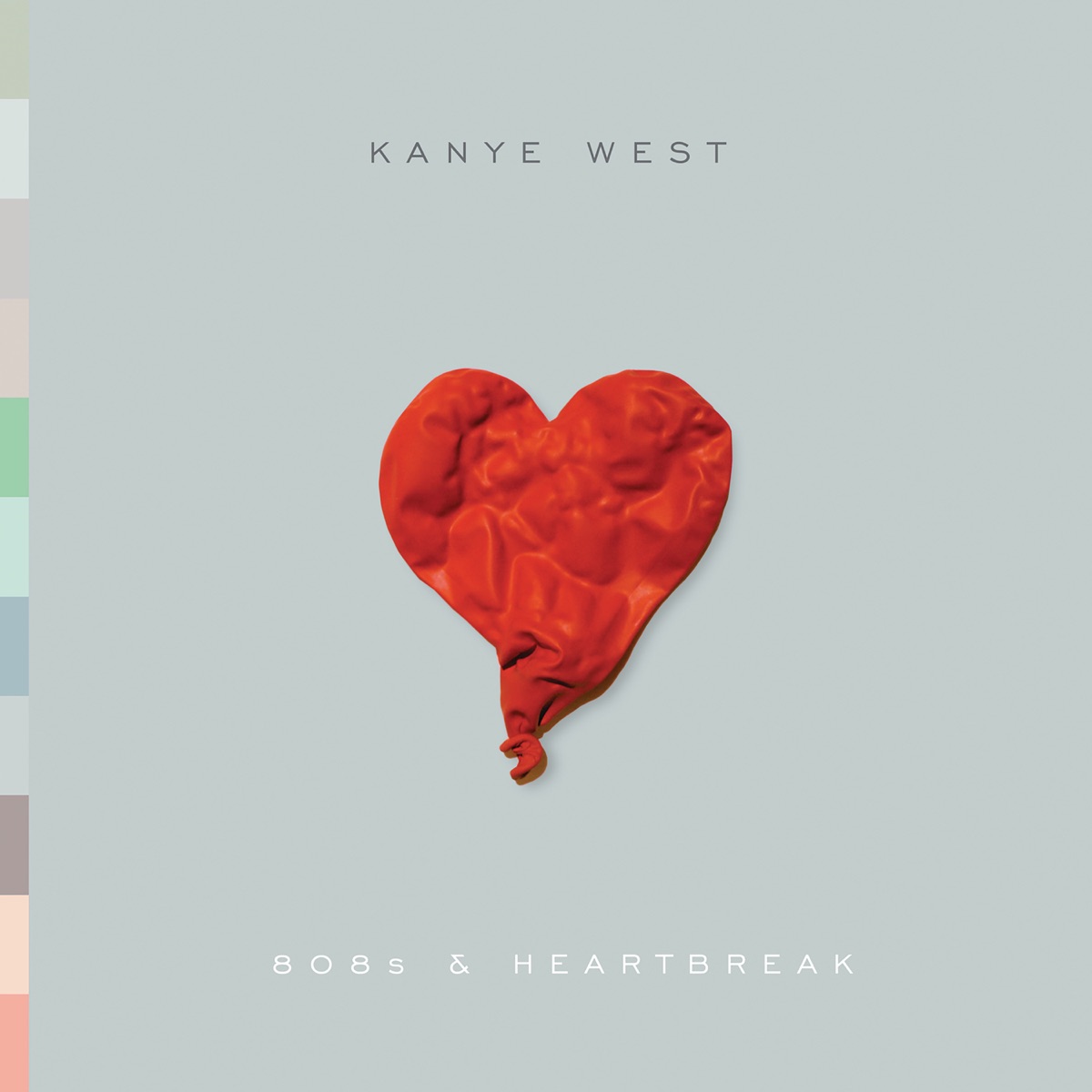
808s & Heartbreak by Kanye West (2008) — what a copy is worth and which pressing to own, in a full Lead-In dossier: Kanye West's fourth album, made after his mother's death and the end of his engagement.
808s & Heartbreak by Kanye West (2008) — what a copy is worth and which pressing to own, in a full Lead-In dossier: Kanye West's fourth album, made after his mother's death and the end of his engagement.
Kanye West's fourth album, made after his mother's death and the end of his engagement. Reviewed well, underrated for years, then credited with shaping a decade of sung, melancholy rap.
It wasn't panned; it was misfiled. The story of a flop redeemed by history gets the reception wrong and the influence right. The singing is the weakest thing on the record, and the reason it mattered.
On 7 September 2008, on the Paramount lot in Los Angeles, Kanye West premiered 'Love Lockdown' at the MTV Video Music Awards. He had 20 taiko drummers behind him and a voice that wavered in front of them. He'd finished the song three days earlier. A year before, his third album, Graduation, had sold 957,000 copies in its first week. Now the most confident voice in rap was singing through Auto-Tune, unsteadily, on live television, and daring the room not to take it seriously. That performance is the album in miniature.
The usual story is that 808s & Heartbreak was panned and later vindicated. That isn't what happened. It was reviewed well: Metacritic logs 36 reviews, 28 positive, 8 mixed and none negative. It went to #1 in America with 450,000 copies in its first week. What it didn't get was respect as a major work. In 2009 Pitchfork left it off its list of the decade's 200 best albums, while including three other Kanye West records. The album didn't change between then and 2018, when the tenth-anniversary pieces called it his most influential. What changed was what it was for. In 2008 it was a star's detour. By the middle of the next decade, a generation of singers and rappers had moved into the space it opened.
The circumstances are on the record, and they're best stated plainly. West's mother, Donda West, died on 10 November 2007, aged 58, the day after cosmetic surgery. The Los Angeles County coroner attributed her death to pre-existing coronary artery disease and multiple post-operative factors. She'd been his manager and his closest companion. He was back on stage within a week, breaking down during 'Hey Mama' in Paris on 17 November and again at the O2 in London five days later. In April 2008 his engagement to the designer Alexis Phifer ended. He told the Observer that year that the album had poured out of him and was therapeutic. At the top, he said, he felt alone without his mother or a partner.
The sound came from the road before it came from grief. The Glow in the Dark tour opened in Seattle in April 2008. West wanted to sing T-Pain's part on 'Good Life', so the band put Auto-Tune on his microphone. Jeff Bhasker, his keyboard player, said it was as if he could suddenly play an instrument. That spring West told the singer and songwriter Esthero he wanted to make a record sung all the way through. By June he was singing through the effect on Young Jeezy's 'Put On'. He credited T-Pain as a teacher, and called Auto-Tune simply a sound he liked, one he'd used as far back as 'Jesus Walks'. The title names the other half. He told the Observer that 'heartbreak' was his word for the 808 kick drum pitched down, which most producers didn't bother to do. Bhasker uses the word for the vocal chain instead. Either way, the title describes a sound before it describes a feeling.
It was made fast, though how fast depends on who you ask. Bhasker and Mike Dean remember 3 weeks. West told Clash it was about a month of recording, then 3 weeks of mixing and finishing. The credits list Avex in Honolulu, Glenwood in Burbank and Chung King in New York. Manny Marroquin mixed it at Larrabee in Los Angeles in less than 2 weeks, while West was still on tour. Dean described the rules West set in Hawaii: every song needed an 808, no ordinary hip-hop beats, tribal drums. No I.D., West's early mentor from Chicago, brought 'Heartless' over from sessions for Jay-Z's The Blueprint 3. Kid Cudi was newly signed and not yet a chart name, and his 'Day 'n' Nite' reached the Hot 100 only in January 2009. He co-wrote four songs and, by West's own account, brought the opening of the 'Heartless' hook.
Its reputation is for bareness, and that's half right. The drum programming is spare, and the 808 sits at the centre of every track. Marroquin says he left it un-EQ'd to keep it pure. But the credits also list a 10-piece string section, arranged and conducted by Larry Gold on five tracks. There's a choir on 'Say You Will' and four percussionists on 'Love Lockdown'. Three outside sources are credited, too. Patrick Doyle's film music for Great Expectations sits under 'RoboCop', Nina Simone's 'See Line Woman' under 'Bad News', and Tears for Fears' 'Memories Fade' inside 'Coldest Winter'. The emptiness is arranged. That's why the record still sounds deliberate rather than thin.
Listen to how it opens. 'Say You Will' is 6:17 long, and West stops singing at about the 3-minute mark. The second half is instrumental. It tells you at once that this is a record about atmosphere rather than verses. 'Heartless' is the opposite. Its hook arrives 8 seconds in, written partly by Cudi, and it's the album's one perfect pop song: a US #2, certified Diamond by the RIAA in July 2026. 'Love Lockdown' sits between the two. West says he freestyled the first version in one take, and the finished record keeps that rawness. On the album, four credited percussionists do what the taiko drummers did on television.
The weakest thing on the album is the thing it's built on. West conceded to The Fader in 2008 that he might not be able to sing. Auto-Tune doesn't change that so much as frame it. Over 52 minutes, the effect that sounds like a confession on 'Say You Will' starts to sound like a limit. The guests make it worse, not better. Pitchfork's Scott Plagenhoef called the guest spots the album's weak points in 2008, and he was right. Young Jeezy on 'Amazing' and Lil Wayne on 'See You in My Nightmares' drag the record back towards the rap album it had chosen not to be. 'Pinocchio Story', a 6-minute freestyle recorded live in Singapore and hidden at the end of the CD, is the most honest thing on it and the least finished. In the New York Times, Jon Caramanica called the album at best a rough sketch for a great one. That describes it exactly.
The best of it is short. 'Coldest Winter' runs under 3 minutes. It's built from Roland Orzabal's 'Memories Fade', a song from Tears for Fears' 1983 album The Hurting, and it's widely heard as an elegy for Donda West. 'Street Lights', co-written and co-produced by Mr Hudson, is the album at its most tender. It found its audience late: Juice WRLD remembered singing it as a child. Neither was a hit. Both are the songs most likely to make a listener who came for 'Heartless' stay for the album.
Its influence is the best-documented thing about it, and also the most overstated. The Weeknd said in 2015 that he counted the album's change of direction among his generation's most important bodies of work. Tom Krell of How to Dress Well said his project wouldn't exist without it. In Britain, the Pet Shop Boys admired 'Say You Will' enough to hire Andrew Dawson, who engineered the album, for Elysium in 2012. Critics have gone further. Pitchfork's Jayson Greene argued in 2015 that Drake emerged nearly whole from it, and the 2018 anniversary pieces traced emo-rap back to it. Drake himself has credited West in general rather than this album. His producer, Noah '40' Shebib, has played down its role in So Far Gone. The honest version is narrower than the legend, and still large. It made a sung, melancholy, machine-treated voice a legitimate centre for a rap record, and a great many people walked through that door.
Hearing it in 2026 means hearing it next to its author's public record since 2022. In October that year West posted antisemitic statements. Within weeks, Adidas had ended its partnership with him and CAA had dropped him. In May 2025 he released a song called 'Heil Hitler', and that July Australia cancelled his visa over it. In January 2026 he took out a full-page apology in the Wall Street Journal. In it, he attributed his behaviour, in his own words, to a brain injury and bipolar disorder. The Anti-Defamation League said the apology didn't undo his history. In April 2026 the Home Office withdrew his permission to travel to Britain, and the Wireless festival he was to headline was cancelled. The album itself has stayed where it was: on the streaming services, and certified 4× Platinum in July 2026. Kid Cudi, who co-wrote four of its songs, broke with West in 2025. He was back on stage with him in Chicago in September 2026.
How much that should change the listening is a listener's call. What it doesn't change is the record. 808s & Heartbreak is a better idea than it is an album. It has a thin voice, two guest verses it didn't need, and a hidden freestyle it should have hidden better. Around those sit five songs that sound as considered now as they sounded strange in 2008: 'Say You Will', 'Heartless', 'Love Lockdown', 'Street Lights' and 'Coldest Winter'. Its importance isn't in doubt, and its quality is real but uneven. Very few albums have mattered this much while sounding this unfinished. The unfinishedness is part of why it mattered: it made the sketch acceptable.
The original to own is the 2008 US 2×LP+CD deluxe edition, Roc-A-Fella B0012198-01, in a gatefold with KAWS artwork, in US shops from 16 December 2008. The catch: later US pressings reuse the same catalogue number and barcode (6 02517 87281 3), and every vinyl edition has the KAWS cover. The runouts are the only reliable test. 2008 copies read 'B0012198-01-LP1A RJ' and so on, with 'STERLING' stamped, from lacquers cut by Ray Janos at Sterling Sound. The 2014 reissue reads 'RE-1'; later pressings carry GZ Media codes.
© The Lead-In · an independent, reader-supported music publication.