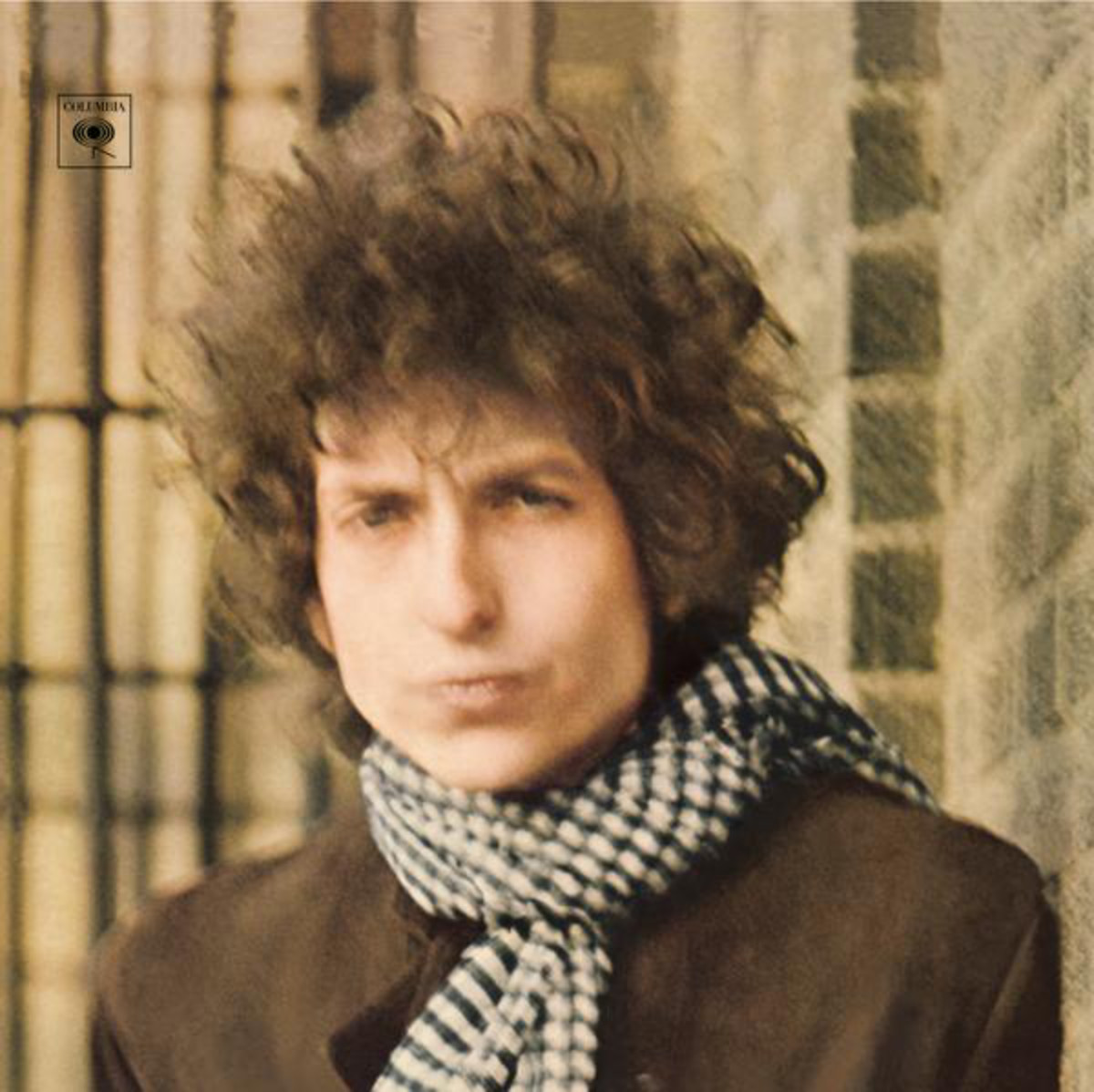
Bob Dylan's 1966 double album, cut mostly in Nashville by session players who sometimes waited all night for songs he was still finishing. The best of it sounds found, not arranged. Side four runs long.
- Released
- 20 June 1966 (US, Columbia C2L 41 mono / C2S 841 stereo), the date Clinton Heylin found in a Sony database; Olof Björner's chronology gives 28 June
- Label
- Columbia (US); CBS 66012 (UK)
- Producer(s)
- Bob Johnston
- Runtime
- 72:54 (2003 timings); about 73 minutes on a double LP
- Chart peak (US)
- #9 (Billboard Top LPs, chart dated 1 October 1966)
- Chart peak (UK)
- #3 (chart dated 3 September 1966), 15 weeks on the chart
- Certifications
- RIAA 2× Platinum (22 September 2003); BPI Platinum (22 July 2013)
- Awards & honours
- Grammy Hall of Fame (1999). It isn't in the US National Recording Registry: Dylan's entry there is The Freewheelin' Bob Dylan
Blonde on Blonde was made by a band told never to stop playing, waiting through the night while Dylan finished his lyrics. That method gave him some of his finest songs, and a side four that doesn't know when to end.
The session at Columbia's new studio in Nashville began at 6pm on 15 February 1966. Then the players waited. Kris Kristofferson, a janitor at the studio at the time, saw Bob Dylan writing at the studio piano through the night. At about 4am the band began to record. By 5.30 they had four takes. Kenny Buttrey, the drummer, had expected a song of 2 or 3 minutes. After the second chorus the whole band kept building. After about 10 minutes, he said, the band were laughing, because they'd peaked 5 minutes earlier. The fourth take is the 'Sad Eyed Lady of the Lowlands' that fills side four of Blonde on Blonde on its own.
That night is the record in miniature. Dylan reached Nashville with one usable track from four months of sessions in New York. Between 14 February and 10 March, in two blocks of sessions, he cut 13 more. He often worked on lyrics while the band waited, sometimes for 6 hours, Al Kooper remembered. The method explains what's best about Blonde on Blonde. These songs sound found rather than arranged, played by men reacting in real time to a singer they couldn't predict. It also explains the flaw. A record made on the rule of never stopping doesn't always know when to stop, and the second disc shows it.
It nearly went another way. From October 1965 Dylan had been recording at Columbia's Studio A on Seventh Avenue in New York. He worked with members of the Hawks, his touring band since September, and with Kooper, the pianist Paul Griffin and the drummer Bobby Gregg. The sessions kept stalling. 'Freeze Out', the song that became 'Visions of Johanna', went through 14 takes on 30 November without a keeper. 'She's Your Lover Now' took 9 hours on 21 January, by Sean Wilentz's count, and never made the album. Only 'One of Us Must Know (Sooner or Later)' survived, on its 24th take on 25 January. Dylan later told Robert Shelton he'd been very down: in 10 sessions, he said, they hadn't got a single song. That's harsher than the tape, since one did make the record. He blamed the band, though he said he hadn't wanted to see it.
Bob Johnston, who'd taken over as Dylan's producer during the Highway 61 Revisited sessions, had suggested Nashville back then. Dylan's manager, Albert Grossman, objected, and so did Columbia. Howard Sounes writes that Grossman threatened Johnston if he mentioned Nashville again. Dylan sided with his producer. Johnston and Charlie McCoy, a Nashville player who'd overdubbed on 'Desolation Row' in 1965, put together a band of local session men. Dylan brought Kooper and Robbie Robertson down from New York. The room was Columbia's Studio A at 804 16th Avenue South. It had opened on 22 October 1965, less than four months before.
What happened in that room is well documented, and it was unusual. By the March sessions, Rolling Stone reports, Dylan was working on songs at a piano in his hotel room. Kooper took each one to the Nashville players, so they'd be ready when Dylan turned up with the finished song. Nobody had charts, so the band followed Dylan's hands. Kooper called the process 'the road map to hell'. Johnston's own rule was never to stop playing, because Dylan never did anything the same way twice. At some point Johnston took down the baffles between the players, apparently at Dylan's request. Buttrey said that changed how they played together: it felt like playing on a tight stage. That closeness is the album's sound.
'Visions of Johanna' is the best evidence. New York gave it 14 tries. Nashville got it on the first night, on the fourth take. Listen to how little the band does. Kooper's organ moves around Dylan's acoustic guitar. Joe South plays bass, and Kooper later singled his part out for praise. Robertson's guitar doesn't slip in until the second verse. Under each harmonica break, Buttrey keeps a steady snare with tolling taps on the cymbal. Across 7:33 nobody plays a note for show, and the song is better for it. Joan Baez insisted it was about her. It's too strange to be about anyone.
The one New York track shows the other way the album could have gone: built up take by take. Johnston suggested starting 'One of Us Must Know' on a harmonica swoop after take 17, and the master came seven takes later. In the choruses, Griffin's piano swells and Gregg's drum rolls push the song forward. It's the tensest track on the record, and it was worked out the hard way. The blues numbers are where Nashville's speed costs something. 'Leopard-Skin Pill-Box Hat' went through 17 takes in the two cities before a one-take master on 10 March. Wilentz says reworked versions built on a knock-knock joke fell flat. The finished track is fun, and slight. 'Obviously 5 Believers', from the same final session, is better. McCoy plays the harmonica line on top, and Kooper plays a fuzzy bass run on a Lowrey organ.
The March sessions are looser. 'Absolutely Sweet Marie', cut between about 1 and 4am on 7 March, is built on Buttrey. He keeps shifting his snare beat through the take, layering one pattern on another. At 2:54 the song opens into a harmonica-and-drums break just under a minute long. It's the best minute on the album. On 'Most Likely You Go Your Way and I'll Go Mine', McCoy added a trumpet line between takes, doubling Dylan's harmonica. Wilentz says that changed the song, and he's right: it turns a put-down into a party. 'I Want You', Kooper's favourite, was the last thing recorded. It's the fifth take, from between about 3 and 7am on 10 March. Wayne Moss runs rapid sixteenth notes through it on guitar. Wilentz hears a smoother, sweeter Dylan on this album than listeners were used to. 'I Want You' is where that's easiest to hear.
In 1978 Dylan gave the sound a name. He said some tracks on the album came closest to the sound he heard in his head, 'that thin, that wild mercury sound'. In the same breath he called it metallic and bright gold. Kooper put it more plainly: nothing, he said, captures 3am better. Both descriptions fit the slow songs best. 'Rainy Day Women #12 & 35' fits neither. Johnston said it sounded like a Salvation Army band, so Dylan asked if they could get one. Johnston rang McCoy, who woke the trombonist Wayne Butler. Buttrey was told to get a drum, and the band marched round the studio. It was a #2 hit in America. It's also the one track here that has worn thin.
The method has a cost, and most of it sits on the second disc. Sid Smith, reviewing the album for the BBC in 2007, called side one close to perfect. He heard the energy slacken across the second disc, and named 'Sad Eyed Lady of the Lowlands' as the chief culprit. He's only half right about the disc, since side three holds 'Absolutely Sweet Marie'. He's right about the song. Dylan had married Sara Lownds the previous November, and Shelton heard it as a wedding song. Wilentz hears echoes of Bach's 'Jesu, Joy of Man's Desiring' in the melody. The opening verses are some of the gentlest writing Dylan had done. But the arrangement has nowhere to go, and Buttrey's account suggests the band knew it. At 11:20 it's a lovely song asked to fill a side, and it can't.
Elsewhere the slack is in the writing. '4th Time Around', the first song finished in Nashville, is one critics have long heard as an answer to the Beatles' 'Norwegian Wood'. Wilentz calls it a much slighter song, Dylan impersonating Lennon impersonating Dylan. That's fair, and the joke doesn't need 4:35. The other weakness is the stereo mix. According to Steve Berkowitz, Johnston said the mono mix took three or four days and the stereo about four hours. The care went into the mono. Berkowitz recalls asking him, during work on the 2003 SACD, why the acoustic guitar sits left of centre in the second verse of 'Just Like a Woman'. Johnston said he must have just set the knob there.
Columbia released it in June 1966 as a double LP, and it reached #9 in America and #3 in Britain. What it changed is easiest to trace through Nashville. Dylan went back there in late 1967 to make John Wesley Harding, with McCoy, Buttrey and Johnston. Joan Baez and Ian & Sylvia followed him to Columbia's Nashville studios before the decade was out. Some of the session men even re-formed as a novelty act, the Mystic Knights Band and Street Singers. With Johnston, they sent up hits in the 'Rainy Day Women' style. Robert Christgau, writing in Esquire in May 1968, found it Dylan at his most involuted and neurotic, and exhilarating. Rolling Stone ranked it #9 of all time in 2003 and 2012, then #38 in 2020. That slide says more about the list than the record.
Blonde on Blonde holds some of the best songs Dylan ever wrote, and it isn't quite his best album. 'Visions of Johanna', 'Absolutely Sweet Marie', 'I Want You' and 'One of Us Must Know' came out of conditions nobody would plan. They sound like it, in the best way. But a double album needs a shape. This one runs long on its fourth side, and its stereo mix was rushed. Highway 61 Revisited, the year before, is the tighter record. Treat the first three sides of this one as the album, and forgive them a couple of slight songs. At their best they're as good as rock got in 1966. Side four is a beautiful song that should have stopped 5 minutes sooner.
Pressing guide — the one to own
The original to own is the 1966 US mono double LP, Columbia C2L 41, in a gatefold. It has red Columbia 'two-eye' 360 Sound labels with MONO in white at the foot, and a 'P' in the runout means Pitman. The inside spread should include the Claudia Cardinale photograph. White-label radio copies exist too: collectors log 129 of them against 6,461 of the standard Pitman mono.