
Deep Dive
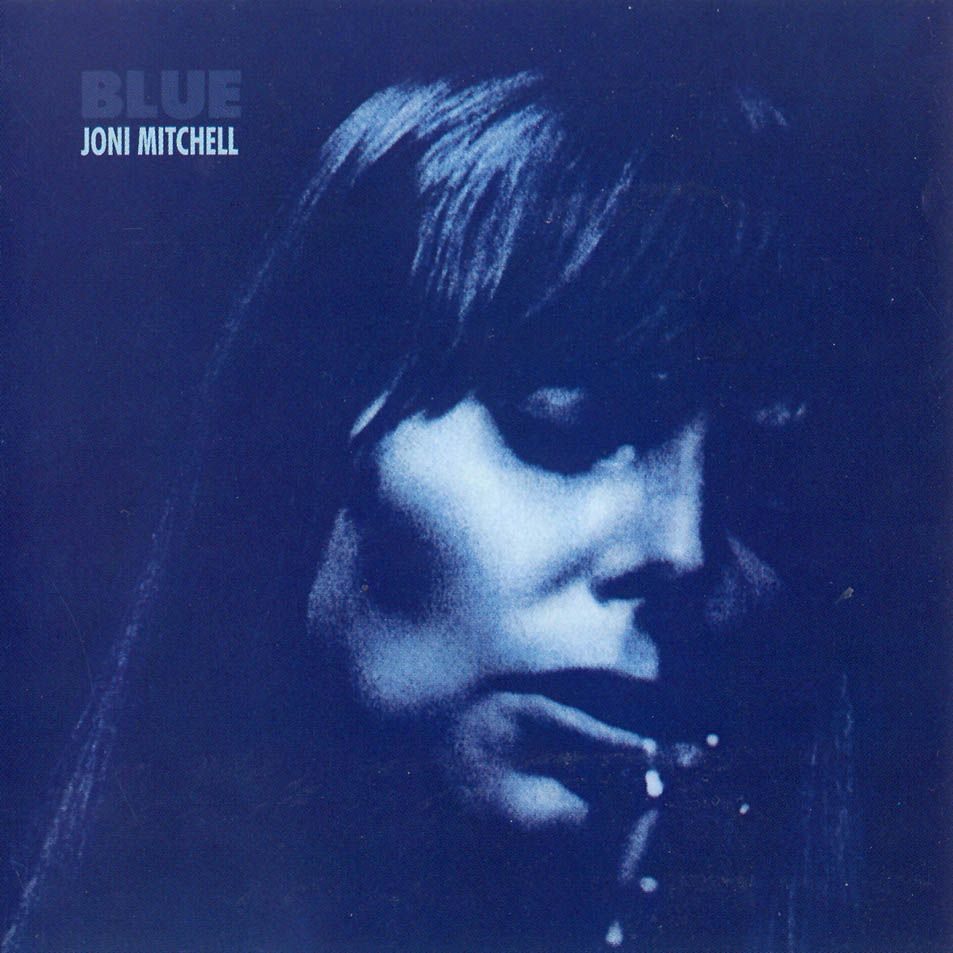
Blue
Blue by Joni Mitchell (1971) — what a copy is worth and which pressing to own, in a full Lead-In dossier: Joni Mitchell's fourth album, recorded at A&M Studios with four guest players and a dulcimer.
Blue by Joni Mitchell (1971) — what a copy is worth and which pressing to own, in a full Lead-In dossier: Joni Mitchell's fourth album, recorded at A&M Studios with four guest players and a dulcimer.
Joni Mitchell's fourth album, recorded at A&M Studios with four guest players and a dulcimer. It's famous as a record with no defences. The songs keep more back than that, and are better for it.
Blue is remembered as the sound of Mitchell with her guard down. The songs tell another story: they keep secrets and grow out of a few repeated chords. Where that discipline slips, on two of the piano ballads, the bareness stops helping.
Joni Mitchell has said that when she played Blue to Kris Kristofferson, he told her to keep something of herself back. She thought he was embarrassed by it, and that other people were too, at first. We'd say that reaction still sums up the record's legend. Blue is the album where Mitchell dropped her guard, the one people reach for when they mean a singer telling the truth. Mitchell signed up to the legend herself. In 1979 she told Cameron Crowe of Rolling Stone that she'd made it with no personal defences. She compared herself at the time to the cellophane wrapper on a packet of cigarettes.
The legend is half right. Blue does sound unguarded, and its plainness is real. It's her fourth album: 10 songs in under 36 minutes, with four guest players between them. But one of its songs, 'Little Green', held a secret that stayed hidden for 22 years. What lasts is the writing, which decides exactly how much to show and builds the rest from a few repeated chords. Heard that way, Blue is a great record about control. It also has a flaw, and it's worth naming. The bareness that makes the dulcimer songs feel close leaves two of the piano songs sounding thin.
Two of the songs lead back to a spring away. In late February 1970 Mitchell arrived in Matala, a village on the south coast of Crete. Cary Raditz, an American who cooked at a taverna there, told the story to Marc Myers of the Wall Street Journal in 2014. She stayed in his small cave, and they spent nearly every day together for about two months. On 19 April 1970, his 24th birthday, she played him a new song called 'Carey'. He wasn't bowled over, he says: it sounded like a ditty she'd tossed off. She was always saying she'd leave soon, and that spring she left for Paris. When Raditz heard the finished album in Los Angeles in 1971, the surprise was 'California', which mentions him. Later he pointed out the misspelt title, and she apologised and called it a spelling mistake.
Not everything was new. Mitchell wrote 'Little Green' in 1966, after signing the papers that gave up her daughter for adoption. Blue's own credits date its copyright to 1967. The daughter had been born the year before, when Mitchell was 21. The fact wasn't public until about 1993, when an art-school roommate from the 1960s sold the story to a tabloid. Mother and daughter were reunited in 1997. Reviewing Blue for Rolling Stone on 5 August 1971, Timothy Crouse found 'Little Green' too cryptic to follow. He was right that the song was closed. He was wrong to count that against it.
Mitchell's own accounts point the same way, toward exposure as a choice. She told Crowe in 1979 that Blue was a turning point, and in the same interview she called herself a confessional poet. In 2013, in words Rolling Stone quoted when it ranked the album, she linked Blue to realising how many people were listening to her. She wanted them, she said, to find out who it was they were worshipping. That's an artist deciding what to show. The confession on Blue is real. It's also edited and placed, which is why it doesn't curdle into a diary.
The recording is as plain as the legend says. Blue was made at A&M Studios in Hollywood with Henry Lewy as engineer. Lewy had worked with Mitchell since Clouds in 1969, and his obituary counted 13 albums together over 14 years. He described her method in general terms. She built arrangements by listening back to her own guitar or piano. When other musicians came in, the first few takes were mostly for listening, and the best moments often came in those takes. The label credits four guests. Stephen Stills plays bass and guitar on 'Carey'. Russ Kunkel drums on three songs, James Taylor plays guitar on three, and Sneaky Pete Kleinow adds pedal steel to two. Five songs have no guest at all.
The dulcimer is the record's real signature. Mitchell bought a dulcimer for $200 at the Big Sur Folk Festival from its maker, Joellen Lapidus, who thinks it's probably the one on Blue. Lapidus remembers a postcard from Mitchell thanking her for it and saying she'd written some new songs. In Matala, Raditz watched her play the same chords over and over until a song opened up. You can hear that method on the record. 'All I Want' opens the album on the dulcimer, and Mitchell doesn't sing for 22 seconds. On 'Carey' it drives the song, with Stills and Kunkel underneath. On 'California' and 'A Case of You' it holds a steady drone while the melody moves over it. The last three are the best songs on Blue, and that's no accident. The instrument limits her, and the limits make her write shorter, stronger tunes.
The guests are used sparingly, and well. Taylor's guitar on 'All I Want' sits under the dulcimer rather than beside it. Kunkel's drums are on only three songs, and 'Carey' is the first of them. It's the moment the record lets the room in, and the lift is all the bigger for coming fourth. Kleinow's pedal steel is on only two songs, 'California' and 'This Flight Tonight', and both are songs about travelling. 'This Flight Tonight' is the shortest track, at 2:50, and the most underrated. Its title line doesn't arrive until 0:49, and the song spends the wait building pressure. Nazareth's 1973 hit version shows how much of a rock song was hiding in it.
The piano songs work differently, and less reliably. 'River' is the one that has travelled furthest. By October 2026 jonimitchell.com counted 1,094 recordings of it, about twice the 541 it lists for 'A Case of You'. Crouse heard the piano opening as 'Jingle Bells' in a minor key, and he called the song self-pitying. The first point is right and the second isn't. The carol fragment sets the song inside a Christmas it can't join, and the voice is careful rather than sorry for itself. From about 3:14 the piano carries on alone, and the song ends without tidying itself up. 'My Old Man' is the other strong piano song, loose and warm, with two short piano breaks that let it breathe before the voice comes back, at about 1:43 and 2:43.
Then there's the flaw. The title track and 'The Last Time I Saw Richard' use the same bare piano and give it less to carry. 'Blue' drifts, and the piano-only stretch from about 1:28 sounds like waiting more than playing. 'Richard' closes the album with a story told at length, its melody following the words instead of lifting them. Crouse called it cluttered in 1971, and on this one he has the better of the argument. Here the plain production costs something. On the dulcimer songs the playing is the arrangement, and nothing more is needed. On these two there's only a voice and a piano, and the production leaves every slack bar in plain view.
Rolling Stone and the Village Voice were warm but divided. Robert Christgau gave Blue an A minus in the Village Voice on 19 August 1971 and called it her best. He later raised the grade to an A. He heard it as a study of easy-come love among California's pop elite. Crouse called the album very powerful and her most focused, but said several cuts sounded like trunk songs, old material dusted off. Britain took it higher than America did. Blue entered the UK chart at #42 on 24 July 1971 and was #3 a week later, still her highest UK album placing. On the Billboard 200 it reached #15 on 31 July. On the chart of 7 August, with Blue still at #15, Carole King's Tapestry was #1 in its 18th week on the chart. That issue of Billboard also reported that Mitchell was leaving Reprise for David Geffen's new label, Asylum.
The reputation rose later, and the certified sales never caught up with it. The RIAA certified Blue Platinum on 13 October 1986, the same day as Ladies of the Canyon. Court and Spark has since gone to 2× Platinum, so on certified figures Blue isn't her biggest seller in America. The honours came in the next decades. Blue entered the Grammy Hall of Fame in 1999, and the BPI certified it 2× Platinum in 2009. In 2020 Rolling Stone put it at #3 in its list of the 500 greatest albums. The songs travelled too. Prince was filmed singing 'A Case of You' at First Avenue in 1983, and later recorded it as 'A Case of U'. Even 'River', at 1,094 recordings, trails 'Both Sides Now' from Clouds, which jonimitchell.com counts at 1,879. So Blue's standing rests on the album as a whole more than on any one song, which suits a record this inward.
What is it worth now? Mitchell gave a fair verdict herself in 1979. She told Crowe that Mingus had more sophistication, but that there was hardly a dishonest note in the vocals on Blue. Honesty is the right word, as long as it isn't confused with helplessness. These songs tell you what they choose to, and the dulcimer kept their melodies short and strong. 'Carey', 'California' and 'A Case of You' are as good as this kind of songwriting gets, and 'River' isn't far behind. The title track and 'Richard' aren't in that company, and the bare production leaves them nowhere to hide. On a record of 10 songs, two soft spots are a real cost. Blue is still one of the best albums anyone has made about telling the truth, and the right place to start with Mitchell.
The original to own is the 1971 US Reprise MS 2038, in a gatefold sleeve. The earliest copies come in a plain deep-blue inner sleeve, with no Warner Communications logo in the label rim text. Many US copies carry 'BG' in the runouts, for Bernie Grundman, who cut the lacquers. A plant letter tells you where it was pressed: 'S' for Santa Maria, 'P' for Pitman, 'T' for Terre Haute. There's no mono version. No 'first state' cover tint is documented, so don't pay extra for one.
© The Lead-In · an independent, reader-supported music publication.