
Deep Dive
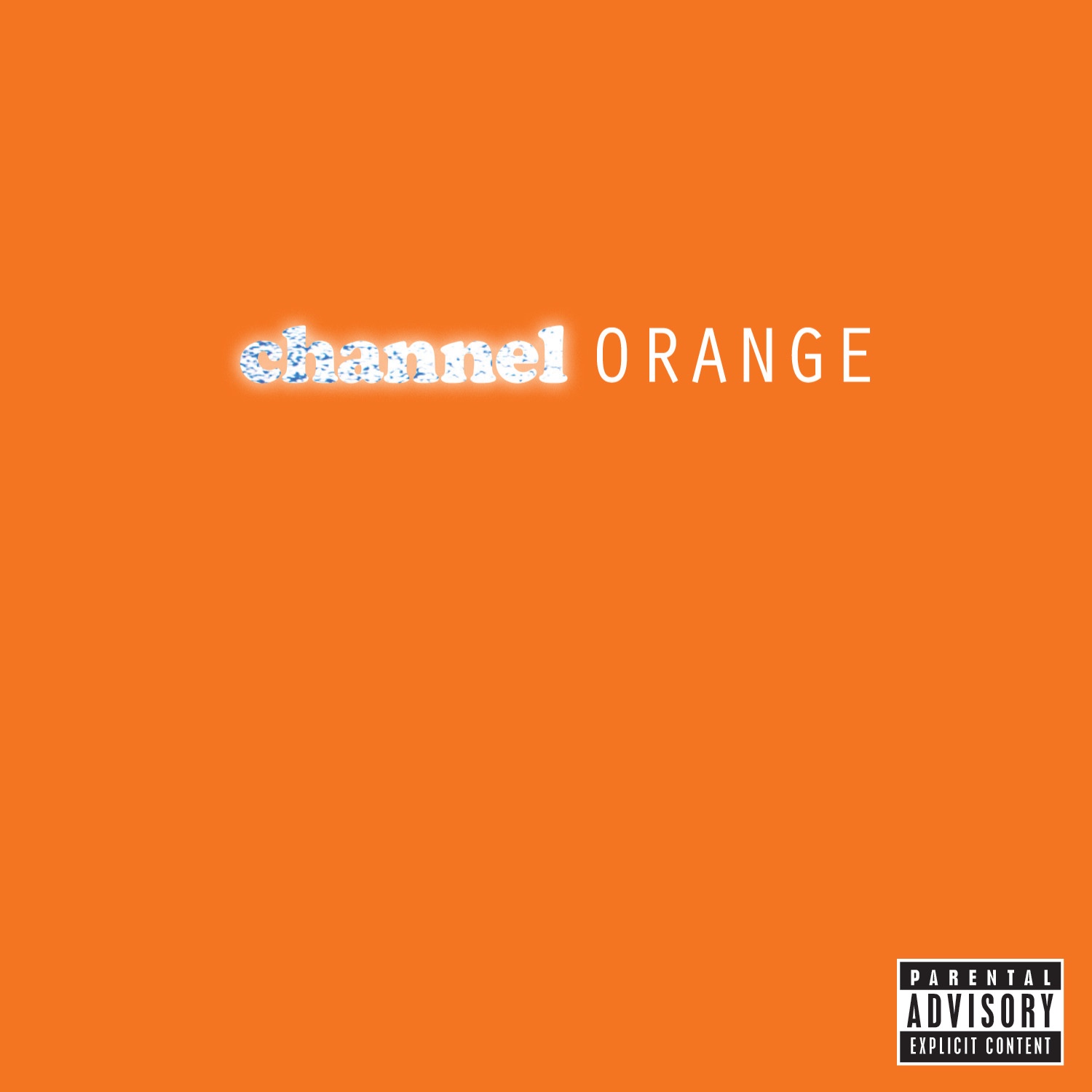
Channel Orange
Channel Orange by Frank Ocean (2012) — what a copy is worth and which pressing to own, in a full Lead-In dossier: Frank Ocean's first studio album, sequenced like a night of television before a vocal was cut.
Channel Orange by Frank Ocean (2012) — what a copy is worth and which pressing to own, in a full Lead-In dossier: Frank Ocean's first studio album, sequenced like a night of television before a vocal was cut.
Frank Ocean's first studio album: 17 tracks of played, story-led R&B, made after Def Jam shelved him and released six days after his letter about a first love.
Channel Orange was sequenced before it was sung, like a night of television, and that plan is both its genius and its limit. Its best songs have kept their nerve. The fragments that fill the schedule around them haven't.
Before a vocal was recorded, Channel Orange had its running order. In early 2011 Frank Ocean and the producer Malay began writing together. They wrote 'Super Rich Kids' on their first day and 'Pyramids' over the next two. Within two to three months they had the whole record. Ocean wrote its songs and interludes on a whiteboard and fixed the order there. Nine months of recording followed, and the order never changed. Malay told Complex they hadn't written 50 songs and picked the best. They wrote an album, in sequence, and then made it.
That plan is the key to the record, for better and worse. The New York Times reported that the interludes were inspired by television, and that they stitch the album together. So it plays like an evening of flicking channels: a rich kid's empty afternoon, an addict's story, a confession to a cab driver, Cleopatra's Egypt. At its best, that gives 17 tracks the pull of a single night's viewing. At its worst it's channel-hopping, with fragments that fill a slot in the schedule rather than earn one. The songs are the reason to come back. The frame around them is what has dated.
It exists because Def Jam didn't want it. The label signed Ocean at the end of 2009, with help from the producer Tricky Stewart. Then, in the New York Times Magazine's account, it gave him no recording budget and left him on the shelf. So he made Nostalgia, Ultra himself and gave it away in February 2011. Within weeks he was in the studio with Beyoncé, and he went on to sing on Jay-Z and Kanye West's Watch the Throne. That April, Barry Weiss, the new head of Island Def Jam, asked to meet him. By the time he made Channel Orange, the label was paying for it largely unheard. Weiss said as much to the Times Magazine, though he wouldn't confirm Ocean's figure of $1 million.
You can hear the change of method at once. The mixtape leaned on other people's records, and Robert Christgau called this one almost sampleless. Malay plays guitar, bass, keyboards and brass. The drums on 'Crack Rock' and 'Monks' are live. Pharrell's 'Sweet Life' began as a programmed track and was recut with players. Large parts were recorded at EastWest in Hollywood, in rooms the Beach Boys and Frank Sinatra had used, some with the equipment unchanged. In Rolling Stone, Jody Rosen heard chord changes from Stevie Wonder's Innervisions, vamps from Marvin Gaye's Here, My Dear and guitars from Prince's Purple Rain. None of that was new in 2012, and the album doesn't pretend otherwise. It sounds like a careful 1970s soul record, made in 2011. Its originality lies somewhere else.
It lies in the writing, and in who does the telling. Ocean told the Times he admired the anonymity film directors have. 'The work is the work,' he said. Malay put it another way, saying Ocean builds worlds that aren't necessarily his own. So the album is crowded with other people. 'Crack Rock' grew from the addicts' stories Ocean heard at the Narcotics and Alcoholics Anonymous meetings his grandfather mentored. 'Super Rich Kids' watches bored, wealthy teenagers without envy and without contempt. 'Not Just Money' is credited to another writer altogether, listed on the label as 'A. Rosie'. Even the executive producer is someone else: the credit goes to Everest, Ocean's Bernese mountain dog. It's a joke, and it reads like a policy too. In the same interview he called always being the focal point unhealthy.
Then, six days before release, he stepped out from behind the work. On 4 July 2012 he posted an image of a TextEdit window to Tumblr, titled 'thank you's'. He'd written it the previous December, on a flight from New Orleans to Los Angeles. It described meeting a man four summers earlier, when Ocean was 19, and falling in love with him. It named no songs, and he'd planned to put it in the liner notes. Critics read 'Bad Religion' and 'Forrest Gump' through it anyway. That's a fair reading, and a narrow one. Ocean has declined to put a label on himself since. The album's real subject is longing that goes unanswered, and it runs just as strongly through the stories that are plainly not his.
'Pyramids' is the plan at its most ambitious. It was written in those first days with Malay and released in June 2012 as a 9:53 single. It starts in ancient Egypt and turns into a present-day story of a stripper supporting a pimp. Ocean told the Guardian it was fantasy, built on a dynamic from his own family. The singing stops at 3:45 and doesn't return until 4:51. In that gap, one song turns into another. John Mayer plays a solo, and after the last vocal at 8:15 the track runs on for more than a minute and a half. Rolling Stone's 500 list calls it the album's peak. It's the boldest idea here, but not the best song. The first half is the stronger tune, and the second outstays its welcome.
The best song is 2:55 long. 'Bad Religion' is set as a confession to a cab driver, and it's where the album's restraint pays off. Ocean sang it on Late Night with Jimmy Fallon on 9 July 2012, his television debut. Its strings sound like a section, but there were only a few players. The engineer Jeff Ellis moved them to different seats for each pass in Studio 1 at EastWest, the room where Sinatra recorded 'My Way'. He caught them on a pair of old stereo ribbon microphones and layered the takes. The song needs both things the trick gives it: the scale of the feeling and the privacy of a confession.
Elsewhere the craft is just as deliberate. 'Thinkin Bout You', the first full song, is built like a standard, with the title phrase in by 0:22, and it was nominated for Record of the Year. 'Pink Matter' works by leaving space. The singing drops out at 1:01 and again at 2:20, and André 3000 adds a verse and a guitar part. 'Lost' is the brightest pop song here, with a hook that comes round 22 times over what Pitchfork heard as the story of a dealer and his mule. The tune and the tale pull against each other, and that's the point. Holding it together is the voice. Ocean and Om'Mas Keith, who joined in June 2011, recorded the vocals first, in album order, over about nine months. When Rick Rubin heard the finished record, he was struck by the rawness of the vocals. He urged Ocean not to tinker with the recordings. On 'Crack Rock' an engineer wanted to smooth out a cracked, breathy take. Ocean kept it. The whole album trusts that instinct.
The plan that gives the album its shape also gives it its slack. Four of the 17 tracks run under 80 seconds. 'Fertilizer' isn't even Ocean's: the label copy credits James Fauntleroy and Reggie Perry, and it lasts 39 seconds. 'White' reworks the instrumental end of a song from an Odd Future record, with Mayer on it. When the first official vinyl arrived in 2025, its early pressings left 'White' out, and it's hard to say the record lost anything. Then there's 'Monks', with its live drums and very little to say. Rosen quoted one of its lines as his example of Ocean's lyrics going soft. He also called Ocean, at times, 'less a songwriter than a purveyor of formless grooves'. On 'Monks' and the fragments around it, that's fair.
Christgau's reservation was different, and it's the sharper one. He gave the album an A minus but found no song on it as striking as the best of Nostalgia, Ultra. He had a point, and he named the songs: three from the mixtape, two of them built on other people's music. This album trades those peaks for evenness, and he heard that too. Few critics minded in 2012. Pitchfork gave it 9.5, and Alexis Petridis gave it five stars in the Guardian. It entered the American chart at #2 with 131,000 copies, behind the Zac Brown Band, and the British chart at #2 on downloads alone. It won the Grammy for Best Urban Contemporary Album and was nominated for Album of the Year.
Its influence is real, and easy to overstate. Complex argued in 2017 that SZA's Ctrl, Gallant's Ology and Khalid's American Teen were made in its wake, and SZA has cited Ocean in interviews. That's a critic's case, and a fair one. What those records took was less a sound than a licence. An R&B album could be a book of short stories, told by a singer who won't say which ones are his. Ocean himself moved on. Blonde, released independently in August 2016, went to #1 where Channel Orange had stopped at #2. By September 2016, Nielsen had counted 686,000 American sales of Channel Orange. Beside Blonde, the debut sounds tidy. That's a virtue as often as it's a limit.
People haven't stopped buying it. The BPI certified it 2× Platinum in January 2026, and the first official vinyl arrived in 2025, 13 years late. What they're buying is a great record in a frame that creaks. 'Thinkin Bout You', 'Super Rich Kids', 'Bad Religion', 'Pink Matter' and the first half of 'Pyramids' rank with the best R&B songs of the decade. They're sung with a nerve that still sounds unusual. The television conceit was clever in 2012 and reads as a device now, and it turns a handful of fragments into furniture. Channel Orange has more great songs than most debuts, and more than it quite knows what to do with. Hear it whole once, then keep the songs.
There's no 2012 vinyl to chase. The original physical release is the CD: Island Def Jam B0015788-02 in the US, out on 17 July 2012, and 602537102327 in Europe. Both hide 'Golden Girl' at the end of track 17. The first official vinyl came 13 years later. It's Blonded BLNDD 0000, a 2×LP sold through Blonded.co from June 2025, cut by Nick Townsend and plated by GZ Media. Its first pressings leave out 'White'. Only the variants with BLDD 000-C metalwork on side C put it back.
© The Lead-In · an independent, reader-supported music publication.