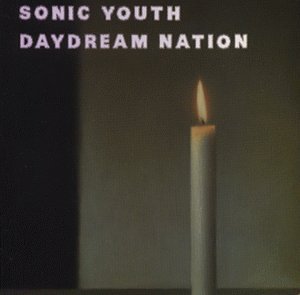
Moore, Gordon, Ranaldo and Shelley's fifth studio album: a 70-minute double made in a few weeks of 1988 for $30,000. It barely charted, and it won them a major-label deal.
- Released
- 17 October 1988 (UK, Blast First); 18 October 1988 (US, Enigma)
- Label
- Blast First, in association with Mute (UK, BFFP 34); Enigma, in association with Blast First (US, 7 75403-1)
- Producer(s)
- The band, with Nicholas Sansano
- Runtime
- 70:47 (12 tracks on the original LP and CD)
- Chart peak (US)
- Did not chart on the Billboard 200
- Chart peak (UK)
- #99 (Official Albums Chart, 1 week, October 1988)
- Awards & honours
- Library of Congress National Recording Registry (2005 list, named April 2006); #171 in Rolling Stone's 500 Greatest Albums (2020)
Its best music is the long stretches nobody sings over, played by a band at full strength. Its weakness is the finish: a record completed against a mastering date, with its biggest piece mixed in a single night.
The Village Voice published its Pazz & Jop critics' poll for 1988 on 28 February 1989. Public Enemy's It Takes a Nation of Millions to Hold Us Back came first. Daydream Nation came second, with 716 points from 58 critics. Its engineer, Nick Sansano, had worked on part of the Public Enemy record too. He was Greene Street Recording's own engineer, used to hip-hop sessions, and he knew little about the band he was now recording. When they met, he played them Public Enemy and Rob Base. In Matthew Stearns's account of the sessions, Sansano's job at first was simply to get the four of them on tape. It became a collaboration, and the sleeve credits the production to the band with Nicholas Sansano.
That first job is the key to the record. Daydream Nation is a great band caught in the act of playing, and its best music is the music nobody sings over. 'The Sprawl' runs 7:42, and Kim Gordon's vocal is over by about 2:46. "'Cross the Breeze" doesn't reach a vocal until about 2:26. 'Total Trash' gives most of its middle to a long instrumental noise break. Those passages carry the album's ideas, and the songs are often there to frame them. The flaw sits in the other half of a producer's job, the finishing. The record was completed against a mastering date, and its biggest piece was mixed in a single night.
The reasons it became a double are practical, and they're more interesting than ambition. After Sister in 1987 the band left SST in a dispute over payments and moved to Enigma. Moore brought in ideas, and the band worked them up into long pieces. Some of the improvisations ran past half an hour. Friends, Henry Rollins among them, had told them their records never caught what they did live. Moore was writing a lot, and by David Browne's account the album had to become a double to hold it all. The double format answered a storage problem: the band had more music than one LP would carry.
The songs were tested in public first. The band played them at 6 shows in June 1988, and some changed a lot before the studio. Moore sang "'Cross the Breeze" at those shows; on the record it's Gordon's. The album is full of its scene, too. Mike Watt, then in fIREHOSE, is the voice on 'Providence', from an answering-machine message he left while on tour in Providence, Rhode Island. 'Eliminator Jr.' got its name because the band thought it sounded like a cross between Dinosaur Jr. and ZZ Top's Eliminator. Pitchfork's Nitsuh Abebe writes that the band sensed a new mood forming, and were sure Dinosaur Jr. had something to do with it. He quotes Moore, from Stearns's book, calling it "a new aesthetic of youth culture". Stearns also groups the album with Hüsker Dü's Zen Arcade and the Minutemen's Double Nickels on the Dime, both from 1984, as the underground's three great doubles. That's the right company. Daydream Nation is a map of the American underground in 1988, drawn by people who'd helped build it.
The sessions were in Studio A at Greene Street, in SoHo. By David Browne's account, the band booked 3 weeks there from mid-July, at $1,000 a day. The total came to $30,000, the most they'd spent on a record, and Moore called it their first "non-econo" record. Stearns puts the actual recording at less than 2 weeks, starting in late July. Both can be true, since a room booked for 3 weeks isn't always recording for 3 weeks. Either way, the money bought time in a proper studio for a band used to working cheaply.
Sansano's account of the room, in Stearns's book, is about pushing the equipment until it broke. One of their experiments was to see how much signal the tape machine would take before they blew a fuse. Eventually a fuse did blow. A tube had failed, the noise turned into a feedback loop, and the whole studio shut down. When gear started to fail, they kept the tape rolling. Sansano also varied the speed of the multitrack during takes and mixes, which gave the sound unnatural overtones. The meltdown at the end of 'Providence' is a real amplifier blowing up. These were an engineer's choices to treat a band as a live event, and they're why the record still sounds like four people in a room.
'Teen Age Riot' sets the terms in its first 2 minutes. Gordon sings the intro, and her part ends at about 1:15. Then the band comes in, and Moore doesn't sing until about 2:05. Jon Matsumoto described the song in the same shape in the Los Angeles Times in 1994: Gordon's intro, then the eruption. Later the song drops its singer again, for more than a minute, from about 4:39 to 5:53. It's the opener and the first single, and the most direct song here. For the single the band cut it to 3:50, and the official video leaves out Gordon's intro. The album keeps all 6:58. They made a short version when radio needed one, and kept the long one for the record, which tells you what the record values.
The long middle of the record is where that choice pays off. Gordon said she took the title of 'The Sprawl' from William Gibson's Mona Lisa Overdrive, and some of its words come from Denis Johnson's novel The Stars at Noon. Once her vocal ends, the band plays on for almost 5 minutes. That half of the song makes the strongest case for the album's length. 'Eric's Trip' has the strangest instrument on the record. Lee Ranaldo sings words drawn from Eric Emerson's monologue in Andy Warhol's film Chelsea Girls. Behind him, Moore plays an old fretless Drifter strung with bass strings, and he plays it with a drumstick. It's also the first album on which Ranaldo sings more than one lead. He has 3.
'Total Trash' pushes the method further than the song can carry. The fan-compiled song database on the band's website calls its middle a radically extended instrumental noise break. The break is good. The song around it is thin, and even on the 1988 tours, which drew almost entirely on this album, the band very rarely played it. 'Rain King' fared worse. It had different words at the June shows, and it was last played live on 10 December 1988. In 1991 Chuck Eddy called the album two discs of good Hawkwind, then dismissed most of it as wallpaper. He was wrong about the instrumental passages. He had a case about 2 or 3 of the songs.
The finish is the record's real weakness, and the paper trail shows why. Paul Smith of Blast First had set mastering for 18 August. By Browne's account the last days were rushed, and Gordon was unhappy with some of her vocal takes. The band spent a whole night mixing 'Trilogy' so it could be mastered the next morning. 'Trilogy' is the album's biggest piece, 14 minutes in 3 parts written in similar tunings and rehearsed as one. So the most ambitious thing on the record was finished against the clock. The reissues started an argument of their own. The fan-compiled discography on the band's website says the 1993 Geffen CD had a harsh overtone, which John Golden's 2007 remaster reduced. Nitsuh Abebe, reviewing that remaster for Pitchfork, found it flattened the guitars and short-changed Steve Shelley's drums. He thought it a poor fit for the open-room feel of the original. Both complaints are about later copies, and both send a listener back to 1988.
It wasn't a hit, and the reviews weren't unanimous. It spent 1 week on the UK albums chart, at #99, in the chart week of 23 to 29 October 1988. It never reached the Billboard 200, and the band's first US chart album was Goo, at #96, in 1990. Jack Barron gave it 10 out of 10 in NME, and Robert Christgau gave it an A in the Village Voice. Robert Palmer gave it 3.5 stars in Rolling Stone in January 1989, though he praised its songwriting and its drive. NME's own list of the year's albums put it at #9. The standing came later. Pitchfork named it the best album of the 1980s in 2002, and the Library of Congress named it to the National Recording Registry in 2006. Rolling Stone moved it from #328 in its 500 greatest albums of 2003 to #171 in 2020. The rise is deserved, and it was slow. In 1988 it was a critics' favourite that came second.
Its influence is the strongest thing about it, and most of that influence is on paper. What it changed first was the band's business. They were unhappy with how Enigma had marketed and distributed the album and 'Teen Age Riot'. In 1989 they signed with Geffen's DGC: 5 albums, $300,000 and creative control. Christgau wrote in 2007 that the album's mastery won them that deal, and that they then persuaded Geffen to sign Nirvana. Michael Azerrad credits Nirvana's choice of DGC to advice from Gordon and from the management company the two bands shared. Krist Novoselic said in 1992 that Nirvana's first goal had been to do as well as them. Kurt Cobain listed Daydream Nation among his top 50 albums. Nevermind came out on DGC on 24 September 1991. The musical debt is harder to pin to this one record. The route from this album to that one runs through a contract, a recommendation and a fan's list, and each step is documented.
Daydream Nation is a great record with a real flaw. The playing is the reason to own it. The long instrumental halves of 'The Sprawl', "'Cross the Breeze" and 'Total Trash' are a band working something out in front of the tape, and they haven't dated. Most of the songs hold up, with 'Rain King' and the sung parts of 'Total Trash' the exceptions. The weak link is the finish. The rushed last days and an overnight mix of its biggest piece left a record that ends in more of a hurry than it begins. Its reach is the other reason it matters: it took the band to DGC, and Gordon's advice helped send Nirvana after them. Play an original 1988 pressing loud, and forgive the ending its hurry.
Pressing guide — the one to own
There are two 1988 originals, cut from different lacquers. The UK Blast First double LP, BFFP 34, carries a catalogue date of 17 October 1988 and was pressed by P.R. Records. Its runouts begin 'BFFD-34', not BFFP. The US Enigma issue, 7 75403-1, is dated 18 October and exists in two pressings, Specialty and Allied. Both countries' lacquers were cut at Masterdisk with DMM, and both carry the 4 etched side titles, starting with 'Rock and Roll For President'. Japan's 1988 issue used the UK lacquers.