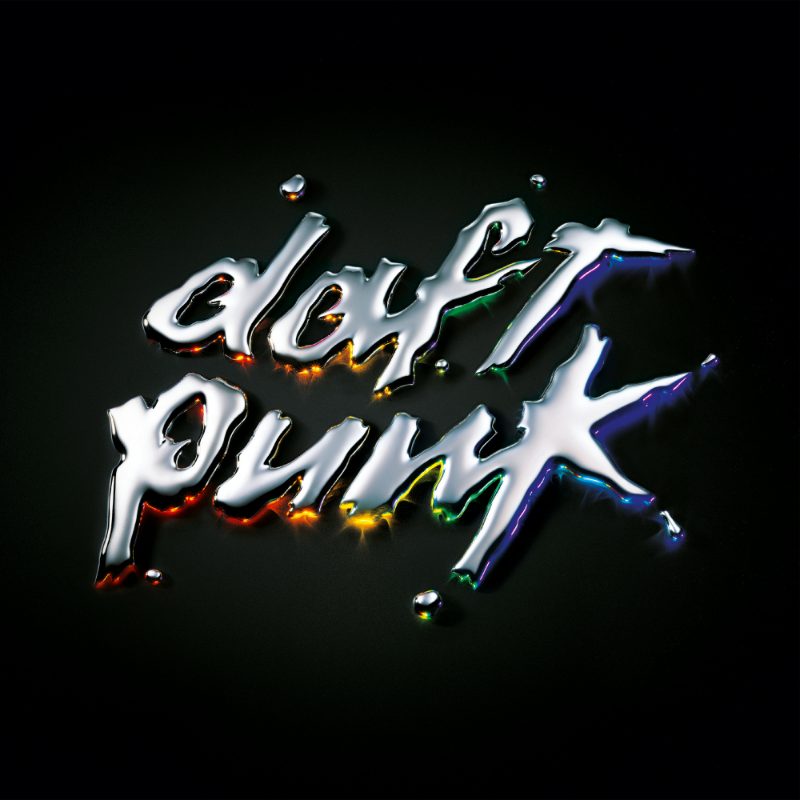
Daft Punk's second album sounds like a crate of old records, but the duo played most of it themselves. Superb production and a child's ear for pop, thin only where the people should be.
- Released
- 8 March 2001 (France); 12 March 2001 (UK and Europe); 13 March 2001 (US)
- Label
- Virgin, under exclusive licence from Daft Life Ltd
- Producer(s)
- Daft Punk (Thomas Bangalter and Guy-Manuel de Homem-Christo); Romanthony co-produced 'Too Long' and Todd Edwards 'Face to Face'
- Runtime
- 60:50 (14 tracks)
- Chart peak (US)
- #44 (Billboard 200, chart dated 31 March 2001); #23 on a re-entry, chart dated 21 March 2015
- Chart peak (UK)
- #2 (Official Albums Chart, 18–24 March 2001), behind Eva Cassidy's Songbird
- Certifications
- BPI 2× Platinum (13 March 2015); SNEP 3× Platinum (17 October 2007); RIAA Gold (11 October 2010)
- Awards & honours
- #236 on Rolling Stone's 500 Greatest Albums (2020). Pitchfork rescored its 2001 review from 6.4 to 10 in October 2021
Discovery was heard in 2001 as kitsch and is heard now as the future. Its real trick is that many of its 'samples' are the duo's own playing, disguised as old records. Its weakness is the duo's own treated voice, which holds the feeling at arm's length.
The sleeve of Discovery credits four samples. George Duke is on 'Digital Love', Edwin Birdsong on 'Harder, Better, Faster, Stronger', the Imperials on 'Crescendolls' and Barry Manilow on 'Superheroes'. Guy-Manuel de Homem-Christo told Remix in 2001 that the album used only three. Mix, later that year, counted four outside samples. De Homem-Christo told Mix that about half of what sounds sampled had first been played by the duo. So the record that sounds like a crate of old disco singles was mostly made by two men in a Paris home studio. They played the parts, then sampled their own playing. Thomas Bangalter put the aim plainly to Remix: "We're interested in making things sound like something other than what they are."
That sleight of hand is the key to the album, and to why it was misheard. Discovery isn't a disco tribute. Bangalter said it was about the years from 1975 to 1985, when the two of them were small children. A child, he said, doesn't judge music or care whether it's cool. A child doesn't know Barry Manilow is uncool, or that a Van Halen guitar solo is a joke. Discovery takes all of it at face value and makes it gleam. That's the source of its greatness, and of its one real weakness. A record this devoted to the sound of memory has less room for the people in it. When Romanthony or Todd Edwards sings, it has a pulse. When the duo sing through their machines, or let the instrumentals idle, it can feel like a beautiful room with nobody home.
The turn away from Homework was deliberate. Their 1997 debut had reached #8 in Britain, and its sound was everywhere. Bangalter complained to Remix that a lot of house now just sampled disco records from the 1970s and '80s. A music that had broken the old rules, he said, had started to set new ones. They wanted to keep the spirit of house and drop its style. So they let in everything they'd liked as children, from heavy metal to classical. They also had debts to pay. Romanthony and Edwards were, in Bangalter's words, the house producers who had influenced them most. The duo had wanted both on Homework, but neither knew who Daft Punk were then. Working with them now, Bangalter said, closed the circle. And disco was in the family. Bangalter's father, Daniel Vangarde, had written and produced songs for disco acts including the Gibson Brothers and Ottawan.
It was made slowly and cheaply, which isn't how it sounds. The bulk of it was done between 1998 and 2000 in Bangalter's home studio in Paris, around work for their own labels. De Homem-Christo told Mix they had never gone to a big studio. They mixed on a small 12-channel Mackie desk, with Logic Audio software. The main compressor on both of their albums was an Alesis 3630 that cost $300. They said they loved American FM radio, where the compression is doing everything. For drums they used an Oberheim DMX and a LinnDrum a lot, alongside the Roland 808 and 909. The gloss came from cheap gear pushed hard. It sounds aimed at a car radio, not a club. Bangalter was frank about the playing too. They weren't that good, he admitted to Remix. "With the help of technology, you can manufacture skills you don't have."
'One More Time' shows the method at full power. It was old news to its makers. Bangalter said in 2013 that it was mixed, finished and shelved for three years before its release. It's built from the horns of 'More Spell on You', a 1979 record Eddie Johns made in Paris, chopped into short pieces and rearranged into new hooks. Romanthony's voice arrives at 0:30, heavily processed. Bangalter said the singer loved it: he had never had his voice treated like an instrument in that way. Then, from 1:33, the voice leaves for more than half a minute, and the song hangs in its own breakdown. A house track would build tension there. This one floats, as if the record were remembering itself. It went straight in at #2 in Britain in November 2000, four months before the album.
The next three tracks make the childhood argument plainly. 'Aerodynamic' runs from a funk groove into a guitar solo, puts the two together, then drifts out into electronics. Mix described the solo as two-handed tapping on an electric guitar. NME's Stephen Dalton heard Van Halen air guitars. Bangalter, asked about another solo, on 'Digital Love', said there are guitars that sound like synthesizers and synthesizers that sound like guitars. 'Digital Love', co-written with DJ Sneak, sits on a George Duke sample from 1979. Rather than sample Supertramp, de Homem-Christo said, they played the Wurlitzer piano the band had used. The duo's voice stops at 1:34 and doesn't return until 3:16, so most of the song is a long instrumental daydream. Then 'Harder, Better, Faster, Stronger' takes an Edwin Birdsong record and hands it to a machine voice, which enters at 0:51. Even Pitchfork's unconvinced 2001 reviewer thought the pitch correction worked here.
That machine voice is also where the trouble starts, though not straight away. 'Superheroes' is fine. A Barry Manilow sample runs from 0:21 to 2:21, and Mix likened the track to Tangerine Dream. Alexis Petridis, who disliked the album in 2001, counted it among the best things on it. 'Something About Us' is the problem. It's the album's ballad, sung by the duo through their processing, and the voice doesn't arrive until 1:17. It's gone by 2:10. That's 53 seconds of singing in a song nearly 4 minutes long, and the processing has to carry all of the feeling. On 'Harder, Better, Faster, Stronger' the machine voice is the hook. On a love song it holds the emotion at arm's length. Pitchfork's Ryan Schreiber called the pitch correction a gimmick here, as on 'Digital Love'. He was harsh, but he had a point.
The same thinness spreads into the last quarter. Tracks 10 to 12, 'Voyager', 'Veridis Quo' and 'Short Circuit', are three instrumentals in a row, about 13 minutes in all. Each is well made. 'Short Circuit' is built on a Sequential Circuits Drumtraks. Critics split on 'Veridis Quo'. Petridis likened it to the incidental music of a Channel Five erotic thriller, while Schreiber liked it. Together they make a stretch in which the record mostly admires its own textures. It never stops sounding like one album, which is why the sag is noticeable rather than fatal. Then Todd Edwards rescues it. On 'Face to Face', which he co-produced, his voice is in at 0:09 and hardly leaves. The duo asked him to sing it a little raspier, like Foreigner. Of course they did.
'Too Long' closes the album with 10 minutes of Romanthony, who co-produced it. Mix called it an in-joke for fans, and the title tells you as much. It's a better joke than it needs to be, because his voice comes in at 0:07 and keeps the track human. Petridis singled it out in 2001, with 'One More Time' and 'Superheroes', as the best tracks. What worried him was that they stuck closest to Homework. Heard now, the list says something else. Two of the three are carried by Romanthony's voice, and the third by Manilow's. Discovery is at its best when someone is singing to you, even through the machines.
In 2001 the critics split. NME's Stephen Dalton gave it 9 out of 10 for reinventing the mid-1980s as pop's coolest era. Petridis gave it 2 stars in the Guardian, and Schreiber gave it 6.4 in Pitchfork. Britain bought it anyway. It entered the albums chart at #2, behind Eva Cassidy's Songbird, and went Platinum by November. America mostly didn't, and it stalled at #44. Then pop moved towards it. In 2020 Petridis wrote that every aspect of the record had been pilfered. Every vocal in pop now had that electronic effect on it, he said, and the album sounded contemporary while his review didn't. In October 2021 Pitchfork rescored it from 6.4 to 10. The record didn't change in those 20 years. The ears around it did.
Its documented influence runs through that vocal sound and one famous sample. Kanye West built 'Stronger' on the hook of 'Harder, Better, Faster, Stronger'. In September 2007 it went to #1 on the Billboard Hot 100, and it reached #1 in Britain too. The original had peaked at #25. One part of the record has aged badly, and it isn't the music. The 2001 sleeve credits four samples but not Eddie Johns, whose horns are the hooks of 'One More Time'. In May 2021 a representative for Daft Punk told the Los Angeles Times that Daft Life pays royalties twice a year to the record's producer and owner. The deal makes that producer responsible for paying Johns his share. Johns said he hadn't been paid. That December a reissue credited his recording, though he still isn't listed as a writer. The fault sits further down the chain than the duo. But for an album about loving old records, 20 years without the credit is an ugly footnote.
So Discovery deserves more than it was given in 2001, and the praise should be exact. Its production is the best thing about it. Cheap machines, a $300 compressor and a home studio made a record that sounds like every radio you ever loved. The first four tracks, 'Superheroes' and 'Face to Face' rank with the best pop of their decade. But there's a thin seam where the people should be. 'Something About Us' asks a processed voice to be tender and gets under a minute of it. The instrumentals near the end coast on texture. It's a great record, not a perfect one. Pitchfork's 10 is the reputation talking. Play it for the gleam and the generosity, and notice how often the best moments belong to someone else's voice.
Pressing guide — the one to own
The edition collectors chase is the 2002 Japanese double LP, Toshiba EMI TOJP-60114•15. It swaps the liquid-metal name for Leiji Matsumoto's artwork, and comes with an obi, a Daft Club card and a message to Japanese fans. The original to own is the 2001 European double LP, Virgin V2940, pressed by MPO in France. It's a gatefold with printed paper inners carrying lyrics, credits and a band photo, plus a Daft Club card. Its runouts read MPO 07243-8496071-1 A2 NiLZ - THE EXCHANGE, and so on to side D. The 2014 Parlophone represses carry the same runouts, so check the copyright line. The original reads 'under exclusive license to Virgin Records Ltd'; the 2014 copies license it to Parlophone Music France, a Warner Music Group company.