
Deep Dive
Let's Get It On
Let's Get It On by Marvin Gaye (1973) — what a copy is worth and which pressing to own, in a full Lead-In dossier: Marvin Gaye's 1973 seduction record, pieced together over three years in Detroit and Los Angeles.
Let's Get It On by Marvin Gaye (1973) — what a copy is worth and which pressing to own, in a full Lead-In dossier: Marvin Gaye's 1973 seduction record, pieced together over three years in Detroit and Los Angeles.
Marvin Gaye's 1973 seduction record, built from sessions in Detroit and Los Angeles over three years. The singing holds it together. The songs don't always.
Let's Get It On is remembered as soul's great seduction record. It's better heard as a feat of singing: half an hour of rebuilt and recycled songs that Gaye's voice turns into one long night, ending on a song about his marriage.
The record opens with a wah-wah guitar, and nobody agrees who played it. The sleeve credits five guitarists, David T. Walker, Eddie Willis, Louie Shelton, Melvin Ragin and Robert White, without saying who did what. Don Peake told Premier Guitar in 2021 that the intro was his. He said the arranger René Hall asked him to make something up for the start. He also said he hit an open string by mistake about 15 seconds in, and it stayed on the record. The magazine's editor puts it at 13 seconds. Premier Guitar adds that people assumed Ragin, better known as Wah Wah Watson, played the part, because he was touring with Gaye. A stray note on a #1 single is a small thing. It's also a fair picture of how the whole album was made: in pieces, by a lot of hands, with some of the joins left showing.
Let's Get It On is remembered as the great seduction record, and that undersells it in one way and flatters it in another. It undersells it because its last song is about a marriage rather than a night. It flatters it because the songs are uneven, and they were gathered over three years. What holds the record together is Gaye's singing. When the voice has a strong song under it, few records in soul sound as good. When it doesn't, you can hear him working to cover the gap. That's the argument here: a singer's album first, a songwriter's album second, and an inventor's album hardly at all.
It wasn't the album anyone expected next. What's Going On had reached #6 on the Billboard 200 in 1971, and the obvious move was another political record. Gaye made one. You're the Man was recorded at Golden World and Hitsville in Detroit between March and May 1972, and then shelved. Ben Edmonds, who wrote the notes for the 2001 Deluxe Edition, describes a writer's block that spring and a new Motown contract that gave Gaye more control. In 1972 Motown moved its base to Los Angeles, and its studio there, on Romaine Street, was known as Hitsville West. By the Deluxe Edition's session notes, the album was finished there between February and July 1973. The same notes take its sessions back to June 1970.
The title song shows how far a song could travel without its music changing. Edmonds and Stereogum's Tom Breihan tell the same story. It began as a religious song. Ed Townsend, who co-wrote it, had just come out of rehab for alcoholism. Then Kenneth Stover rewrote it as a political song, and Gaye cut that version. Townsend didn't like it and talked Gaye round to a love song. The two of them rewrote the words together, and Edmonds says they kept the backing track that already existed. During the sessions Gaye fell for Janis Hunter, the 17-year-old daughter of his friend Slim Gaillard, a jazz musician. Breihan points out that Gaye was already making the album when they got together. The gossip matters less than the music. The same backing track carried politics and then desire. Whatever the song finally means, it means because of the voice on top.
The credits read like two bands sharing one record. There are two bassists, James Jamerson and Wilton Felder, and three drummers, Paul Humphrey, Uriel Jones and Eddie 'Bongo' Brown. Los Angeles players such as Joe Sample, David T. Walker and Felder appear by courtesy of other labels. No document says who plays on which track. The engineers were Art Stewart and Cal Harris. In his liner essay Gaye thanks Harris as the man who practically produced the record. That spread of names is the sound of an album made in two cities over three years. Gaye's voice is the one constant.
Gaye said plainly what he was after. In the essay printed inside the gatefold, he argues that sex and love are separate needs. He says he doesn't believe in "overly moralistic philosophies", and he even quotes T. S. Eliot. In 2003 Rolling Stone quoted him on his method: he'd make sounds at the microphone until they turned into words. Jon Landau, reviewing the album for Rolling Stone in December 1973, heard the result: lyrics that were sometimes simple, phrased with real eloquence. David Ritz, his biographer, reads the album as Gaye trying to make sexual and religious feeling fit together. The liner essay is less troubled. It treats desire as a need, not a sin.
Listen to the title song with that in mind. Landau heard three wah-wah notes, a 1950s-style melody and simple chords. Under them, he said, the arrangement turns on a slightly eccentric rhythm pattern. He was right on every count. The tune is plain. What isn't plain is the singing, which Landau called Gaye's best. He singled out the background voices too, and the long, moody fade that dares you not to play it again. For the rest of the record, he said, Gaye's lead and backing voices create a dreamlike quality. That's the method in one song: simple material, made strange by the way it's sung.
It was a huge hit. The single was #1 on the Hot 100 on 8 September 1973. It gave way to Helen Reddy's 'Delta Dawn' for a week, then was back at #1 on 22 September. It spent 6 weeks at #1 on the R&B chart, and Billboard ranked it the #4 single of 1973. The album came out on 28 August, 11 days before the single reached the top. It arrived riding one song, and side one stays close to that song for all four tracks.
Townsend co-wrote and co-produced all four songs on side one, and René Hall arranged them. Landau said the side flows with ease. He also found its melodies sometimes underdeveloped, with Gaye's voice holding the attention anyway, and he had a point. 'Keep Gettin' It On' is a sequel, which Landau heard as a reprise of the title song. The 2001 Deluxe Edition even calls its complete take 'Let's Get It On (Part II)'. There's a stranger fact about 'If I Should Die Tonight'. On the 1973 LP it runs 3:03, though the label still says 3:57. The Deluxe Edition's take runs 4:01. So the original LP, and Mobile Fidelity's 2008 reissue, carry a song nearly a minute shorter.
Side two is where the album's history shows. Gaye produced it alone. By Edmonds's account, recording the title song sent Gaye back to unfinished recordings from his 1970 sessions in Detroit. 'Come Get to This' and 'Distant Lover' are the best things on the side. 'Come Get to This' lasts 2:40, the shortest song here, and Landau called it up-beat. Landau preferred its loose sensuality and its dazzling arrangement to the slow closer. 'Distant Lover', written with Gwen Gordy Fuqua and Sandra Greene, went out as the B-side of 'Come Get to This'. In 1974 a live version recorded in Oakland reached #28 on the Hot 100 as a single in its own right.
Then comes the record's real weakness. 'You Sure Love to Ball' opens with voices credited on the sleeve to Fred and Madeline Ross. After that, Landau wrote, it has the chant-like quality of most of the album and overdoes it. What hypnotises at first turns to boredom as the repetitions pile up, and that's the fair verdict. Released as a single in 1974, it stalled at #50. Here Gaye's method works against him. Improvising until the words come is fine when there's a tune to improvise over. On this track there isn't much of one. It's also where the album's claim to novelty runs thin. Edmonds credits the album's frankness with making sex a bigger subject in pop. The frankness is easy to hear. The music under it wasn't new, and Landau heard the 1950s in the title song's tune.
The closing song changes what came before it. Gaye wrote 'Just to Keep You Satisfied' with his wife, Anna Gordy Gaye, and Elgie Stover, and the Monitors had recorded it in 1968. Edmonds says Gaye reworked it to address his marriage, which ended in divorce in 1977. Landau found it "too blatantly sincere". Daryl Easlea, writing for the BBC in 2009, heard it undercutting the rapture that comes before. Easlea is right, and Landau missed the point. After half an hour of seduction, the record ends on a marriage that's failing. Without that song it's a mood. With it, it's a story.
Reviews were warm rather than ecstatic. Landau found the album as personal as What's Going On but with fewer high points, and said Gaye's singing saved it. Robert Christgau gave it an A-minus. The public was less cautious. In October 1973 the album reached #2 on the Billboard 200 for a single week, behind the Rolling Stones' Goats Head Soup. It topped the R&B albums chart for 11 weeks. In Britain it spent 1 week at #39. Edmonds argues it set off records like Barry White's Can't Get Enough and Smokey Robinson's A Quiet Storm. That's the reissue annotator's case, but it's a plausible one. Rolling Stone ranked the album #165 in 2003 and #422 in 2020.
That drop is half right. It punishes the filler Landau heard in 1973, and that's fair. But a list that moves the record down 257 places has stopped listening to the singing. Let's Get It On is a great record with a real flaw. Its best 4 songs, the title song, 'Come Get to This', 'Distant Lover' and the closer, are as good as soul singing gets. Its middle sags, and its ideas are older than its reputation suggests. Play it for the voice, and stay for the last song, which tells you what the voice was really singing about.
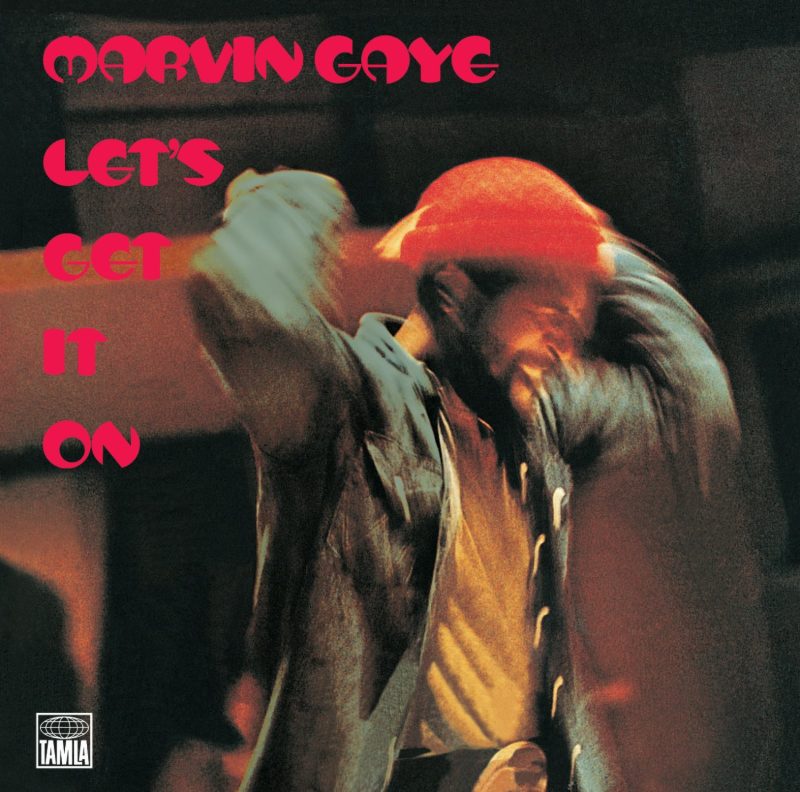
The original to own is the 1973 US Tamla T 329V1 in the gatefold sleeve, with Jim Britt's blurred photograph on the front and Gaye's liner essay inside. Every US original carries the label master numbers C5RS-7950 and C5RS-7951, but the runouts differ by plant. 'H' and '03B' mark RCA Hollywood, 'I' and '01A' RCA Indianapolis, '12B' Superior in New Jersey and 'SXT' Columbia in Terre Haute. On the Superior copies, 'TVC' is the mark of Tracy-Val, the plating firm next door.
© The Lead-In · an independent, reader-supported music publication.