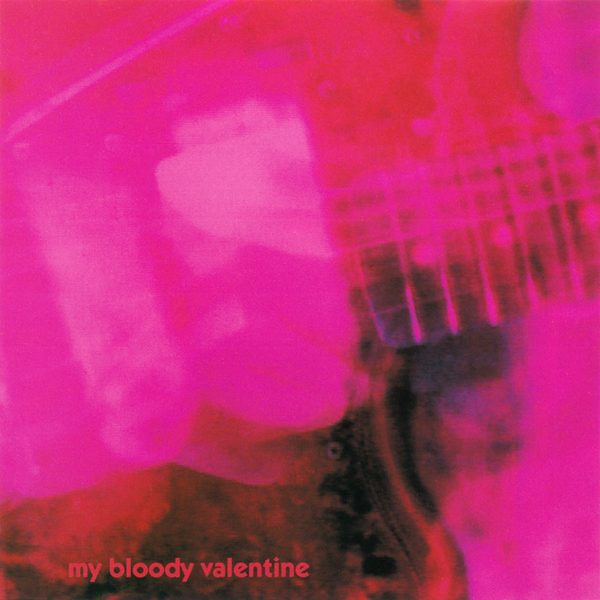
Loveless is famous for its cost and its years in the studio. What made it is plainer and stranger: guitars bent and recorded dry, and drums rebuilt from samples.
- Released
- 4 November 1991 (UK, Creation; some sources give 11 November). US: Sire/Warner Bros., November 1991
- Label
- Creation Records (UK, crelp 060 / crecd 060); Sire/Warner Bros. (US, CD and cassette, 9 26759-2 / 9 26759-4)
- Producer(s)
- Kevin Shields; Colm Ó Cíosóig ('Touched')
- Runtime
- 48:32 (11 tracks)
- Chart peak (US)
- Did not chart (Billboard 200)
- Chart peak (UK)
- #24 (November 1991); #7 (June 2021), Official Albums Chart
- Certifications
- BPI Gold (21 May 2021); Silver (22 July 2013)
- Awards & honours
- #14 in the Village Voice Pazz & Jop critics' poll for 1991; #2 on Pitchfork's Top 100 Albums of the 1990s (2003), behind OK Computer
Much of what makes Loveless strange lies in its drums, voices and edits, made by a producer who says he was focused from the start. The songs are good, but only some of them are as good as the sound.
Kevin Shields and Bilinda Butcher sang some of their Loveless vocals in a curtained booth at Britannia Row. The engineer, Anjali Dutt, couldn't hear them. She watched the meters instead. Each song was sung in whole takes, with no compression, reverb or delay. A lead take sat on a bed of 10 or more near-identical takes, faded together. How loud they sang depends on which interview you read. Shields told Magnet in 2007 that they sang as loud as they could, in a controlled way. In 2018 he told Sound on Sound that they sang reasonably quiet. Either way, the voice ends up deep in the mix, and the famous softness owes as much to the production as to the singing.
That gap between the legend and the method runs through the whole album. The legend says Shields spent two years and a quarter of a million pounds hunting for a guitar sound, and nearly sank Creation Records doing it. His own account is different. He told Rolling Stone in 2017 that the work was very focused from the very beginning. He told Magnet that the average My Bloody Valentine track has one or two guitar tracks. Their records, he said, have the same number of tracks as most bands' demos. Much of the effort went on what surrounds the guitars: the drums, the voices and the joins between songs. Loveless is a producer's record first. That's why it still sounds like nobody else, and it's also where its one real weakness lies. The songs underneath are good. Only some of them are as good as the sound.
The idea itself came quickly. Shields told Rolling Stone that he had the vision in the first months of 1989 and had it on guitar by the end of that year. Some of the means were older. In 1988 a borrowed Jazzmaster gave him the shivering tremolo-arm sound of 'Thorn'. His rules were strict: no echo, no reverb, no chorus or flanger. He wanted the mid-range sound of a ghetto blaster or a small gig. The one exception was the reverse reverb setting on a Yamaha SPX90. He'd used it since 1987, and on 'Slow', in 1988, he first ran it at full mix. He admired American guitar bands, Dinosaur Jr. among them. But Sound on Sound, interviewing him in 2018, says the Bomb Squad's productions for Public Enemy mostly informed his approach. Those records were built from samples that were, as Shields put it, often slightly out of tune. Hear Loveless as a sampling record made by a guitarist, and much of it makes sense.
The sessions started at Blackwing, a studio in a former church in Southwark, in February 1989. Only one song from them survived: 'Moon Song', which ended up on the Tremolo EP. In September the band moved to Elephant in Wapping. During the 2 months there, Colm Ó Cíosóig had a breakdown, and he'd recovered by the end. His breakdown shaped the record. With the engineer Harold Burgon, he and Shields programmed the drums from samples of his playing. They used an Akai S900, run by Steinberg Pro24 on an Atari ST. Once he'd recovered, Ó Cíosóig played a live kit on some newer songs, including 'Only Shallow' and 'Come In Alone', and added toms to 'Loomer'. Money was short throughout. Shields told Rolling Stone that the tapes were confiscated three or four times during the recording, because there was no money to pay the studio bill.
How long it took, and what it cost, are still argued over. Sound on Sound counted 25 studios in 2018. Other counts say 19, and the sleeve credits 18 engineers and assistants. Shields told Magnet the sessions ran a year and 10 months. Six of those months went on touring the Glider EP, he said, so the band were in studios for about a year and four months. Studio time cost £200 to £250 a day, rising to £600 a day for the last 2 months. NME's review that November gave the cost as £250,000, a figure Shields told Magnet doesn't add up. He puts it at about £140,000, against £130,000 for Primal Scream's Screamadelica. That's the account of the man who ran the sessions. Paul Lester, interviewing him for the Guardian in 2004, still wrote that the recording had drained Creation's resources. No audited figure has been published.
As for Creation, Shields calls the bankruptcy story false. He told Magnet that Creation was already bankrupt by the time the band resumed recording in September 1989. Its later crisis, he says, came from Primal Scream's spending on Give Out But Don't Give Up. Alan McGee's account is more personal. He told the Guardian in 2004 that Loveless was a factor in his own breakdown. He dropped the band, he said, because he couldn't face working with Shields again. Both accounts can be true at once. Whatever the record did to the label's books, it ended the band's time there, and they signed to Island in 1992.
Put on 'Only Shallow' and the method is all there. For the riff, Shields set a 60s Burman amp and a Fender Showman facing each other, with one microphone in the middle. Both had their tremolos running, at different rates. He overdubbed that, sampled it into the Akai, then played it backwards and an octave up. Under it is Ó Cíosóig's live kit. The tape was sped up from 30 to 32 inches a second to suit Butcher's voice. When Shields dug out the track sheet for Sound on Sound, it showed two main guitars panned apart and a guide guitar for the last verse. Four more tracks carry the riff. That's more than the one or two he called typical. He also told Magnet that he could only have one or two guitars going at any one point, because more made the sound smaller.
The glide sound is simpler than its reputation. Shields taped the tremolo arm of a Jazzmaster or Jaguar, set it very loose and pushed on it as he strummed. Pitch and tone bend together. Because the arm adds its own sense of space, the amps were recorded dry. The reverse reverb sits at full level, so playing harder makes it louder. Shields told Sound on Sound that early imitators failed because they used a standard tremolo set-up. The voices get the same treatment as the guitars. On 'Come In Alone', the voice that sounds like Butcher's is Shields's own, sped up on the varispeed. The keyboards are samples too, made from guitar feedback, woodwind and Butcher's own voice. Who's singing, and what's a guitar, are questions the record never settles.
The two EPs released before the album show where it was heading. 'Soon' led the Glider EP in April 1990 and reached #41. NME's reviewer heard its beat as hip-hop, and Pitchfork later relayed Brian Eno's remark that it was the vaguest music ever to have been a hit. 'To Here Knows When' led the Tremolo EP and reached #29 in February 1991. NME called it possibly the strangest single ever to chart. Its singing is over by about 2:42, and the song runs for nearly 3 minutes more. Then there's 'When You Sleep', the brightest tune on the album. Shields sings it alone, by his account to Select, with many takes played at once. It's the best case for the method: a pop song that the processing makes stranger without hiding it.
That's also where the record runs short. Rolling Stone's Ira Robbins wrote in 1992 that the songs were strong enough to survive being stripped down. Some are. 'When You Sleep' and 'Soon' would survive almost anything. Others wouldn't, and the giveaway is how often the singing stops early. On 'I Only Said', 'Sometimes' and 'What You Want', the vocal is done by about the 3-minute mark, with 2 minutes or more still to run. Several of those long endings hold some of the best sounds on the album. Heard one after another, they become a habit. 'What You Want' is the weakest song here. Its tune circles without building, and the last two and a half minutes add little to what came before. Dele Fadele's complaint in NME that the album had nothing to say was too harsh. The fairer charge is that the sound carries some of these songs further than their tunes could go alone.
Loveless wasn't a hit. It entered the UK chart at #24 in November 1991, fell to #69 the next week and was gone. It never reached the Billboard 200. The critics were warmer, but they weren't unanimous. Robert Christgau admitted he hadn't at first liked the guitars or the vocals, then gave it an A−. The Village Voice critics' poll put it #14 for the year. The influence came slowly, and it's harder to pin down than the legend suggests. NME's review already heard Curve, Chapterhouse and Slowdive drawing on the band's earlier records. Pitchfork argued in 2012 that much of the band's influence lies in Isn't Anything. Shields told Rolling Stone he didn't feel very connected to the shoegazing bands that came after Loveless.
What Loveless changed is easier to hear than to document. Robert Smith told the Guardian in 2003 that it was one of his three favourite records. Rolling Stone hears Shields's sound in Siamese Dream, which Alan Moulder mixed, and in Dälek's Abandoned Language. Pitchfork credited it with teaching indie listeners to hear texture. The reputation grew while the band were silent. In 2003 Pitchfork ranked it #2 of the 1990s, behind only OK Computer. The BPI certified it Silver in 2013 and Gold in 2021, the year it went back into the UK chart at #7. In 2018 Shields rebuilt it for an all-analogue vinyl edition, redoing every digital crossfade as a tape edit. He said the remastering cost as much as the original record. He'd preferred the digital version when he made it.
The money story is the least interesting thing about Loveless. What lasts is a handful of decisions, above all guitars bent and recorded dry and drums rebuilt from samples. The production is the best thing about it, and 35 years on it still sounds like nobody else's record. The flaw is the writing. Four or five of these songs are as strong as anything from the period. The rest lean on the sound, and the run of long endings in the second half shows it. That keeps Loveless just short of perfect. It's still the record to play anyone who thinks a guitar band has nothing new left to find.
Pressing guide — the one to own
There are two 1991 UK originals of Creation crelp 060, and neither is documented as the first. One was a DMM cut, mastered at The Town House and pressed by Audio Services, with runouts reading CRELP-060-A5 ✱ DMM ASL TOWNHOUSE 3 MAX. The other was pressed by MPO, with MPO CRELP060 A1 and B1 runouts. Both came in a glossy single sleeve with a printed inner of thick paper that opens sideways. There was no American vinyl until 2003.