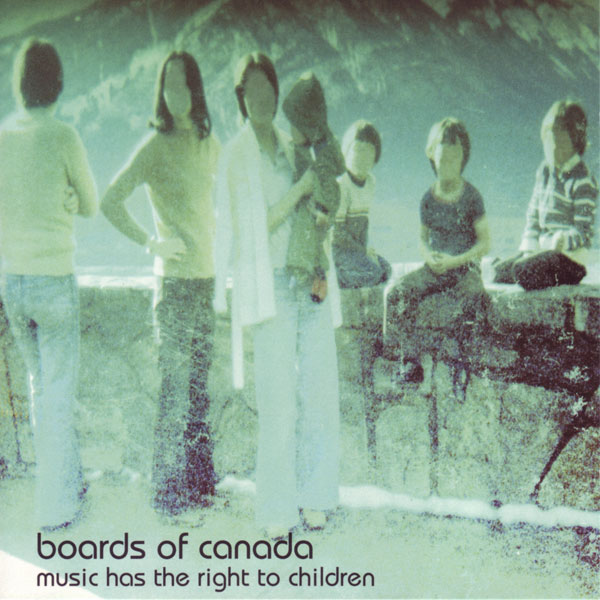
Boards of Canada's first album for Warp and Skam, built from older tracks, friends' voices and children's television. None of its parts was new. Pointing electronic music at memory was.
- Released
- 20 April 1998 (UK, Warp and Skam); 22 September 1998 (US and Canada, Matador CD)
- Label
- Warp and Skam, jointly (LP warplp55 / skalp1; CD warpcd55 / skald1); Matador in the US (CD ole 299-2)
- Producer(s)
- Michael Sandison and Marcus Eoin
- Runtime
- 63:00 (17 tracks, UK CD); about 70:50 on the US CD, which adds 'Happy Cycling'
- Chart peak (UK)
- #24 on the UK Independent Albums chart (2 May 1998); never in the Official Albums Top 100; #3 on the Official Dance Albums chart (April 2026)
- Certifications
- BPI Gold (31 January 2025); Silver from 22 July 2013
- Awards & honours
- #2 in Pitchfork's 50 Best IDM Albums (2017), behind Aphex Twin's Selected Ambient Works 85–92; #26 in Pitchfork's 150 Best Albums of the 1990s (2022)
Its admirers say Boards of Canada invented little here, and of the parts that's true. The invention was the assembly: 63 minutes that turn dance music's machines towards memory, held back only by drums that have aged worse than the melodies.
Side C of Music Has the Right to Children opens with 'Rue the Whirl', and there are birds in it. In June 1998 the brothers told Virgin Megaweb in Paris how they got there. One of them was listening back to the track when he heard birdsong over it. The studio window was open, and the birds suited the music so well that they recorded them. Fact told it differently in 2013, as days spent editing recordings of the birds outside. Either way, the birds stayed. The studio was their own, set up in the Pentland Hills a few miles from Edinburgh. Around the same time, Simon Reynolds writes, they lived right beside a wildlife sanctuary. The record lets the outside in, and it does the same with television and with the band's own back catalogue.
Much of it wasn't new. Several tracks were years old. Most of the voices, the band said, belonged to friends, and the ones people remember came from television. The cover is an unidentified family's holiday snapshot. Reviewing the 2004 reissue for Pitchfork, Mark Richardson gave it 10/10 and still wrote that, "properly speaking, they invented nothing." Of the parts, that's fair. But he also wrote that the parts had never come together quite like this, and the assembly is where the invention lies. Late-1990s electronic music sold itself as the sound of the future. This album pointed the same drum machines and samplers at memory instead, and Reynolds wrote in 2018 that the band had created a style of music in their own image. Its one real weakness is the part most tied to 1998, which is the drums.
Michael Sandison and Marcus Eoin had been making tapes since they were about 10. In 2005 Mike described their first attempts at multitracking. They'd record on one cassette machine, play it back a couple of feet away, and play along to it onto a second. They took the band's name from the National Film Board of Canada, whose films they'd seen at school in Britain. They found inspiration in the films' grainy, wobbly look, and in their electronic scores. They also lived briefly in Alberta in the late 1970s, they said in 1998. By the early 1990s they were playing something nearer experimental rock, in the line of Cocteau Twins and My Bloody Valentine. Even then they were sampling their own instruments. The move to electronic music was a short step from there.
The route to the album ran through Autechre. The brothers sent their recordings to several people, Sean Booth among them, and he rang the next day to tell them to work with Skam, a Manchester label. Skam released their Hi Scores EP on 9 December 1996. They began an album for Skam at the start of 1997. That summer, or around September by a second account, Warp asked for it too. The two labels released it together on 20 April 1998, so that Warp wouldn't tread on Skam's toes. By then Warp was promising a second album for the end of the year. Geogaddi didn't arrive until February 2002.
They described their methods in 1998 with more modesty than mystery. A track usually began as a melody, they said. They wrote hundreds of little tunes, kept the ones that stuck, and only then built the rhythms. They didn't own many synths, and used old and new equipment, hi-fi gear and some tricks, including a secret weapon they wouldn't name. They sampled their own piano and guitars, and reworked them until a listener wouldn't know a piano was there. Warp's biography put them in a bunker, which they called the label's exaggeration. The studio wasn't big, they said, but it was full of gear. In 2005 Mike said they'd started an acoustic version of the album years earlier, and that it still existed.
The exceptions are what listeners remember. The children on 'The Color of the Fire' and 'Aquarius' come from Sesame Street, and the voice-over on 'An Eagle in Your Mind' comes from a documentary about otters. Critics traced those sources years later. The gap between the band's account and the samples matters less than it seems. What they took from television was a manner more than any content: a child sounding out a few words, an adult explaining nature. In 1998 they said the melodies of children's programmes had shaped them more than any music had, and the record sounds like that claim. The Film Board is there too. Reynolds hears some of the short interludes as close to the synthesiser logo that opens its documentaries. 'Pete Standing Alone' shares its name with a young Blackfoot man seen in its films.
The shape does as much work as any single track. There are 17 pieces in 63 minutes. Seven last under 2 minutes and four run past 6, and each of those four follows a piece of under 3. On the double LP, side A opens on the 77 seconds of 'Wildlife Analysis', and the other three sides each open on a long track. Richardson wrote that they approached it from a rock perspective, sequencing it with care and drafting interludes. That's the right comparison. The short pieces aren't filler, and AllMusic counted several of them among the best tracks on the record.
Put on 'An Eagle in Your Mind', the first long track, and the method is all there. It fades in slowly. There's a looped break under it, with scratching, and over the top comes the voice-over about otters. In 1998 the band agreed that it showed their process of corrupting their own melodies and voices. They also said that even the tunes which sound like samples were theirs, destroyed by the sampling process. That's the trick of the whole record. New music is made to sound found, as if it'd been lying in a drawer for years. 'Roygbiv' works the other way round. Its title is the mnemonic for the colours of the rainbow, and its melody is the point. Reynolds noticed that it runs over many bars, at a time when electronic music mostly ran on short riffs. At 2:31 it's the album's case for melody over rhythm, made in miniature.
Some of the best music here is also the oldest. 'Turquoise Hexagon Sun' had been out on Hi Scores since 1996, and Richardson singled out its electric-piano tone. 'Smokes Quantity' goes back to 1995. Reynolds hears a My Bloody Valentine haze in it, which is the guitar band still audible under the machines. 'Bocuma' is a very simple melody, bent by small pitch-shifts and set in reverb, and it lasts 95 seconds. 'Olson' lasts 91, and Fact singled out its piano. Pieces this short can't lean on a groove. The melody has to carry them alone, which is why they show the writing most clearly.
Set the record against its moment and its choices are plain. Reynolds describes late-1990s electronic music as crisply digital and futuristic, with titles and sleeves borrowed from science fiction. Andy Crysell's 8/10 review in the NME in May 1998 heard this album as retro. He noticed that there wasn't any futuristic imagery on the sleeve, either. The band wanted their rhythms simple. In 1998 they called rhythm a vehicle for melody, and said they had no wish to follow jungle's complex beats. Twenty years later Sandison said that what he still liked about the album was everything it doesn't do, set against the music of its time. That turn towards the past is the invention Richardson's "nothing" leaves out.
The weakness is the beat. "I always felt rhythm is the part of music that dates it," Sandison told Reynolds in 2018. On this record it does. Reviewing it for the BBC in 2013, Mike Diver heard a handful of trite trip-hop motifs. He named the jittery turntables of 'Sixtyten': accomplished, he wrote, but stuck in their era. Fact said the same year that the album's trip-hop flavour was already tired by the late 1990s. Fact also offered a defence, that a record about nostalgia loses little by sounding of its time. That's half right. The melodies sound like memories, while the scratching sounds like 1998, and those aren't the same thing. There's a smaller risk in the writing too. Fact warned that the band often come close to twee, and Richardson thought they avoided it.
It wasn't a hit, and it wasn't a classic straight away. On the UK Independent chart of 2 May 1998 it reached #24. Chart Log UK, which compiles the positions below the published Top 100, has it at #193 on the full chart that week. It has never entered the Official Albums Top 100. Crysell's 8/10 praised the melodies. Reynolds admitted in 2018 that the album had passed him by at first. The standing came later. Pitchfork's 10/10 arrived with the 2004 reissue. The BPI certified it Silver on 22 July 2013 and Gold on 31 January 2025, almost 27 years after release. In April 2026, as the band returned with new music, it reached #3 on the Official Dance Albums chart.
Its influence is easier to hear than to document. Reynolds wrote in 2018 that it spawned a legion of sound-alikes, Tycho among them. He also heard its traces in Black Moth Super Rainbow and in Radiohead, whose Thom Yorke often mentioned the band around Kid A and Amnesiac. Fact's 2013 list ran from Four Tet and Bibio to Gold Panda and The Caretaker. It found Tim Hecker's Ravedeath, 1972 hard to imagine without this record. These are critics' readings, not the artists' own statements. Reynolds also called the album a forerunner of the Ghost Box label and of hauntology. That may be its largest legacy: electronic music about memory instead of the future.
Is it their best record? Fact preferred Geogaddi in many respects. Pitchfork's IDM list put this one second, behind Aphex Twin's Selected Ambient Works 85–92. Both views are defensible. But this is where their way of working is clearest, and where it was new. Played start to finish, it's assembled with rare care, and its turn towards memory changed what that music could be about. The drums are the price, as Diver and Fact both noted. The band released a fifth album, Inferno, in 2026, and this is still the one to start with. Put it on for the sequence, and forgive the beats.
Pressing guide — the one to own
The original is the 1998 UK double LP in a gatefold, Warp warplp55 and Skam skalp1, pressed by EMI. Its runouts read 'SKAM / WARPLP 55 A-1-1-1 F.A.' on side A, with B-1-1-1, C-1-1-1 and D-1-1-1 on the others. The labels carry both the Warp and Skam logos. The 2004 reissue, and a later undated repress from its plates, share the catalogue number and barcode. Their runouts carry DA MONT, and their labels have no logos. There was no separate US vinyl: American shops sold the UK pressing with a Matador sticker, ole 299-1.