
Deep Dive
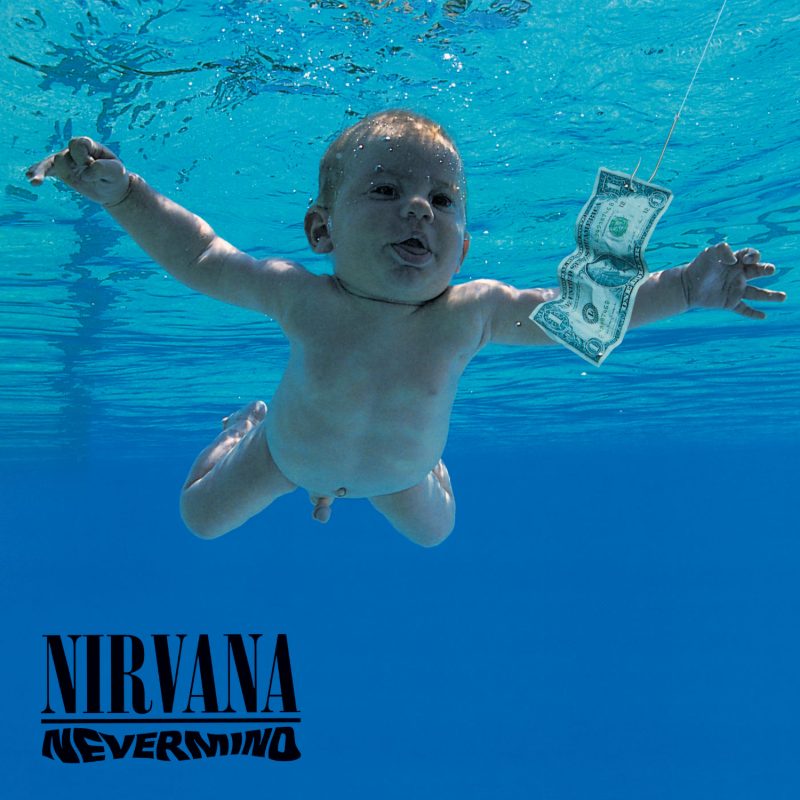
Nevermind
Nevermind by Nirvana (1991) — what a copy is worth and which pressing to own, in a full Lead-In dossier: Nevermind went from #144 to #1 in 14 weeks without inventing much.
Nevermind by Nirvana (1991) — what a copy is worth and which pressing to own, in a full Lead-In dossier: Nevermind went from #144 to #1 in 14 weeks without inventing much.
Nirvana's second album went from #144 to #1 on the Billboard 200 in 14 weeks. It changed what a hit could sound like without inventing much; its real achievement is craft.
Nevermind is praised for a newness it doesn't have. Its strength is craft: pop songs written on purpose, trimmed by Butch Vig and mixed by the man Cobain chose, in a sound he later disowned. Only one stretch, late on, shows the seams.
In its 14th week on the Billboard 200, on the chart dated 11 January 1992, Nevermind went from #6 to #1. Michael Jackson's Dangerous dropped to #5. Three months earlier, Nirvana's second album had entered the chart at #144. Geffen had hoped it might sell 250,000 copies. By October 2025 Billboard counted 554 weeks on its album chart, and more than 30 million copies sold.
The story told about that January is that something new had arrived. The first reviewers, even the admiring ones, heard older things in it. Ira Robbins wrote in Rolling Stone in November 1991 that the band weren't onto anything altogether new. Robert Christgau, who gave it an A− in the Village Voice, heard hard rock as it was before metal. In 1994 Cobain himself told Rolling Stone the 'Teen Spirit' riff was a cliché, close to Boston or 'Louie Louie'. Nevermind's strength isn't invention. It's craft: a punk band writing pop songs on purpose, a producer who trimmed them and a mixer who made them fit the radio. That's why it's great, and it's why one stretch of it sounds like a formula running down.
Cobain had planned the turn. He later called the 1990 single 'Sliver' a statement: he'd had to write a pop song to prepare people for the next record. Butch Vig, who recorded the band at Smart Studios in Madison in April 1990, had found Bleach one-dimensional, apart from 'About a Girl'. By Nevermind, he said, Cobain was writing far more melodically. Cobain described 'Teen Spirit' as an attempt at the ultimate pop song, which in his telling meant borrowing from the Pixies. The line-up changed just as decisively. Buzz Osborne introduced Dave Grohl to the band in September 1990. When Vig first heard him, in a North Hollywood rehearsal room in the days before the sessions, he was struck by Grohl's power.
The label and the producer followed. Kim Gordon recommended Nirvana to DGC. DGC suggested producers, among them Scott Litt and Bob Mould. Vig says the band met three or four and liked none of them, and held out for him. The budget was $65,000. Vig booked Sound City in Van Nuys without seeing it, on a cheap deal, because Los Angeles was where the band wanted to work. The 2011 box set dates the sessions to 2–19 May 1991. Vig remembers 16 or 18 days.
The method was plain. The band played the basic tracks live in Studio A, usually in two or three takes. Grohl sat in the middle of the room, hitting a rented brass snare known as the Terminator. Overdubs moved to Studio B: second rhythm guitars, doubled vocals, Grohl's harmonies. Vig recorded Cobain's warm-ups as takes and built vocals from up to four passes. On 'Teen Spirit' his biggest changes were to the arrangement. He cut the solo down and shortened the chorus. That's the producer's real gift to this record. He made a punk band's songs get to the point.
You can hear that discipline across the first half. In 'Teen Spirit' the longest stretch without a sung line, solo included, runs from 2:45 to 3:33, and nothing in the song outstays its welcome. The quiet verse and loud chorus are the Pixies' idea, as Cobain said. What's his is how plainly the song states it. 'Come as You Are' gets its menace from underneath. The bass was recorded three times, once straight, once an octave up and once detuned through a sub-harmonic unit, until it sounded like a 12-string. Cobain worried the riff was too close to Killing Joke's 'Eighties', and that held up its choice as the second single. 'Lithium' was the only song cut to a click track, because the band kept speeding up. Its steadiness is a large part of its pull.
The best moments are the ones nobody planned. In the middle of 'Drain You', in the long gap between sung lines that opens at 1:31, the song gives way to a break of noise. On each vocal pass Cobain ran to grab squeaky toys, percussion and an aerosol can. It came to about 17 bars, and Vig left all of it in. 'Breed' starts with Cobain's guitar plugged straight into the desk, scratchy and close. 'Territorial Pissings' opens with Novoselic hollering a line from the Youngbloods' 'Get Together', at Vig's suggestion. Cobain sang it in one take. These are the record's punk parts, and they keep the polish honest.
The two quiet songs do the most with the least. 'Polly' isn't from these sessions at all. It's the Smart recording from April 1990, with Chad Channing's cymbals, uncredited. Jonathan Gold wrote in the Los Angeles Times that the acoustic songs rocked as hard as the punk ones. 'Something in the Way' was built on a near-whispered solo take, recorded with the air conditioning switched off. Bass, drums, harmonies and Kirk Canning's cello went on afterwards. The cello was hard to tune to Cobain's detuned five-string acoustic. Robbins, who gave the album three stars out of five, heard in it a translucent cloud of acoustic guitar and cello. In March 2022, after The Batman used it, its US streams rose 1,508% in a week.
Then came the mix Cobain disowned. Vig's first mixes, made at Sound City and, for three or four days, at Devonshire Studios, were raw, which he says is how the band wanted them. But the sessions had fallen behind, and the label and management wanted a new mixer. Vig agreed that fresh ears would help. DGC's Gary Gersh sent a list of mixers. Cobain picked Andy Wallace, because Wallace had co-produced Slayer's Seasons in the Abyss. Wallace worked at Scream Studios in Studio City, a song or two a day. The room microphones on the drums hadn't worked, so he added digital reverb and mixed samples in behind the kick and snare. Grohl said the drums came out sounding more digital. In 1993 Cobain told Michael Azerrad he was embarrassed by the sound, which was closer to Mötley Crüe than to punk rock.
The case against the mix has a witness. Steve Albini, who recorded In Utero, said in 2011 that the band played a cassette of Vig's rough mix for reference while they made it. To his ears it sounded far more forceful than the album. Vig says the band loved the finished record. In his view Cobain turned on it later because admitting he loved a 10-million seller wasn't cool. The 2011 box set let everyone check. Vig's Devonshire mixes are on its third disc, and Pitchfork's Jess Harvell found them not far from Wallace's. Slate's Seth Colter Walls heard Cobain's guitar rattle in new ways on them, while noting that the takes are the same ones. That's why Harvell's verdict is the fairer one. The songs carried this record, and the mix made sure radio could hear them.
Where Nevermind falls short is the run after 'Drain You'. 'Lounge Act' is a good song in the wrong place, covering ground the album has just covered. 'Stay Away' is the weakest thing here. It's an older song, first cut at Smart in 1990 as 'Pay to Play', and its title is sung 20 times. From 2:50 it runs out in noise to the end. Robbins called that ending an awesome meltdown rumble, and meant it kindly. Set beside 'Breed', which was tracked the same way, it sounds less like a decision than a way out. 'On a Plain' recovers. Cobain wrote its words at the last minute and sang it in one take, and its unaccompanied harmonies near the end are the stretch's best idea. In 2005, BBC 6 Music listeners voted Nevermind the most overrated album in the world. Some of the voters quoted said that past the single it was second-rate. They were wrong about most of it, and right about those few minutes.
What it changed was permission, more than sound. Pearl Jam's Ten came out 4 weeks earlier and Soundgarden's Badmotorfinger 2 weeks later, so Nevermind didn't create its scene's records. It changed what labels would pay for. Gersh later said there was a pre-Nirvana and a post-Nirvana record business. Vig said the album taught bands that hooks and choruses were allowed. His own phone started ringing: every major label was calling, he said, and he could pick his projects. One was Siamese Dream, by the Smashing Pumpkins, whose debut Gish he had produced just before the Nevermind sessions. The critics agreed fast. In the Village Voice critics' poll it was the album of 1991, with 1,699 points to Public Enemy's 923.
Its reputation has kept rising. Rolling Stone placed it #17 among the 500 greatest albums in 2003, and #6 in 2020. The Library of Congress added it to the National Recording Registry in 2004. Christgau raised his grade from A− to A. In Britain it peaked at #7 in 1992, then reached #5 on the chart of 8 October 2011, 20 years on. By October 2026 it had spent 451 weeks in the UK Top 100. Some of that is the legend of Cobain, who died in April 1994. More of it is the songs: in 2023 the Official Charts Company counted it the fourth most-streamed 1990s album in Britain.
So Nevermind deserves most of its reputation, just not for the reason usually given. It didn't invent the sound of the 1990s. It took the Pixies' dynamics, a riff its writer called a cliché and a punk band's noise, and made pop songs out of them. Vig made them tight, Wallace made them carry and Grohl made them hit. The stretch after 'Drain You' sags, and the record's novelty has always been overstated. But 'Teen Spirit', 'Lithium', 'Drain You' and 'Something in the Way' are about as good as guitar songs got in 1991. It's a great album with a real flaw, and still the first Nirvana record to hear.
The copy to own is the first US LP, DGC-24425, released on 24 September 1991. It comes in a single sleeve with a printed black-and-white inner sleeve. The runouts read 'MASTERDISK DGC-24425-A-GL1', and 'GL1' marks the MCA plant in Gloversville. It has no hidden track: the 1991 LP ends with 'Something in the Way'. In Europe, the Sonopress first press has a misprinted inner sleeve, with the text and monkey photograph on its back upside down.
© The Lead-In · an independent, reader-supported music publication.