
Deep Dive
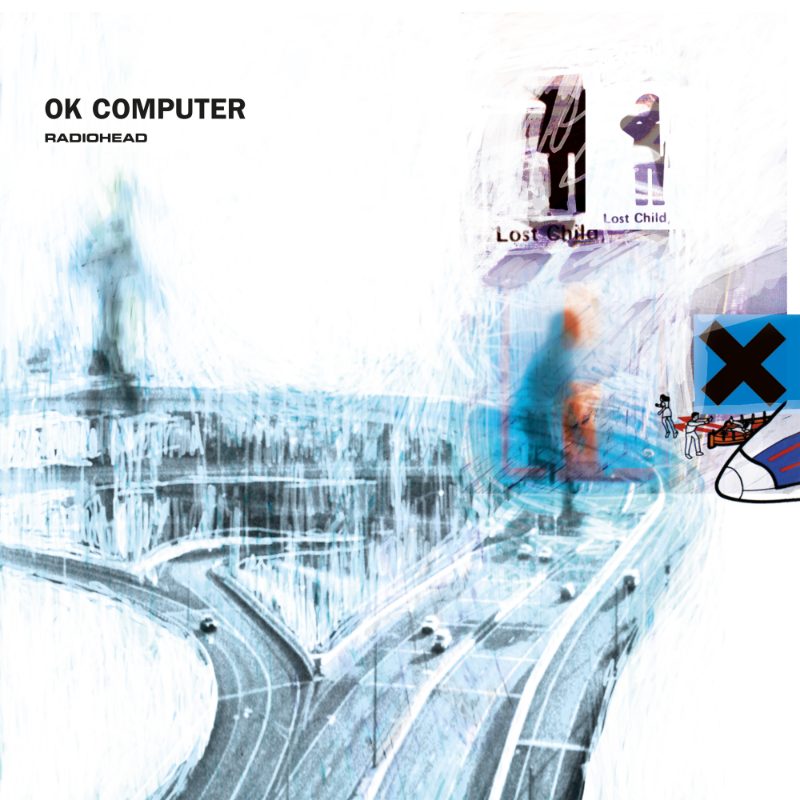
OK Computer
OK Computer by Radiohead (1997) — what a copy is worth and which pressing to own, in a full Lead-In dossier: Radiohead made their third album in a rented 16th-century house near Bath, playing most of it live.
OK Computer by Radiohead (1997) — what a copy is worth and which pressing to own, in a full Lead-In dossier: Radiohead made their third album in a rented 16th-century house near Bath, playing most of it live.
Radiohead's third album, recorded mostly in a rented Elizabethan house near Bath in 1996, went to #1 in Britain in June 1997. Its rooms and its running order are what make it work.
A band spent its hard-won freedom playing live in an old house near Bath, and a producer stitched the results together on tape. Their running order makes it hold together better than anything else Radiohead have made, whatever it seemed to predict.
On 4 September 1995, Radiohead spent 5 hours in a studio with Nigel Godrich, recording a song for a charity album. It was 'Lucky', for The Help Album, a War Child charity record that was rushed out that week. Godrich had only heard the song on a cassette. The band had played it on stage the night before, so they knew it. During the album sessions Godrich tried to remix it, then decided it was fine as it was. So 'Lucky' sits at track 11 of OK Computer as it was first recorded. "That really is the beginning of OK Computer, that day," Godrich told Rolling Stone in 2017.
That's a modest origin for a record now filed under prophecy. In 2011 Steven Hyden wrote in the AV Club that Radiohead had seemed to forecast the paranoia and dread of 21st-century life. That reading has become the album's reputation, and it's the least convincing thing said about it. The title came from a line in the radio version of The Hitchhiker's Guide to the Galaxy. Jonny Greenwood said that one title and one computer voice don't make a concept album, and he was right. OK Computer is about being in a band in 1996: the touring, the interviews, the politics of the moment. Its achievement isn't what it foresaw. It's how completely it holds together.
'Creep' had bought them the freedom to make it. Thom Yorke said the hit worked like a pass that let them do whatever they wanted for a few years. They toured The Bends from early 1995 to late 1996, with only January 1996 off. Afterwards, Yorke said, EMI agreed to their terms: their own gear, their own studio and Godrich. Uncut later reported that Parlophone gave them £100,000 for equipment. Ed O'Brien remembered being told that a second Bends would sell six or seven million copies. So they did the opposite. The urge behind the record was simple: don't repeat yourselves.
They started at Canned Applause, their rehearsal space in an apple-storage shed on a farm near Didcot. Godrich called it "a cork box without a toilet". They worked there for about 2 months in 1996. O'Brien remembers starting in May; a 2008 Q feature says July. Four songs came out nearly finished, 'No Surprises' among them. Then came a summer tour of America supporting Alanis Morissette. Days after it ended, they moved to St Catherine's Court near Bath. It's a 16th-century house, then owned by the actress Jane Seymour, and the Cure had already made a record there.
The house became part of the arrangement. Godrich put the control room in the library, which he called "a lovely dead space". The ballroom, with its wooden floor and panelling, was the live room. A lot of the vocals were cut in the orangery outside. There was no assistant engineer, only the band's roadie, Peter 'Plank' Clements, helping Godrich carry gear. Yorke sang 'Exit Music (For a Film)' on a stone staircase, and said it felt as if someone was standing next to him. O'Brien estimated that 80% of the album was recorded live. Their time in the house came to two stays of 3 weeks each. Much of what sounds designed on this record is a room doing its work.
You can hear the method from the first track. For 'Airbag', Godrich told Yorke and Phil Selway to spend a couple of hours making a drum loop. They came back a day and a half later. Godrich says the idea came from DJ Shadow. The loop wasn't exciting enough, so he ran it through Jonny's pedal board, and they kept all three takes. When the voice drops out at 1:06, that treated loop and the bass carry the song. It's a rock band borrowing a sampler's habits without losing its feel. 'Paranoid Android' goes further. Yorke called it half 'Bohemian Rhapsody' and half 'Happiness Is a Warm Gun'. An early version ran past 14 minutes, with a Hammond solo that went on and on. Godrich joined separately recorded sections on tape. Listen at 3:27, after a 35-second break, where the song slows right down. The join is the point.
The middle of the record is where the rooms matter most. 'Exit Music' opens on acoustic guitar, and at 0:24 Yorke's voice arrives loud and close. Godrich says they took that from Johnny Cash's At Folsom Prison. 'Let Down' was recorded live with no overdubs, and Jonny plays his part in a different time signature from the band. The song seems to drift while it stands still. Where it was cut is disputed. Tim Footman's book on the album says the ballroom at 3am; Godrich remembers the orangery. 'Karma Police' was recorded complete, but Yorke disliked its second half. So they rebuilt it from samples and loops, the first time they'd worked that way. Godrich calls it "the forerunner of a lot of things to come, good or bad".
What binds these different methods is the running order. At track 7, 'Fitter Happier' stops the record for 117 seconds with Fred, a flat synthesised voice built into Apple's software. Stanley Donwood had been getting Fred to read his short stories aloud. Yorke disappeared for a few hours and came back with a text of his own. Under it sit his piano from a Dictaphone tape, Godrich's electronic sounds and strings Jonny scored to the piano. There's also dialogue from Three Days of the Condor, taped off the television. The band thought about opening the album with it and found it too off-putting. In the middle it works as a hinge, and what follows is stranger and harder. The sequencing is the record's real strength.
The last four songs show how far that carries. 'Climbing Up the Walls' is the ugliest thing here. Jonny wrote its strings for 16 instruments, after Penderecki's Threnody to the Victims of Hiroshima. He has said they used the violins "to make frightening white-noise stuff, like the last chord". 'No Surprises' comes straight after: a glockenspiel lullaby recorded back at Canned Applause. Then 'Lucky', from 1995, and 'The Tourist', built on a slow riff of Jonny's. Yorke said he started singing about slowing down because they were always travelling. Godrich remembers the last sound on the album as a triangle, played, he thinks, by Selway. After so much tension, the record ends almost in silence.
Not every track earns its place. 'Electioneering' is the weak link. It's the heaviest song here, with cowbell and a distorted guitar solo. Yorke traced it to reading Noam Chomsky for the first time, and to the endless handshaking of promotion. The anger is real but general, and it's the one moment when the band sound like their earlier selves. It also shows the record's softest spot. The playing on OK Computer is rarely the point. Selway, Colin Greenwood and O'Brien serve the arrangements more than they drive them. Andy Gill's review in The Independent named the wider problem in June 1997. He found the album "easy to be impressed by, but ultimately hard to love", and thought The Bends had better tunes. On the tunes he was wrong. About it being hard to love, he had a point.
Capitol, the American label, was nervous. Mac Randall's biography of the band says it cut its sales forecast from 2 million copies to half a million. Selway told the Ottawa Sun in 1997 that Capitol saw the album as "commercial suicide". In Britain it went straight in at #1, above Jon Bon Jovi's solo album, and spent 2 weeks there. In America it peaked at #21. 'Paranoid Android' had come out 3 weeks before the album and reached #3. Two more British singles followed: 'Karma Police' reached #8 and 'No Surprises' #4. It lost the Mercury Prize to Roni Size and Reprazent after 5 hours of judging. The chair, Simon Frith, said the judges still thought Radiohead's album "a classic". In February 1998 it won a Grammy in the alternative category and lost Album of the Year to Bob Dylan.
Its influence is easiest to trace in the records that came next. Godrich produced Travis's The Man Who in 1999, and the British press accused Travis of copying Radiohead. Godrich called those comparisons lazy journalism. Chris Martin of Coldplay said OK Computer changed his life. Radiohead themselves moved on fast. Yorke said he knew they weren't going to repeat it, and Kid A followed in 2000. The reputation kept climbing. Pitchfork named it the best album of the 1990s in 2003. Rolling Stone's list of the greatest albums moved it from #162 in 2003 to #42 in 2020. There was a backlash too: in 2005 BBC 6 Music listeners voted it the sixth most overrated album in the world. In 2025 a TikTok revival took 'Let Down' to #91 on the Billboard Hot 100, 28 years after release.
Yorke's targets were specific to 1996 and 1997: touring, interviews and the handshaking of promotion. What lasts is the sound of a band and a producer making every room, edit and running-order decision count. OK Computer is one of the best rock albums of the 1990s, and it deserves its place near the top of any list of them. It isn't flawless. 'Electioneering' is filler with a cowbell, and the playing seldom surprises. But nothing Radiohead made before or since holds together as completely across 53 minutes. Play it in order, and listen for the moment 'Lucky', the 5-hour song that started it all, arrives as track 11.
The original to own is the 1997 UK double LP, Parlophone NODATA 02, also numbered 7243 8 55229 1 8. It comes in a gatefold, with printed inner sleeves that have thin scooped cut-outs on the top edge. Chris Blair cut it at Abbey Road, and his runouts are the test. On a 1997 copy the side A matrix reads NODATA 012A-1-1-, with the '1' crossed out or a '2' stamped over it. Each side carries an etched slogan and a DMM 'D', and side A adds 'VINYL BLAIR'. The 1998 repress adds an etched 8552291 1A1. There was no American vinyl at all until Capitol's 180g edition in 2008.
© The Lead-In · an independent, reader-supported music publication.