
Deep Dive
Tapestry
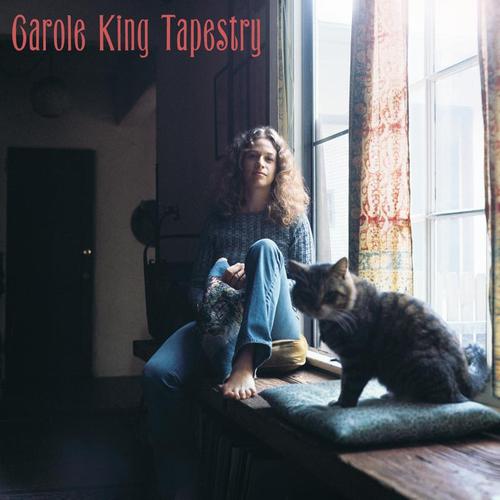
Tapestry by Carole King (1971) — what a copy is worth and which pressing to own, in a full Lead-In dossier: Carole King's second solo album, made in about 3 weeks at A&M after a decade of writing hits for others.
Tapestry by Carole King (1971) — what a copy is worth and which pressing to own, in a full Lead-In dossier: Carole King's second solo album, made in about 3 weeks at A&M after a decade of writing hits for others.
Carole King's second solo album put 10 years of writing hits for others into her own voice, at her own piano. It held #1 for 15 weeks, and its craft runs deeper than its invention.
The legend says Tapestry began the singer-songwriter decade. It didn't. What it did was rarer: it made a professional songwriter's craft sound like conversation. Most of the songs still hold, and the plain setting that flatters the best of them exposes the rest.
On the Billboard chart dated 19 June 1971, Carole King was #1 twice. Tapestry went to the top of the Top LPs list, up from #2. Its single, 'It's Too Late' paired with 'I Feel the Earth Move', was #1 on the Hot 100. Further down the album chart, at #143, sat Writer. That was her solo debut, which had got no higher than #84 on its first run. Now it was back, riding on Tapestry's coat-tails. It's the whole story in one issue of a trade paper: the same woman, the same label, and a second try that worked.
Tapestry is usually told as a beginning, the record that started the singer-songwriter decade. It wasn't. James Taylor and Joni Mitchell were already there, and King's own first attempts had failed. What Tapestry did was rarer and smaller. It took a decade of writing hits for other people and set that craft in a room with a piano and a voice that sounded like talking. The songs are the achievement. The setting gets out of their way, and that's both why the record lasts and where it stops.
The craft came first. With Gerry Goffin, King wrote 'Will You Love Me Tomorrow', a #1 for the Shirelles in January 1961, when she was 18. The partnership kept supplying other people's hits through the decade, until the marriage behind it ended. By 1968 they'd divorced, and King moved to Laurel Canyon with her two daughters. She formed a trio, the City, with Charles Larkey and Danny Kortchmar. Its one album sank, partly because she wouldn't tour, and the group split in 1969. Writer followed in 1970 on Lou Adler's Ode label and stalled. By then she'd fallen in with Taylor and Mitchell in the canyon. Taylor pushed her towards a solo career, and she later credited him with nudging her out in front.
Adler knew what he wanted from the second try. He told Harvey Kubernik, for the album's 50th anniversary, that he wanted listeners to picture her at the piano, singing and playing. He planned a lean record that sounded close to a demo, with her piano as the anchor. They made it at A&M's studios in Hollywood. It took about 3 weeks and about $22,000, according to Grammy.com. The building was busy. The Carpenters were working in Studio A and Mitchell was making Blue in Studio C. Grammy.com puts King in Studio B, with the lights low and candles lit. Adler says the tracks were made in Studios B and C, and Merry Clayton, who sings on three tracks, remembers him in C for her vocal. Nothing about the plan was new. The point was to do it without decoration.
The band is bigger than the image of a woman alone at a piano. The sleeve credits 14 musicians and singers besides King. Larkey, by then her husband, plays bass on 11 of the 12 tracks. There are two drummers, Joel O'Brien and Russ Kunkel. Curtis Amy plays a different instrument on each of his four songs: flute, then soprano, tenor and baritone saxophone. What keeps it small is the method. Adler's plan was King playing figures at the piano over a basic rhythm section. He doubled many of her piano parts with Kortchmar's guitar, after a Peggy Lee record on which George Shearing doubled the piano with vibes and guitar. Hank Cicalo, the engineer, said he was after the warm middle of her voice. He wanted everything else to serve the voice and the piano.
The sequencing makes the case early. The record opens with its most forceful song. 'I Feel the Earth Move' has King singing by 0:07, over her own keyboard, Kortchmar's electric guitar, Larkey's bass and O'Brien's drums. About 50 seconds in, the voice drops out for more than half a minute and the band carries the song alone. Then 'So Far Away' arrives, slower, with Taylor's acoustic guitar and Amy's flute. From there the record settles into the pace it keeps for most of its length. The opener promises a rock record. What follows is a songbook, and it's the better for the switch.
'It's Too Late' is the method at its best. Toni Stern wrote the words and King the music. It's a break-up song with no villain in it, and the arrangement keeps the same level temper. King's piano and Ralph Schuckett's electric piano are both on it. Then, from 1:36 to 2:38, the voice drops out for more than a minute. Kortchmar plays electric guitar on the track and Amy soprano saxophone, and the long break lets the song breathe without turning into a jam. Robert Christgau, writing about King at length in Newsday in November 1972, called it "a true and ironic standard about breaking up". By 1981 he doubted there was a truer song on the subject. He was right. It's a hit single that sounds like an argument already settled.
Elsewhere the restraint is a matter of taking things away. Grammy.com says King wrote 'You've Got a Friend' in answer to Taylor's 'Fire and Rain'. King told Adler in 1972 that she hadn't written it with Taylor, or anyone, in mind. Her recording runs over 5 minutes and doesn't sing its title until 1:36, so the promise arrives late and lands harder for it. Taylor's acoustic guitar and a string quartet are on it, along with Kortchmar's congas. The title track goes further. 'Tapestry' is King alone, voice and keyboards. The closing 'Natural Woman' is her keyboard and Larkey's string bass, and she's singing within 3 seconds.
The two old songs are where the method costs something. King's 'Will You Love Me Tomorrow?' is slower than the Shirelles' single. Mitchell and Taylor sing behind her, credited on the sleeve as the Mitchell/Taylor Boy-and-Girl Choir. Slowed down, a teenager's question becomes an adult's, and that's a real reading of her own song. 'Natural Woman' is harder to defend. Aretha Franklin's 1967 recording is the one the song is known by, and it was built for a big voice. King's conversational singing, a strength almost everywhere else, sounds slight against the memory of it. These are the writer's versions. They tell you who wrote the songs, not why the hits were hits.
The other weakness is in the writing, which is the record's strength, so it matters more. Christgau's 1972 essay sorted three songs by type, and the labels weren't compliments. 'Beautiful' was the chin-up song and 'Way Over Yonder' the pastoral escape. The title track was the inane one about life being cosmic. Two of the three close side one, back to back. He said it in passing, in an essay that's mostly praise, but the problem he named is real. When King moves from particular feelings to general uplift, the songs thin out. 'Where You Lead' has a different flaw: its devotion has dated, and King says so. Introducing it at Hyde Park in 2016, she said she rarely sings it, and that it came out before women's liberation. That night she sang a revised version with her daughter, Louise Goffin.
The sales came fast. Tapestry entered Billboard's album chart at #79 on 10 April 1971 and held #1 for 15 weeks, from 19 June to 25 September. Christgau wrote in November 1972 that it had sold "well over five million" copies. The critics' poll was cooler. In the Village Voice's Pazz & Jop poll for 1971, critics placed it 10th, one place below Blue. That order is fair. Blue is the stranger and more exposed record. Tapestry is the better-made one, and better-made is a smaller thing to be. The Grammys had no such doubts. At the 14th ceremony, on 14 March 1972, Tapestry won Album of the Year. 'It's Too Late' won Record of the Year, 'You've Got a Friend' won Song of the Year, and King took Best Pop Vocal Performance, Female. Grammy.com counts her as the first woman to win more than one Grammy in its General Field.
What it changed is easier to name than the legend suggests. Christgau's case was that King had made the first widely recognised instrumental signature developed by a woman, and she made it at the piano. He also heard a voice that broke with both folk purity and the sexualised singing expected of women. That's the real legacy: permission. Rolling Stone argued in 2014 that she won women the same licence as Dylan to sing with an imperfect voice. Taylor Swift inducted her into the Rock and Roll Hall of Fame in 2021. And no album by a woman spent longer on the Billboard chart until Adele's 21 passed it in 2017.
What it didn't change was the form. Taylor's Sweet Baby James came out in February 1970, a year earlier, and Grammy.com says its success set King to work on Tapestry. Her own Writer, with Taylor on guitar, had already sunk. Tapestry's biggest innovation was commercial. It proved that this kind of record could top the American chart for a whole summer, with a woman at the piano. That's a large thing. Christgau's sharpest point cuts both ways here: he argued that Adler's polish was what let a real, forceful woman past a mass audience. But reach isn't the same as inventing a sound, and the album's reputation often blurs the two.
So what is it worth now? Admiration, without the reverence. The best half-dozen songs on Tapestry are built to last, and the plain setting lets you hear exactly how they're built. That's a lesson in craft, and it still teaches. But the record leans on its songs so completely that it can't hide the weaker ones. Two of its tracks are footnotes to other singers' hits. It didn't invent the form. What it did is harder to repeat: it made great songwriting sound like an ordinary person talking. That makes it a very good record, not a sacred one.
The one to own is a 1971 US Ode SP 77009 in its gatefold. Several CBS plants pressed it. A T in the runout marks Terre Haute and an S marks Santa Maria; copies whose runouts end in P numbers carry no plant letter. Early Terre Haute copies have an 'Ode 70' logo on the labels. The matrix numbers read 77017 and 77018, not 77009.
© The Lead-In · an independent, reader-supported music publication.