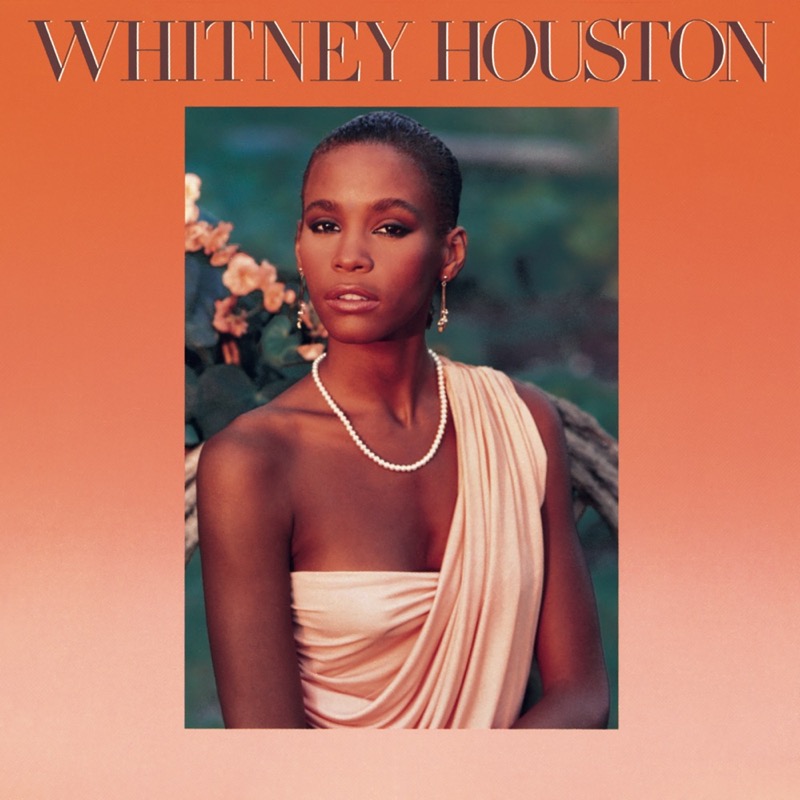
Clive Davis chose her songs and her producers, and the debut he built around a 21-year-old singer took nearly a year to reach #1. A very good record, with clear limits.
- Released
- 14 February 1985 (Arista)
- Label
- Arista (US LP AL 8-8212; Europe LP 206 978, made by Ariola Eurodisc)
- Producer(s)
- Clive Davis (executive); Kashif, Jermaine Jackson, Michael Masser, Narada Michael Walden
- Runtime
- 46:54 (10 tracks, as timed on streaming editions)
- Chart peak (US)
- #1 (Billboard 200, chart dated 8 March 1986); 14 weeks at #1 in two runs; #1 album on Billboard's 1986 year-end chart
- Chart peak (UK)
- #2 (Official Albums Chart, 1 March 1986); 119 weeks on the chart
- Certifications
- RIAA Diamond (database entry dated 27 January 2023); Music Canada Diamond (31 March 1987)
- Awards & honours
- Grammy for Best Pop Vocal Performance, Female ('Saving All My Love for You'), 25 February 1986; nominated for Album of the Year. Grammy Hall of Fame, 2013. Rolling Stone's 500 Greatest Albums: #254 (2003), #249 (2020)
Clive Davis planned the launch in order: Black radio first, then the ballad, then the dance song. It worked because of the voice. The album around the hits is thinner than the hits, and one of the three #1s was never meant to be a single.
On 30 March 1985 Whitney Houston's debut album entered the Billboard 200 at #166. It reached #1 on the chart dated 8 March 1986 and held the top for 14 weeks in two runs. Paul Grein reported in the Los Angeles Times that Arista had placed three full-page ads in Billboard around release, before she'd cracked the Top 50. The label was spending ahead of the sales. That's the shape of the whole record: a plan, carried out in order, resting on one thing no plan could supply.
Whitney Houston is a very good record with clear limits. The plan was sound. Clive Davis wanted her established at Black radio first, so she wouldn't fall between Top 40 and R&B. The singles ran in a set order: the R&B hit, then the adult-contemporary ballad, then the up-tempo song. The singer is the best thing about the album by a distance. The songs around the hits are another matter. At least three of the ten had been recorded by other singers first, and Don Shewey of Rolling Stone thought many of the songs so featureless that anyone could have sung them. The sound is a good craftsman's answer to its year rather than a new idea.
She wasn't an unknown. Her mother, Cissy Houston, sang with the Sweet Inspirations, and Dionne Warwick was her cousin. Houston sang in her mother's club act, modelled for Click and then Wilhelmina, and was on the cover of Seventeen in November 1981. Her manager Eugene Harvey told the Los Angeles Times that two major labels wanted her at 18 and he felt it was too early. Then Gerry Griffith of Arista saw her at a club and told Davis the next day. She signed on 10 April 1983, aged 19. A clause in her contract gave Davis the choice of songs and producers. That clause matters more than the pedigree. It made the album one man's taste, and the record's strengths and weaknesses are his as much as hers.
She'd also been on record. She recorded vocals for Material's 'Memories' in 1982 and for Paul Jabara's 'Eternal Love' in 1983. Her first single, 'Hold Me', came out on 24 May 1984, a duet with Teddy Pendergrass from his album Love Language. It reached #46 on the Hot 100 and #5 on the Hot Black Singles chart, and it closes her debut. It also cost her something. The Recording Academy ruled her ineligible for Best New Artist because of her credits on Pendergrass's and Jermaine Jackson's 1984 albums. Davis protested in Billboard in January 1986, and Sade won. Harvey also told the Los Angeles Times that the long wait for the album was a matter of finding the right material and producers.
What Davis did with his control took a long time. TIME reported in 1987 that gathering the songs took a year and a half, and that many producers turned her down after seeing her perform in New York and Los Angeles. The album was budgeted at $200,000 and cost almost $400,000. Davis told TIME that the main test for each song was whether it would be a hit. The sleeve shows the result. Michael Masser produced four tracks, Jermaine Jackson three, Kashif two and Narada Michael Walden one, each with mostly different musicians. The mixing credits split along the same lines. At least three of the songs had been recorded by other singers first. George Benson cut 'Greatest Love of All' in 1977, and Marilyn McCoo and Billy Davis Jr. cut 'Saving All My Love for You' in 1978. Diana Ross cut the song that became 'Hold Me' as 'In Your Arms' in 1982. The history of a fourth, 'Nobody Loves Me Like You Do', is disputed. Every track is built for the radio. Fewer are built to be heard together, which is why the album feels assembled.
The singles carried out the plan one format at a time. 'You Give Good Love' came out on 22 February 1985 and reached #3 on the Hot 100 and #1 on the R&B chart. 'Saving All My Love for You' followed in August 1985, a ballad that spent a week at #1. 'How Will I Know' arrived on 22 November 1985 and was #1 for 2 weeks from 15 February 1986. MTV was slower, and the accounts differ. A 2023 retrospective by Maura Johnston and Jeff Gage says MTV first refused her video for 'You Give Good Love'. The Los Angeles Times said in 1986 that the 'How Will I Know' clip put her on MTV for the first time on Christmas Day 1985. Davis told the authors of I Want My MTV that this video took the album to a different level.
Harvey and Davis told Grein that the success rested on careful strategy and blind luck. Grein wrote that Arista never intended to release 'Greatest Love of All' as a single. It was the last song recorded, in December 1984. It first came out in February 1985 as the B-side of 'You Give Good Love'. Davis wanted to keep it off the album, and Masser and Houston prevailed. Davis put it second to last. In May 1986 it became her third #1, and he told TIME it had moved the album into a different category altogether. The plan got Houston to the pop audience. A song that wasn't part of it finished the job. That should make us careful with the word 'engineered'. The longest-running #1 of the three was the song its architect had wanted to leave off.
'How Will I Know' is the best-made track here, and Walden has described its making in detail. The demo had no verse, he says, so he wrote one. He cut the basic track in San Francisco in a matter of hours, playing drums and synth bass himself. Randy Jackson played bass and Corrado Rustici guitar. Houston sang the vocal at Mediasound in Manhattan in about an hour, and Walden says he'd made the first line very high for her. Jon Pareles of the New York Times called her a chirper on this track. TIME's writer heard Cissy Houston's lessons in it too, in the way her daughter hits the last consonant of the refrain. Cissy had told the magazine not to start loud and to make control the base. Christgau, who gave the album a C, said only one of the four producers put any zip into it. It was Walden.
The ballads show other Houstons. Pareles heard a cooer on 'You Give Good Love' and 'Saving All My Love for You', and a belter on 'Greatest Love of All'. Kashif says he emptied out the choruses of the first so that her voice carried them. He made the band busier under the long notes of the bridge. Shewey singled out 'Greatest Love of All' in Rolling Stone as the place she gives a coherent performance. He described an arc. She starts cautious and contained, singing it as written and enunciating clearly. As the lyrics repeat she lets go a little, adds churchy phrasing and holds notes longer, and still leaves a sense of something held back. That's close to the lesson Cissy Houston gave TIME: don't start loud. Pareles disagreed in 1987. On the debut, he wrote, phrases were exquisitely sung but sounded patched together in the studio, with her timbre changing from line to line. He added that she sang this song in concert with the same phrasing as on the record.
The weakness is the middle. 'Someone for Me' is a Jermaine Jackson production that Shewey called overproduced. He called the Jackson and Pendergrass duets mushy. 'Thinking About You' went to R&B radio only and reached #10 on the Hot Black Singles chart. A Spotify tally from October 2026 tells the same story. 'How Will I Know' had 464.5 million plays. 'Someone for Me', 'Thinking About You' and 'Take Good Care of My Heart' had 2.9 million, 3.7 million and 5.0 million. None of them is a bad record, but any could be swapped for another song of its year. Even the best dance song sounded familiar to Shewey, who heard the Pointer Sisters' 'He's So Shy' in it. Pareles went further in 1987. He wrote that on both of her first two albums she submitted to pop formulas designed for lesser singers. The album is better built than it is written. What was new about it was the route it took to the charts.
TIME's 1987 cover story divided the response into admirers and scoffers. It reported that scoffers in the rock critical establishment saw 'a black Barbie doll' and found her songs bland and timid. The press of 1985 was more mixed than that. Shewey called the songs 'pleasant but undistinguished', though he also wrote that there was a lot to like. Christgau called the material 'schlock'. Others split the verdict the way this essay does. Stephen Holden's New York Times capsule in May 1985 called the album impressive and 'musically conservative', built around an exceptional voice. The Los Angeles Times capsule that December found the arrangements frequently listless and the material sometimes mediocre, and said the voice outweighed both. The scoffers were right about the filler. We think they were wrong about the singing, although Pareles's complaint about patched-together takes is the best case for them. Rolling Stone ranked the album #254 in 2003 and #249 in 2020.
The influence claims are critics' readings, and they're consistent. Allison Stewart wrote in the Washington Post in 2009 that the album gave a blueprint to the careers of Mariah Carey and others. Stephen Thomas Erlewine of AllMusic called it the foundation of diva-pop. A comparison between two songs came in 1993, when the Orlando Sentinel's reviewer called Carey's 'Hero' a knockoff of 'Greatest Love of All'. All three are the critics' words, not Carey's. What's documented is narrower and still large. It was the first debut album, and the first album by a solo woman, to produce three Hot 100 #1s. Its 14 weeks at #1 were a week short of Carole King's record for a woman, by Billboard's count.
The voice is the reason to own Whitney Houston, and the plan worked on three singles. 'You Give Good Love' and 'Hold Me' show how it began. 'Saving All My Love for You', 'How Will I Know' and 'Greatest Love of All' show what it was for. The other tracks are competent rather than memorable, because a man chose them by asking one question of each. This is a very good record with clear limits, and it earns admiration, not reverence.
Pressing guide — the one to own
Nothing here is a grail. On 12 October 2026, 13,811 collectors listed one US pressing as owned, and US and Canadian club editions carry the same catalogue number as the regular LP. The pressing worth owning is the cleanest copy of an ordinary original. The collector's object is the 2020 Vinyl Me, Please box: lacquers cut from the original tapes at Sterling Sound Nashville, a second LP and a 40-page book. We found no published edition size for it. The one numbered edition is the 2024 Mobile Fidelity LP, 4,000 copies, which its own sleeve says was cut from a digital master.