
Deep Dive
Private Dancer
Private Dancer by Tina Turner (1984) — what a copy is worth and which pressing to own, in a full Lead-In dossier: She was 44, and her own label had nearly dropped her.
Private Dancer by Tina Turner (1984) — what a copy is worth and which pressing to own, in a full Lead-In dossier: She was 44, and her own label had nearly dropped her.
Tina Turner's fifth solo album, released in 1984 and made by five production teams from ten songs by other writers. The voice is the triumph; the limit is how little here is new.
Remembered as a comeback, Private Dancer is better heard as a great singer winning over songs she didn't write, and one she didn't want. The voice is superb. The record around it is skilled work by committee, with the limits that implies.
In HBO's documentary Tina, released in 2021, Turner remembered her first reaction to 'What's Love Got to Do with It'. She heard a pop song, and she didn't want it. "It was terrible. It was awful." Terry Britten, who co-wrote and produced it, remembered her telling him at their first meeting that she didn't want to do it. Her manager did. John Hudson, who engineered the session, told Sound on Sound in 2004 that she didn't like it. Like everyone in the room, he said, she was probably expecting 'I Can't Stand the Rain' to be the one released. In September 1984 the song she hadn't wanted spent 3 weeks at #1 in America.
That's the whole record in miniature, and it's a better story than the usual one. Rolling Stone's review in July 1984 called the album a comeback. The Library of Congress essay framed it the same way when it joined the National Recording Registry in 2020. The credits point somewhere less romantic. Turner wrote none of the ten songs. Six had already been released by other artists, and only one was written for the album. Five production teams made it. What holds it together is a great singer working her way into material she mostly didn't choose. That's its strength. Its limit is how little of it is new, and you can hear that.
She had never stopped working. What she lacked was hits: she hadn't had a record in the American charts since 1975. Turner left Ike Turner in Dallas on 1 July 1976 with 36 cents. She paid off her debts in cabaret rooms and hotels. Her solo album Love Explosion failed in 1979, and United Artists let her go. Roger Davies became her manager after seeing her at the Fairmont in San Francisco. In 1983 John Carter, an A&R man at Capitol, signed her. Not everyone at the label agreed. Its president, Don Zimmerman, was sceptical. Carter said in 2009 that he had to fight to stop Capitol dropping her.
The way back ran through a side project. In 1982 Martyn Ware of Heaven 17 was making a covers album as British Electric Foundation. When James Brown's terms proved too steep, Virgin's Ken Berry suggested Turner, and she sang 'Ball of Confusion'. Ware says she and Roger Davies arrived at that session and asked where the band was. He pointed at the Fairlight. Her team then asked Ware for new songs. He suggested a soul cover instead: Al Green's 'Let's Stay Together'. It reached #6 in Britain in December 1983, and #26 in America, her first solo hit there. Accounts differ on what it led to. The registry essay says its success created the call for an album. Ware remembers being asked for songs when the album was already being made, and a 2020 Library of Congress announcement has Carter signing her in 1983 and work beginning in England.
How fast it was made depends on whose clock you use. The registry essay says it took just 2 weeks to record. Turner remembered driving to several studios every night for a fortnight. That can't be the whole record. 'Let's Stay Together' was already a hit, and Hudson says Britten's three songs took a few weekends, with Turner booked to sing all three on a single Sunday. Our reading is that her fortnight was the vocal sessions, though no source says so. Britten worked at Mayfair in Primrose Hill. Rupert Hine used the Farmyard, a studio in Buckinghamshire. Carter used Wessex and Good Earth for his two, and Ware and Greg Walsh used Abbey Road and CBS. Three of the Crusaders produced 'Help!', and the label doesn't say where.
Robert Christgau gave it a B+ in the Village Voice in July 1984, and later raised it to A−. He noted the four production teams, "always a sign of desperation", then found the result seamless. He was reviewing the American edition, which has nine tracks and one team fewer. On the British edition the joins show. Hine's two tracks put her in front of members of The Fixx, Jamie West-Oram on guitar and Cy Curnin on backing vocals. 'Help!' was made by three of the Crusaders, with David T. Walker and Charles Fearing on guitars. Ware's '1984' is a synth record with strings. Her voice is the one thing all five share, and it has to do a lot of work. The American edition, without 'Help!' and ending on the title track, hides the joins better.
The best idea on the album is Britten's, and she had to be talked into it. The registry essay says she came round only when he played her the song on acoustic guitar. At Mayfair, Britten and Hudson built a track with very little in it. A Linn drum machine replaced Graham Jarvis's real drums at the mix. Billy Livsey's tweaked DX7 patch plays the line that sounds like a harmonica. Hudson remembers the moment the Linn and that line first played the intro together, before her voice comes in at 0:21. At first, Hudson says, she belted it as if to 25,000 people. Britten coached her down, at last telling her to sing into his ear rather than to an audience, and she sang quietly. Hudson recorded her through two microphones, one close and one further back, and comped the vocal from about six takes. The result is the most persuasive singing on the record. She sounds like someone who has heard every line before and believes none of it.
The title track shows the same skill at greater length. Mark Knopfler wrote 'Private Dancer' for Dire Straits' Love Over Gold in 1982 and left it off. By Turner's account, he felt it wasn't a man's song. She told Radio 1's Roger Scott in 1989 that she had planned at first to sing over his band's own recording, until a record-company problem got in the way. Carter re-cut it with John Illsley, Terry Williams, Hal Lindes and Alan Clark, and Mel Collins on saxophone. Jeff Beck played the guitar solo. At 7:16 it's the longest track on the album, and from 3:08 to 4:49 there's no sung line at all. That's a long time for a story-song to go without its narrator. For 1:41 the song belongs to the band, and the record trusts the players to hold it. It's a brave choice for a title track, and it pays.
'Let's Stay Together' had already shown what machines could do for her. Ware programmed the Linn drum and Walsh the Fairlight. The chord that hangs over the opening is a reverb held by the freeze function of a Quantec Room Simulator, which Ware says was the first machine that could do it. Around that grid sit real players: Ray Russell on guitar, Nick Plytas on piano and Gary Barnacle on saxophone. Ware says what you hear is all one take, and that she had rehearsed every detail of it beforehand. 'What's Love Got to Do with It' was assembled from about six. Two methods, and both work. That's the album at its best: a voice set against machines and winning.
'Steel Claw' is the other place where the plan works. It's a Paul Brady song from his 1983 album True for You, cut by the same band with Richie Zito added on guitar. Beck solos again, and Christgau singled out how she bends Brady's written words into her own way of speaking. 'Better Be Good to Me', first a 1981 single by Spider, won her the rock vocal Grammy and reached #5 in America. The registry essay calls it a "womanist anthem". 'I Might Have Been Queen', the opener, is the one song written for the album. Jeannette Obstoj, Hine and Jamie West-Oram wrote it, after Obstoj and Hine talked with Turner about her Buddhism. It gives her what no cover could: a song that starts from her. The remakes of older classics are where the record goes slack. 'I Can't Stand the Rain' adds nothing to Ann Peebles' 1973 single. 'Help!' runs 4:29, almost twice the length of the Beatles' 1965 single, and has one idea to fill it. As British singles, 'Help!' reached #40 and 'I Can't Stand the Rain' only #57.
That points to the album's real limit, which is that very little here was new. The Linn drum, the DX7 and Walsh's Fairlight were tools of their year, not inventions. Evelyn McDonnell, who wrote the registry essay, hears production that now sounds dated, held together by the voice. Ware himself has called it a "coffee table" record, a mainstream one, and he made two of its tracks. What was different was the casting. An American singer of 44 sang other people's songs, mostly in London studios, with synth-pop producers and a rock band's rhythm section. Turner marvelled at Ware and Walsh's gear, which she called the "X-ray" machine. The phrase fits the album's best moments, where the machines expose the voice rather than cover it.
The audience didn't care about any of this, and it bought the record for years. In Britain it reached #2, held off on two charts by Now That's What I Call Music 3, and spent 150 weeks in the top 100. In America it peaked at #3, under Purple Rain and Born in the U.S.A., and stayed in the top 10 for 39 weeks. That's 7 more than Purple Rain. Worldwide sales claims run from Billboard's 10 million in 2008 to Ware's 20 million, and none is audited. The certifications are firmer: 5× Platinum in America, 3× in Britain, 7× in Canada. At 44 years and 9 months she was then the oldest woman to top the Hot 100. Aretha Franklin passed her in 1987, and Cher holds the record. The Grammys gave her Record of the Year and the female vocal awards for pop and rock. Its documented influence is thinner. We found no artist on record saying the album shaped their work. Christgau, reviewing her next album, called it "the archetypal all-singles all-hits multiproducer crossover". McDonnell argues that its spread of producers became a precedent for hit albums. That's a fair reading, and hard to prove.
So the reputation gets the singer right and the authorship wrong. Private Dancer is a set of skilled people solving the problem of what to give her. Their answers vary. Four songs still sound first-rate: 'What's Love Got to Do with It', 'Let's Stay Together', 'Private Dancer' and 'Steel Claw'. Around them sit remakes that are competent and no more, and a running order that changes its mind several times. It's a very good record with clear limits. Admire it for the singing, which is as good as anything she recorded. Don't mistake it for her vision. The credits show it was everyone's.
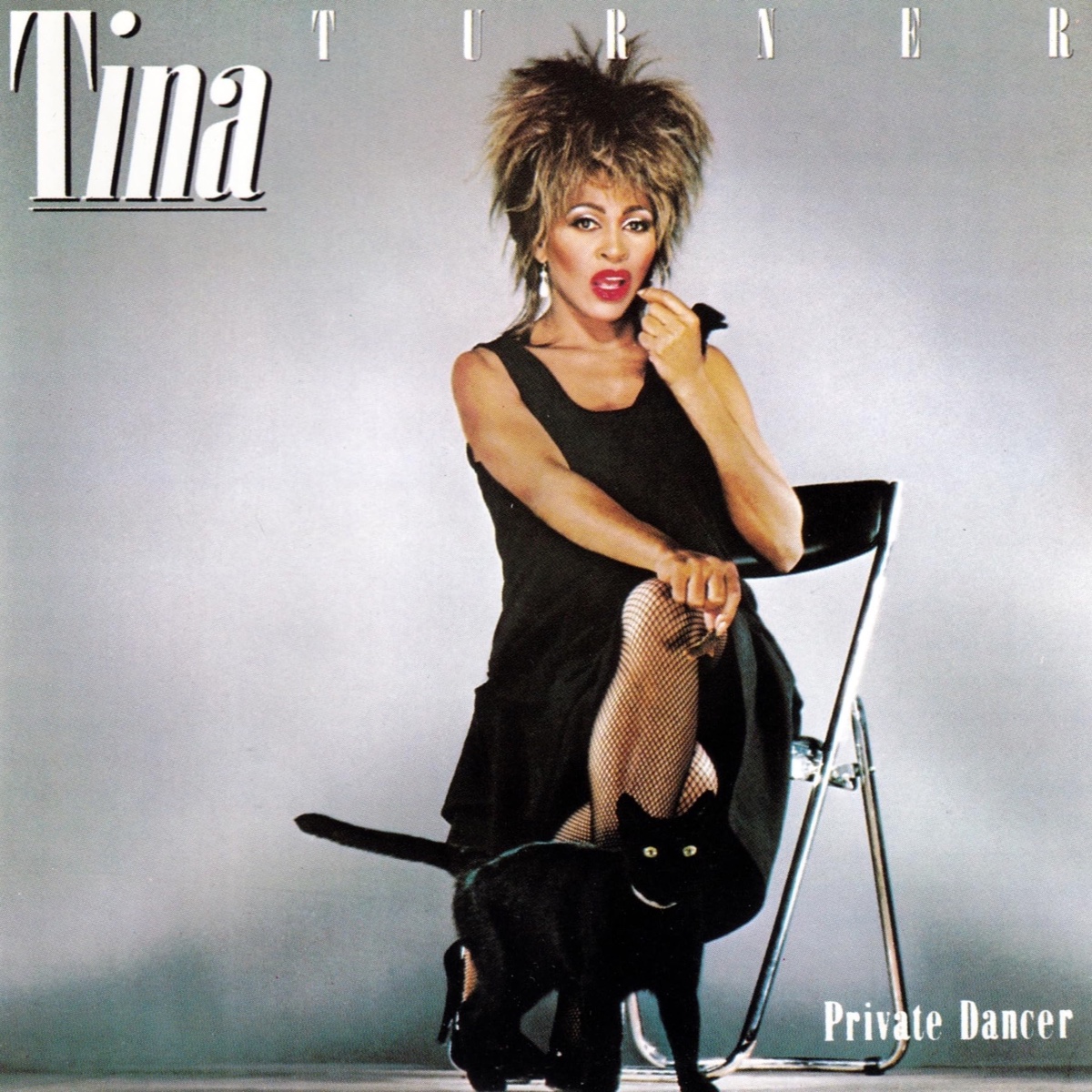
The British original, Capitol TINA 1, is the edition this dossier describes: ten tracks, with 'Help!' and the title track closing side one. Its runouts carry EJ 2401521T and a stamped 'Penthouse', the cutting room. The picture disc, TINA P1, pressed by Grampian in Annan, is the collector's object. On 4 October 2026 it had 619 owners and 230 wants. The American ST-12330 is a different record, with nine tracks and a different cover photograph.
© The Lead-In · an independent, reader-supported music publication.