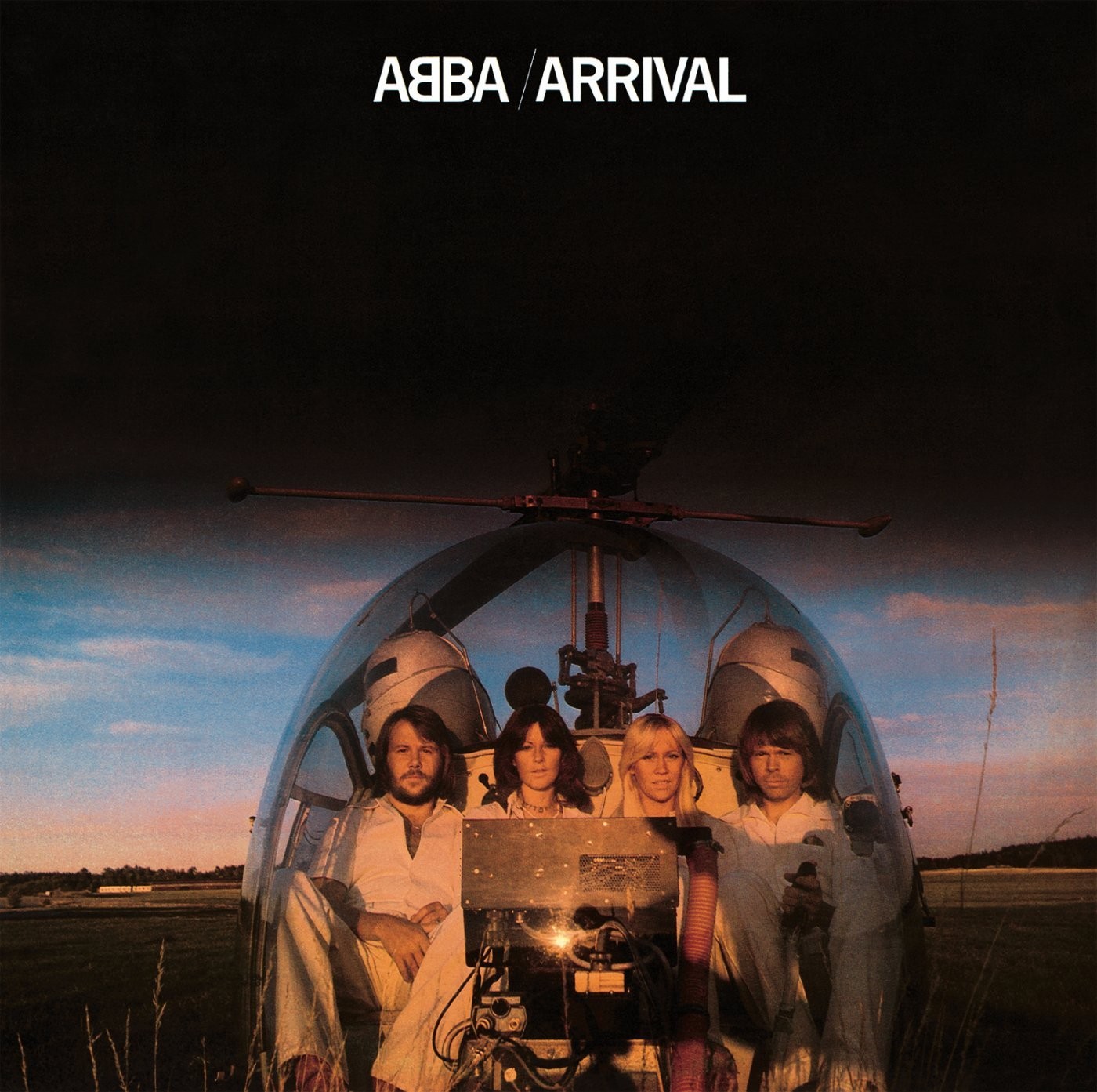
ABBA's fourth album, built across a year in Stockholm out of a disco groove they first called 'Boogaloo'. By the time it came out in October 1976 that groove had become 'Dancing Queen', they had a finished record, and a Eurovision novelty act had turned itself into the most efficient hit machine in pop.
- Released
- 11 October 1976
- Label
- Polar Music (Sweden) / Epic (UK) / Atlantic (US)
- Producer(s)
- Benny Andersson and Björn Ulvaeus (engineer: Michael B. Tretow)
- Runtime
- 32:19
- Chart peak (US)
- #20 (Billboard 200); topped the 1977 US year-end Billboard 200
- Chart peak (UK)
- #1 — best-selling album of 1977 in the UK (and West Germany); 79 consecutive weeks in the UK Top 40
- Certifications
- BPI Platinum (UK); RIAA Gold (US)
- Awards & honours
- Selected for the US National Recording Registry by the Library of Congress (2024); contains ABBA's only US #1 single, 'Dancing Queen'
The album where ABBA shed the Eurovision-novelty tag and became a global pop institution. Recorded across more than a year in Stockholm, it carries three of their biggest hits and an instrumental title track — and put four Swedes in a helicopter on one of pop's most recognisable sleeves.
ABBA had won Eurovision in 1974 with 'Waterloo' and spent the two years since trying to prove they were more than a one-off. By the time they began their fourth album in August 1975 they had real momentum in Europe and Australia but had not yet conquered Britain or America. The sessions ran, on and off, until September 1976 at the Metronome and Glen studios in Stockholm, with Benny Andersson and Björn Ulvaeus producing and the engineer Michael B. Tretow layering the multitracked sound that became the group's signature. It was a long, unhurried build for a record that would change everything for them.
The turning point was a backing track the group laid down early, inspired by the disco of George McCrae's 'Rock Your Baby'. They called it 'Boogaloo'. All four members remembered hearing the playback and knowing they had something enormous; Agnetha Fältskog said simply, 'We knew immediately it was going to be massive.' With new lyrics it became 'Dancing Queen', and it would be ABBA's biggest song — their only US number one and a UK number one, given its first public airing at the gala on the eve of the wedding of Sweden's King Carl XVI Gustaf in June 1976.
Around that centrepiece the album is a catalogue of craft. 'Money, Money, Money' — inspired by the 'Money' song from Cabaret and built up through working titles 'Been and Gone and Done It' and 'Gypsy Girl' — became a cabaret-pop drama with a Lasse Hallström video. 'Knowing Me, Knowing You' is one of the great divorce songs, all the more so for predating the band's own breakups. 'My Love, My Life' began as a song called 'Monsieur Monsieur' and ended as a lush ballad whose harmonies the group built in tribute to 10cc's 'I'm Not in Love'.
Even the lesser-known tracks show the method. 'When I Kissed the Teacher' opens the album on a sly schoolyard hook; 'Why Did It Have to Be Me?' began life as a discarded song called 'Happy Hawaii'; Björn admitted he brought in 'Dum Dum Diddle' mostly to prove he'd been working all night on lyrics. And the album closes on its title track — an instrumental originally titled 'Ode to Dalecarlia', a wordless, folk-tinged piece of Benny Andersson keyboard grandeur, reportedly written around the arrival of Björn and Agnetha's first child, which gave the album its name.
Arrival came out on 11 October 1976 and detonated. It hit number one in around a dozen countries, became the best-selling album of 1977 in both the UK and West Germany, and spent 79 consecutive weeks in the UK Top 40. American critics were sniffier — Rolling Stone's Ken Tucker likened it to Muzak — but the public didn't care; it reached US #20 and topped the 1977 year-end Billboard chart there. The sleeve, shot at Barkarby airfield outside Stockholm with the four of them posed in and around a Bell 47 helicopter, debuted the now-iconic mirrored-B ABBA logo designed by Rune Söderqvist, and looked exactly like what the record was: a band ready for lift-off.
Arrival is not in our hundred only because the hundred is closed. It has since been inducted into the US National Recording Registry, and it remains the clearest single statement of what ABBA actually were — not a novelty act but a songwriting-and-production workshop as disciplined as Motown or Brill Building pop, turning out melodies engineered to be unforgettable. Critics spent the 1970s sneering at exactly the craft that has kept these songs alive for fifty years. 'Dancing Queen' alone has outlasted nearly everything the people who dismissed it preferred.
Pressing guide — the one to own
The origin grail is the 1976 Swedish first pressing on Polar, POLS 272 — ABBA's home label, the configuration the record was mastered and released on first. Note it is a single sleeve with a printed inner, not a gatefold; the famous helicopter photo is the front cover. It was the first ABBA studio album to carry Rune Soderqvist's mirrored-B logo, though that logo had already debuted on the 'Dancing Queen' single that August. Early UK Epic (EPC 86018) and the original US Atlantic SD 18207 are the common international alternatives. As a record that sold in enormous numbers, condition and true first-press markers drive value.