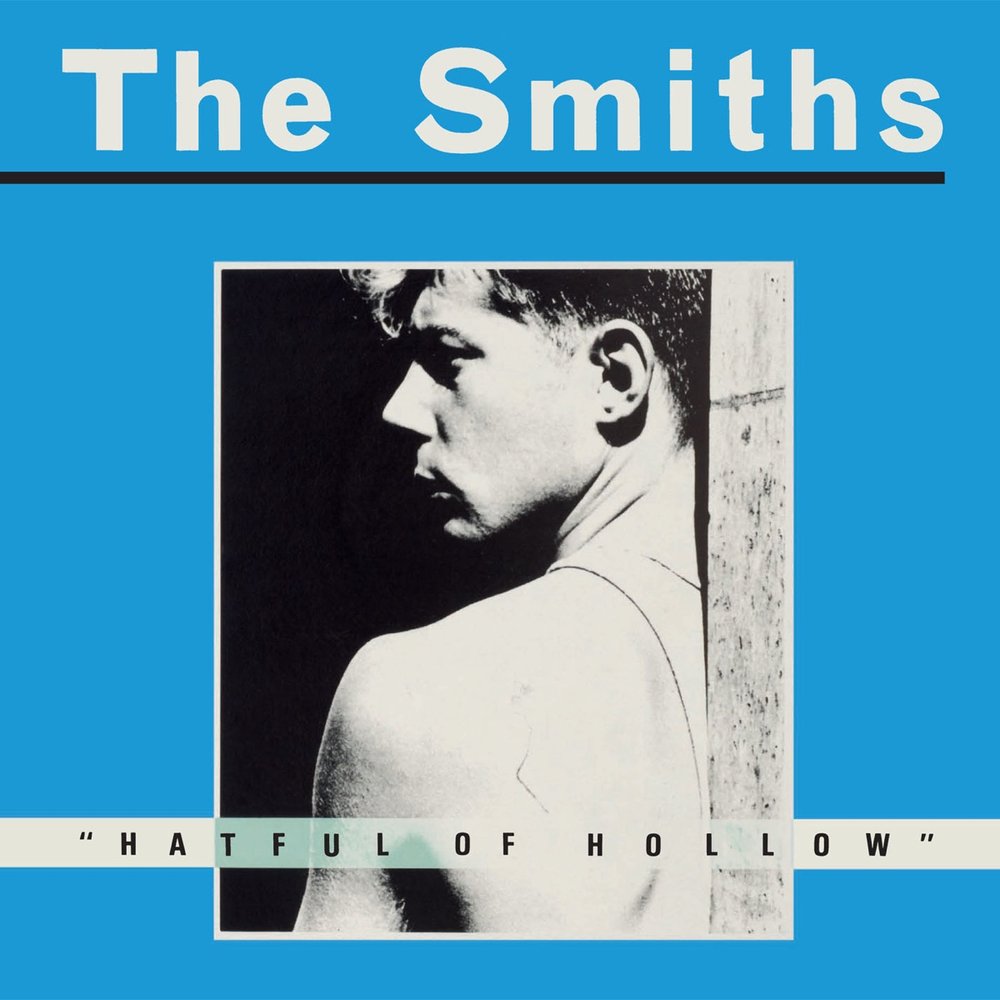
The Smiths' 1984 gathering of BBC sessions, singles and B-sides, with a £3.99 price sticker the band insisted on. Great songs and playing, held together by little more than the running order.
- Released
- November 1984 (UK, Rough Trade). Sources give the day as anywhere from 2 to 16 November
- Label
- Rough Trade (UK) · Sire / Rough Trade (Canada, 1984) · Sire (US, 1993)
- Producer(s)
- John Porter (six tracks) · Roger Pusey (the seven Peel session tracks) · Dale Griffin (two Jensen session tracks) · The Smiths ('Hand in Glove')
- Runtime
- 55:56 across 16 tracks on one LP
- Chart peak (US)
- No US peak: the album wasn't issued in the US until 1993, on CD
- Chart peak (UK)
- #7 (Official Albums Chart, week of 18 to 24 November 1984), 46 weeks in the Top 100
- Certifications
- BPI Silver (19 November 1984) · Gold (20 November 1984) · Platinum (11 October 1987)
- Awards & honours
- 10/10 in Pitchfork (2011) · #100 on NME's 500 Greatest Albums of All Time (2013)
Ten of its 16 tracks are BBC radio sessions, and its songs and playing are the reason to own it. But it was gathered, not designed, and its limits are the limits of a collection.
Copies of Hatful of Hollow carried a sticker telling buyers to pay no more than £3.99. The Smiths had insisted on it, Record Mirror reported in October 1984, and Music Week listed the dealer price at £2.43. For that you got 16 songs, 55 minutes and a gatefold with the lyrics printed on the inner bag. The record went in at #7 in the week Wham!'s Make It Big was #1, one place under Duran Duran's Arena.
Its standing has risen since. Douglas Wolk gave it 10/10 in Pitchfork in 2011. In 2024 Toby Manning argued in The Quietus that it's the Smiths' best album, set against an overcooked debut and a muffled Meat Is Murder. NME's 2013 list of the 500 greatest albums put The Queen Is Dead at #1 and this record at #100. That ordering is nearer the truth. Hatful of Hollow is the best place to hear the band play, and it holds some of their best songs. But it's a collection. Nobody designed it as an album, and its limits come from that.
Its make-up is odd. Ten of the 16 tracks are BBC radio sessions from 1983, seven for John Peel and three for David Jensen. One is 'Hand in Glove' in its original single mix. The other five are the A-sides and B-sides of the band's two latest singles. The sleeve credits only the four members, with no guests. So the record gathers recordings made for different jobs, in different rooms, under different producers. It isn't a live album either. No track on it was recorded at a concert.
Morrissey's reason was simple. Record Mirror reported in October 1984 that he put it down to the mail: much of it demanded the radio versions. Michael Hann, writing in the Guardian in 2023, notes that Morrissey recalled fan letters prompted by 'Accept Yourself'. The sessions had already done a lot for the band. Peel's producer, John Walters, saw them at ULU on 6 May 1983 and pushed for the first session. Peel then repeated it twice before they could return, and Dig! counts six repeats in all by 1986. Of the debut album's ten tracks, only two had never been recorded for Radio 1.
That debut, The Smiths, came out on 20 February 1984 and reached #2. Johnny Marr was blunt about its making. He told The Quietus in 2012 that it suffered from second-guessing and from John Porter's pursuit of a modern sound, and that he much prefers the Troy Tate recordings. Classic Pop reads the BBC takes on Hatful as a hint of what the Tate-produced album might have sounded like. On that reading, the sessions are a stand-in for the Tate version of the debut. It's a generous reading, and it holds only for the ten session tracks.
Start with 'This Charming Man'. Marr told the Guardian in 2011 that he wrote it for a Peel session, and it was first recorded at the second one. He wanted something more upbeat, in a different key. He was also miffed, he said, that Aztec Camera's Roddy Frame was on the radio and the Smiths weren't. He says Geoff Travis heard it being recorded and called it the single. The take here has no guitar intro and a looser rhythm. Porter later stiffened the rhythm and added the stops for the single, which reached #25 in December 1983. So this is the song as the band first recorded it. Manning points to Andy Rourke's bass in this version. Play it beside the hit and you can hear what a producer tightened.
The other sessions show the same thing. 'Reel Around the Fountain' has no keyboards here, where on the debut Paul Carrack added them and the bassline changed. Hann thinks the Peel version beats the album one. That's an opinion, and a fair one. 'Handsome Devil' had already appeared as a B-side, in a version taken from the mixing desk at the Haçienda in February 1983. The Peel take is a second go. 'Still Ill' is slightly slower than the album take, with Marr on harmonica at the start and the end. 'Back to the Old House' is Morrissey and Marr alone. 'This Night Has Opened My Eyes' exists on no other official release. Manning's case for the record rests on this kind of detail: freshness, fewer overdubs and no keyboards.
Wolk argues that the sequencing turns this miscellany into something like a narrative. There's something in that. 'William, It Was Really Nothing' opens the record in 2:09, with a 19-second instrumental break before the title line first arrives at 0:49. 'Hand in Glove' sits seventh, in its original single mix, which Dig! says brings Rourke's bassline to the fore. Side two opens with the band's biggest hit at the time, 'Heaven Knows I'm Miserable Now'. It then runs through sessions and B-sides and closes on the 1:50 of 'Please Please Please Let Me Get What I Want'. The running order is well judged. It can't hide that five of these songs are already on the debut, four as different session versions and one as a different mix.
Then there's 'How Soon Is Now?', the recording here whose making is best documented. At 6:43 it's also the longest, and it began as a B-side: Dig! reports that Geoff Travis didn't want it as an A-side. John Porter, who produced it, says it's built mostly on one chord, with Marr tuned to F♯ and a LinnDrum loop underneath. He says it's two takes edited together, and that he told Mike Joyce to hold the groove and not worry about fills. The tremolo came from a noise gate keyed from a LinnDrum cowbell, plus Fender Twin amps. Porter thinks Morrissey came in to sing it the next day, and says the vocal is almost all a first or second run-through.
That makes it the odd one out, and the record's one real piece of invention. Where the session takes were cut for the BBC, this one was made over a booked weekend at Jam Studios, with two other songs from the album. Manning, who prizes the sessions, calls it a risky rockist move. Porter says Rough Trade dropped him afterwards for changing the band's sound. So the one new idea here sits beside the sessions without growing out of them. That's the gap in the case for Hatful as an album.
The songs carry the rest of the case. 'Heaven Knows I'm Miserable Now' gave the Smiths their first Top 10 hit, at #10 in June 1984. Dig! says Marr wrote its music in about an hour on his first trip to New York, and 'Girl Afraid' in the same burst. Marr wrote 'Please Please Please Let Me Get What I Want' as a slow waltz, Dig! adds, and Morrissey later said hiding it on a B-side was 'sinful'. The Dream Academy's instrumental version entered the UK chart in November 1985 and peaked at #83. It later soundtracked a scene in Ferris Bueller's Day Off.
It sold steadily. The original issue spent 46 weeks in the UK Top 100 across 10 runs, the first lasting 31 weeks. The BPI certified it Silver on 19 November 1984 and Gold the next day, and Platinum took until 11 October 1987. It re-entered the albums chart at #26 in March 1995, and reached #16 on the Official Vinyl Albums Chart in August 2023. Alex Turner has said that his driving instructor lent him the debut and Hatful on vinyl when he was about 17. He said the Smiths' runout messages are why Arctic Monkeys etched their own. NME's 2013 list also carries a comment from Nicky Wire of Manic Street Preachers. This was where the band nailed it for him, he said, and the other albums aren't brilliantly produced.
The reputation has travelled a long way from a bargain compilation at #7. The reservations started early. Dylan Jones called the record close to a greatest-hits set in Record Mirror in 1984 and gave it 4 stars, but thought a few session tracks sounded a bit muddy. Wolk says the 2011 remaster left it dramatically improved. Taylor Parkes, interviewing Marr for The Quietus in 2012, wrote that the bass and drums on Smiths records never completely gelled. Manning prizes the rhythm section on the sessions, and he still flags misogyny in 'William, It Was Really Nothing'. Stephen Thomas Erlewine's 5-star AllMusic review says the record began a habit of fast repackaging. None of this sinks it. It does undercut the claim that it's the best Smiths album, which mistakes freshness for design.
So Hatful of Hollow is a very good record with clear limits. Its songs are among the band's best, and its session takes are the closest thing to hearing the Smiths at work. But it has no sound of its own. Five of its songs live on the debut too, and its boldest recording was a B-side built a different way from the session takes around it. Admire it for the playing and the songs. Keep your reverence for The Queen Is Dead, the Smiths record that was made as an album.
Which pressing to own
The copy to own is a UK first-issue LP, ROUGH 76, in its gatefold with the printed lyric inner sleeve. On 16 October 2026, 18,520 collectors listed the main UK release in their collections. First copies have no barcode, carry a Garrod & Lofthouse printing credit and have two etched runout messages: 'THE IMPOTENCE OF ERNEST' on side A and 'Ian (EIRE)' on side B. Catalogue entries credit at least four plants with 1984 UK copies: CBS at Aston Clinton, Disco France, MPO and Immediate Sound Services. Nothing we've seen ranks them or says which came first, so buy on condition and check the gatefold hinges.