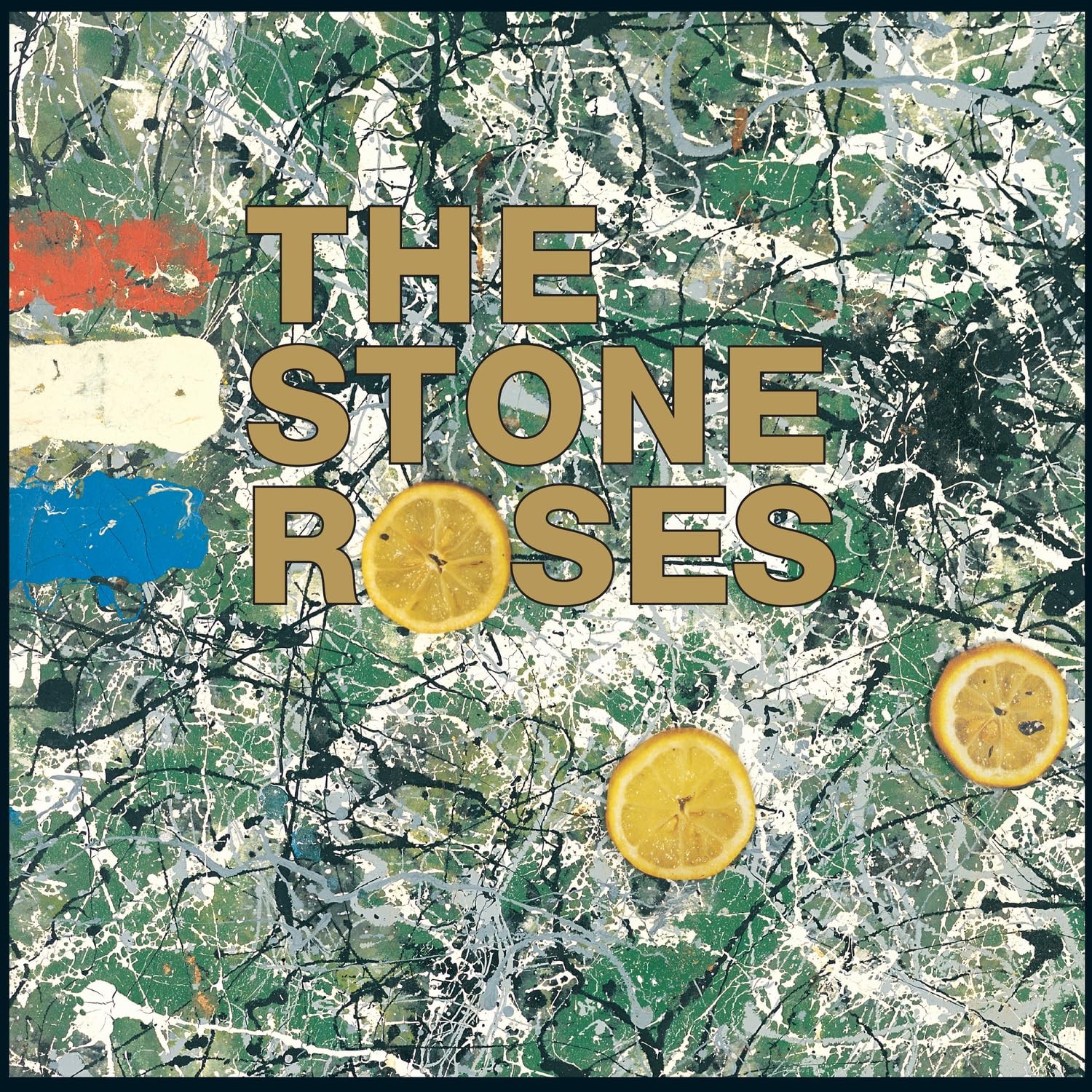
Recorded in fragments across London and Wales between June 1988 and February 1989 by a Manchester band who thought they were already the best in the world. It peaked at number 19 on release and was barely reviewed. A decade later it was being voted the greatest British album ever made.
- Released
- 2 May 1989 (UK); 25 July 1989 (US)
- Label
- Silvertone Records (ORE LP 502) — a Zomba division
- Producer(s)
- John Leckie (engineer: Paul Schroeder)
- Runtime
- 49:02
- Chart peak (US)
- Did not chart on original US release
- Chart peak (UK)
- #19 on original run (peaked 3 Feb 1990); later re-charted, ultimately reaching #2
- Certifications
- BPI Platinum (UK); 4M+ worldwide
- Awards & honours
- Voted the greatest British album of all time in a 2006 Observer/NME poll; widely cited as the defining Madchester record
The debut by a Manchester four-piece who fused 1960s jangle, psychedelia and the swagger of the city's rave culture into a record of total self-belief. It sold modestly, was freed only by a courtroom, and grew — across a decade — into the album most often named the best Britain ever produced.
The Stone Roses formed in Manchester in 1983 and spent five years releasing scattered singles on a handful of labels before a Zomba A&R man, Roddy McKenna, signed them in 1988 to Silvertone, a new guitar-rock subsidiary run by Andrew Lauder. The deal — reportedly around £100,000 across eight albums — would later become the thing that nearly destroyed them. But in the summer of 1988 it bought them studio time, and bassist Mani, a fan of John Leckie's work on the Dukes of Stratosphear records, pushed for Leckie to produce. Leckie listened to the band's demos and was unimpressed: the tempos were too fast, he said, and there was far too much reverb on Ian Brown's vocals. What he couldn't deny was that they were extraordinarily well rehearsed and entirely convinced of their own greatness.
Recording ran from June 1988 to February 1989, mostly at Battery Studios in London — the former Morgan Studios in Willesden — with additional sessions at Konk in Hornsey (owned by the Kinks), Coconut Grove in Stockport, and Rockfield in Monmouthshire, the Welsh farm studio where Queen had built 'Bohemian Rhapsody' a decade earlier. Leckie's job was to slow them down and clear the murk without sanding off the arrogance. The rhythm section of Mani and the drummer Reni played with a loose, dance-suggestive swing that no other British guitar band had then; over it, John Squire's guitar ran in long psychedelic lines and Ian Brown sang as if adoration were simply his due.
The songs justified the swagger. 'I Wanna Be Adored' opens the album by fading up out of near-silence on a single bass note, a full minute before Brown arrives to announce, flatly, that he wants to be adored. 'Waterfall' and '(Song for My) Sugar Spun Sister' are jangle-pop in the Byrds tradition refracted through 1989; 'Elizabeth My Dear', a sixty-second republican aside, sets new words to the melody of 'Scarborough Fair'; and the eight-minute closer 'I Am the Resurrection' ends the record on a four-minute instrumental jam built over a bassline that Mani had been playing as a backwards joke version of the Beatles' 'Taxman'.
John Squire painted the cover himself — a Jackson Pollock-style canvas of paint splatter with three lemon slices, the lemons a reference to the May 1968 Paris riots, where protesters reportedly sucked lemons to counter the effects of tear gas (the same riots that gave the album its track 'Bye Bye Badman'). Brown and Squire were unhappy with Leckie's finished mix, wanting the bass and drums louder and the guitars, in Brown's word, 'more devastating' — a wish Leckie attributed to the pair playing Public Enemy at full volume in the studio throughout the sessions.
Silvertone released The Stone Roses on 2 May 1989. It reached only number 32 nationally that month and didn't crack the UK Top 20 until 3 February 1990, when it peaked at number 19. American critics shrugged; Robert Christgau called the band overhyped. But the record spread by word of mouth and through the band's increasingly mythologised live shows, and as Madchester crested it became the scene's founding text. Then the label trapped them: Zomba took out an injunction in 1990 to stop them recording elsewhere, and only in May 1991 did a court free the band to sign with Geffen — by which point the moment had begun to pass, and the long-delayed second album would never match this one.
The Stone Roses is not in our hundred, and the reason is only that the hundred is closed. It has since been voted the greatest British album ever made more than once, and its DNA is in every guitar band that followed it out of the North — Oasis above all, whose Gallagher brothers were both in Roses audiences. What it proved was specific and durable: that a guitar band could carry the rhythmic looseness of the dancefloor without becoming a dance act, and that total, unembarrassed self-belief, recorded well enough, can sound exactly like the thing it claims to be.
Pressing guide — the one to own
The 1989 UK first pressing on Silvertone, ORE LP 502, with red and black labels and pressed at the SNA plant — identified by the runout matrix 'ORE LP 502 A2 / ORE LP 502 B2' with the etched SNA logo (later DFI represses crossed out the SNA mark and moved to cream labels). The front cover is John Squire's Pollock-style painting 'Bye Bye Badman'; the inner sleeve pairs band photos with a second Squire painting, 'Waterfall'. Both embossed-gold and non-embossed front lettering exist among first presses, the embossed run being the more sought-after, but the SNA runout — not the embossing — is the definitive first-press marker.