
Deep Dive
Vienna
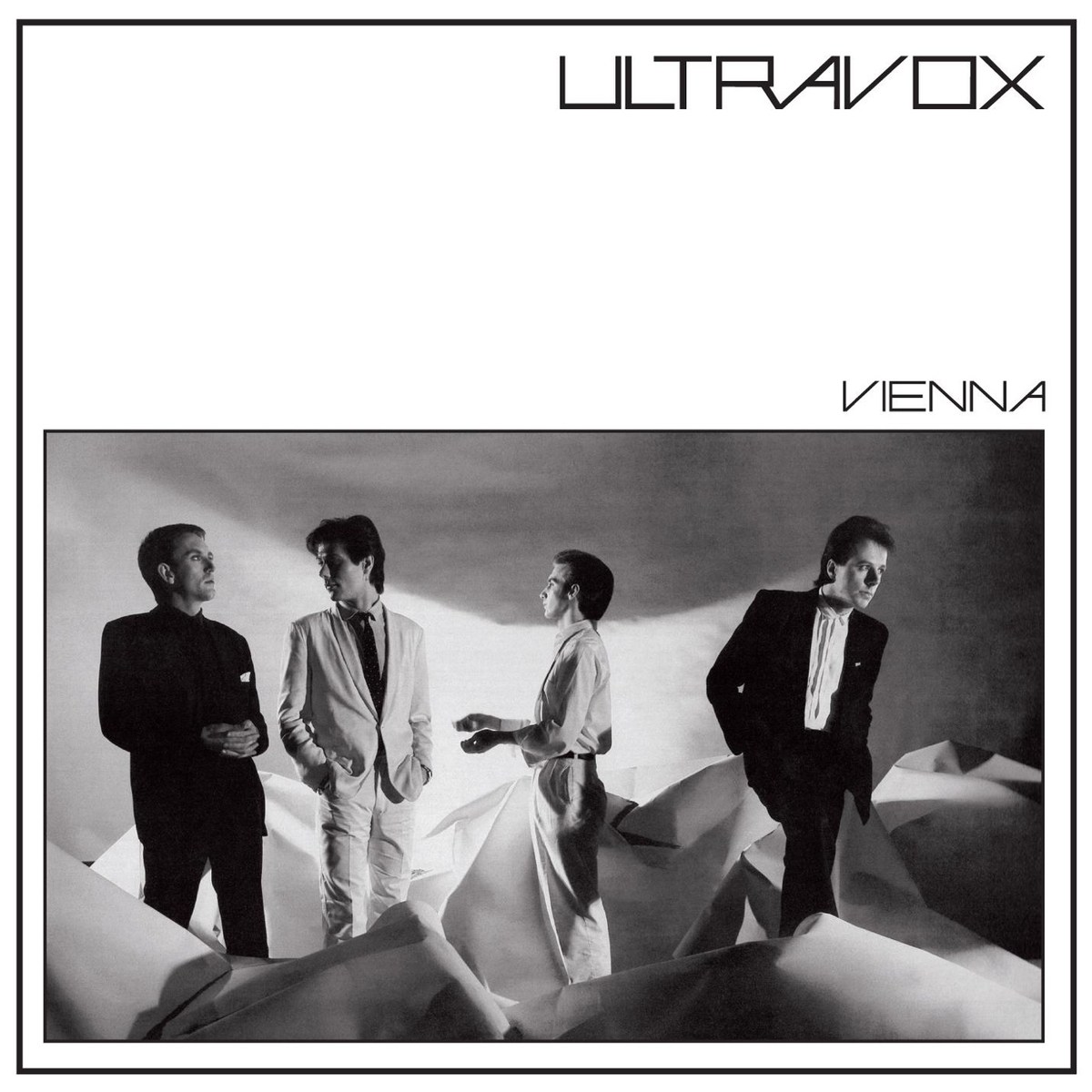
Vienna by Ultravox (1980) — what a copy is worth and which pressing to own, in a full Lead-In dossier: Ultravox's first album with Midge Ure stalled at #14 until its title track spent 4 weeks at #2 and pulled it up to #3.
Vienna by Ultravox (1980) — what a copy is worth and which pressing to own, in a full Lead-In dossier: Ultravox's first album with Midge Ure stalled at #14 until its title track spent 4 weeks at #2 and pulled it up to #3.
Ultravox's first album with Midge Ure, mostly recorded in 10 days at RAK in London with Conny Plank. Its best idea is a Minimoog pulse, not the famous title track.
Vienna's legend belongs to a single that stalled at #2, after which its album climbed to #3. The record underneath is better built and less even than that story suggests.
Vienna entered the UK albums chart on 19 July 1980 at #14, and that was as high as it got that year. Its title track came out as a single 6 months later. The single entered the chart at #52 on 17 January 1981, and a week later the album re-entered too. On 7 March the album reached #3, while the single sat at #2 for the last of its 4 weeks there. The single made the album. Nearly everything people now remember about Vienna runs through that one song: Joe Dolce, the chart injustice, the honorary #1.
That story is true, and it has buried the record. Play the whole album and the title track isn't its best idea. The best idea is a pulse: a Minimoog playing steady eighth notes, which Warren Cann names as the source of 'Sleepwalk', 'New Europeans' and 'All Stood Still'. It's tempting to credit the sound around it to Conny Plank, the famous name on the sleeve, and to his mixing room near Köln. Our reading of Cann's account puts more of it earlier, in 10 days of recording at a London studio, with Plank there as co-producer. Vienna is a very good record by a band that knew how it wanted to sound. It's also uneven, and its famous song is part of the reason.
It exists because the old Ultravox fell apart. Island dropped the band around New Year 1979. They paid their own way round American clubs that February and March. After a row in San Francisco, they parted from John Foxx, who had sung on all three of their albums. The guitarist Robin Simon stayed in New York and quit by phone. In April 1979 Midge Ure joined as singer and guitarist. He and Billy Currie were already writing together in what became Visage, and Rusty Egan had pushed Currie to ask him.
The members spent much of 1979 on paid work for other people. Currie's was the telling job: he played on Gary Numan's The Pleasure Principle and its tour. Numan later wrote, in sleevenotes for a CD reissue of Replicas, that Systems of Romance was exactly where he'd wanted his own music to go. So while Ultravox had no label, their keyboard player was playing on a #1 album by a fan. The new songs came that autumn, and Cann is certain that 'Astradyne', 'New Europeans' and 'Mr. X' were among the first. All of them were credited equally to the four members, a rule the band set when Ure joined. A second American tour followed from December: 29 shows in 32 days.
Then came the deal, and the way they won it says a lot. Chrysalis offered studio time for demos. The band spent it on one finished master instead. In February 1980 they recorded 'Sleepwalk' at AIR in London, with Plank engineering, in about 3 days, and Chrysalis signed them. That April, at RAK in St John's Wood, Cann says they 'put all of the tracks down in ten days'. Mixing followed at Plank's farmhouse studio near Köln, in May and June, over about 2 weeks. Cann thinks money kept the recording in London. The plan, he says, had always been Germany.
That order matters to how the record sounds. Cann never says who made Vienna sound European. He does say the band generally recorded reverb and delay onto tape with each part, rather than adding them later. They used backwards reverb, backwards guitars and vocals, and drum machines run through guitar pedals. So, on our reading, much of the space on this record was made at RAK, by the band working with Plank, before the mix near Köln. The sleeve credits the production to 'Ultravox and Conny Plank', in that order. On the evidence, that's the right order. The production is the album's strongest suit, and it belongs to five people rather than one.
You can hear the method from the first second. 'Astradyne' opens on a ticking Roland CR-78 pattern called 'Metal Beat', and Cann plays along to it. Nobody sings for 7 minutes. Putting that first was an act of nerve, and the American issue undid it by moving the track to the end of side one. 'Sleepwalk' shows the pulse at work. From about 1:09, Ure's voice drops out for most of a minute while the machine carries the song. That stretch is the record's case in miniature: a band trusting a repeating synthesiser line to hold up a pop single. These are the album's best tracks. They've aged better than the title track because they don't strain for grandeur.
'Vienna' itself came together in a rehearsal room. Currie dates it to January 1980. Cann's account puts it a little later, after the Chrysalis deal. Cann started it with a pattern on the CR-78 and a Synare drum pad, and the band attached a chorus idea they already had. Currie wanted it to sound like the late-19th-century Romantics, and named Grieg and Elgar. He'd also been listening to Max Reger, a German composer he thought had tried too hard and overdone things on purpose. That, he told the Guardian in 2017, was why his violin solo was 'overly vibrato and romantic'. So the overstatement is deliberate. It's a costume, chosen by a classically trained player who knew exactly what he was wearing. The middle section didn't exist when they first played the song live. It was finished in the studio.
That costume is why the song worked in 1981, and why it has dated faster than the songs around it. Ure told the Guardian that 'every track was for a movie that didn't exist'. 'Vienna' is the one that sounds most like the trailer. Currie remembers Ure, new to the band, worrying that it was arty, and Plank telling him to sing that doubt. That unease is the best thing in the vocal. But the bombast in the middle imitates a composer chosen for his excess, and imitation of excess ages. Chrysalis thought the track too long and too slow for a single, and Cann recalls the label calling it 'too weird for a Top 30 chart hit'. They were wrong about the chart and half right about the music.
The album's real weakness sits just before it. 'Mr. X' and 'Western Promise' open side two with nearly 12 minutes of mood. Cann wrote most of the words to 'Mr. X' and sings it, and he doesn't come in until a minute has passed. 'Western Promise' has the album's best recording story. Cann tracked its drums at night in RAK's glass-and-marble reception, until the neighbours called the police. He got the take the following night. Neither song has a tune to match its atmosphere. Robert Christgau, who gave the album a C in his Consumer Guide, joked that 'Western Promise' should have been called 'Algiers'. 'Passing Strangers' is slighter still. The band wanted 'Vienna' as the second single and were talked out of it, and 'Passing Strangers' stalled at #57.
The single needed help, and the band paid for it. Chrysalis wouldn't fund a video, so they spent 'in the region of six or seven thousand pounds' of their own, Cann says. Russell Mulcahy directed, and Ure's Burberry raincoat in it cost about £300. About half was shot in London, mainly in Covent Garden, and about half in Vienna, including the Zentralfriedhof cemetery. Once the single started to climb, the label asked for the film and paid for it. 'Vienna' then spent 4 weeks at #2. John Lennon's 'Woman' kept it off the top for the first week, and Joe Dolce Music Theatre's 'Shaddup You Face' for the other three.
The near-miss became the legend. In 2012 Radio 2 listeners voted 'Vienna' the nation's favourite #2 single, and the Official Charts Company declared it an honorary #1. Asked about Dolce again in 2019, Ure said a #2 had changed everything for the band, and that nobody would still be talking about a long-running #1. He's right, and the album has paid for it. The legend is about a chart position, not about a sound. The record's documented influence is smaller than its fame. The clearest line runs to the band's own next album. Rage in Eden, made with Plank in Germany as they'd first planned, reached #4 the following year.
Currie has been blunt about the band who made it. He told the Guardian in 2017 that they were 'extremely arrogant back then and probably too prog-rocky'. He also owned up to some fairly long tracks. That arrogance is audible in the title track's middle and in the two long tracks that open side two. So is the discipline of 'Sleepwalk' and 'All Stood Still', and that's the better part of the record. The difference between them isn't the machines. Both come from the same four players and the same co-producer. What separates them is whether a song has a tune strong enough to carry its atmosphere.
So what is it worth now? Vienna is a very good record with clear limits. Its production is the real achievement: a band and a producer making drum machines, a Minimoog and a violin sound like a place. Its best songs are the ones built on the pulse, and they still sound purposeful. Its famous song works, but it's overdressed, and it's better as a single than as the album's centrepiece. Two long tracks in the middle sag. Start with 'Sleepwalk' and 'All Stood Still'. Admire the rest, and don't mistake the legend for the record.
There's no single prize Vienna, and the useful skill is telling the originals apart. The UK first issue is Chrysalis CHR 1296, cut at The Town House and pressed by PRS. Most of the catalogued variants have TOWNHOUSE etched in the runout, but some lack it on one or both sides. The stamped ▽ E TH mark is the steadier sign. The US issue has the same catalogue number and a different side one, opening with 'Sleepwalk' and ending with 'Astradyne'. The discarded title Torque Point appears on the picture sleeves of a few test pressings, and the catalogue documents one.
© The Lead-In · an independent, reader-supported music publication.